

When I write about an activity here, I like to start with an introduction. For me, this is often the most interesting part of the writing—not the “how to” of implementing it in the classroom, but exploring why the activity matters in the first place. Sometimes that means thinking about the theory behind an approach. Why does it work? What makes it tick? Other times, I find that an activity has its roots somewhere deep in my past. Previously I wrote about infographics and how my fascination with them began in childhood, when I would riffle through encyclopedias looking for the layered acetate overlays.
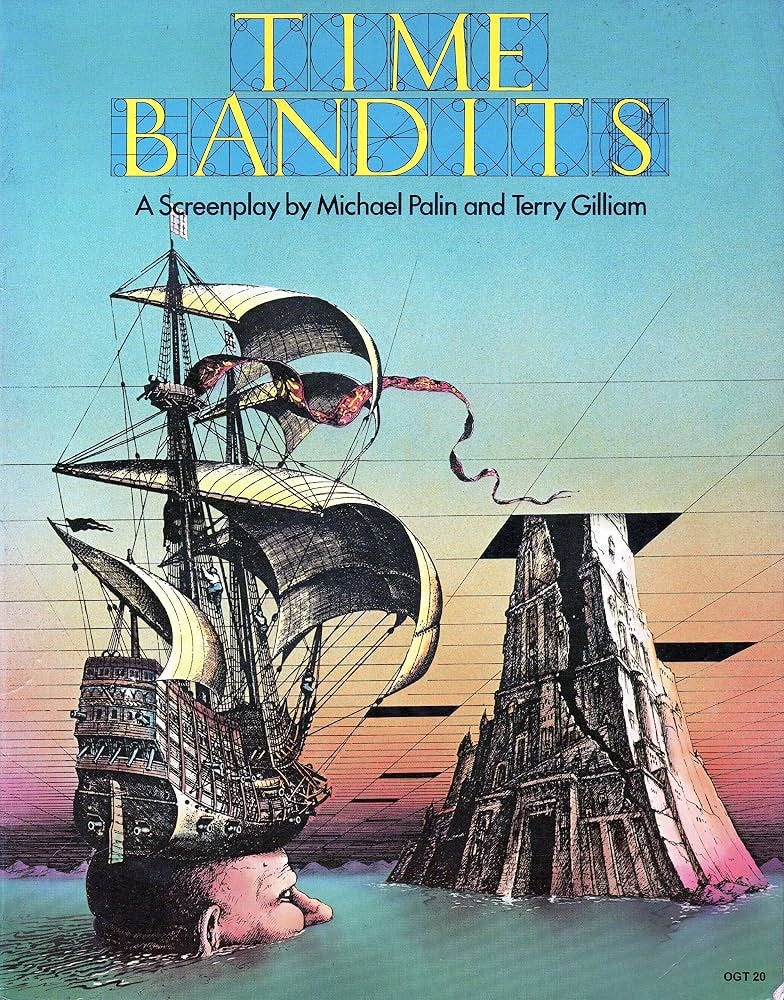
I had a similar experience with this week’s activity—storyboards. We’ve been using storyboards in a variety of ways now for over twenty years. The earliest storyboards I can remember were made by Terry Gilliam for his movie Time Bandits. In 1981 he released the full script of the movie in a book aptly titled Time Bandits: The Movie Script by Michael Palin and Terry Gilliam.
This was at a time when, as kids growing up in the 1970s and 1980s without the internet, we sought any artifact that might connect us to our beloved movies. I loved collecting albums that would have the voice acting from a particular film—my favorite was the two-album set of the Rankin/Bass animated version of The Hobbit. When the July 18, 1977 People magazine with C3PO came out, my friends and I immediately bought it (and anything else we could find with pictures from the movie).


Another precious artifact was my Time Bandits script. Supplementing the movie script were Gilliam’s doodles and drawings storyboarding the film.
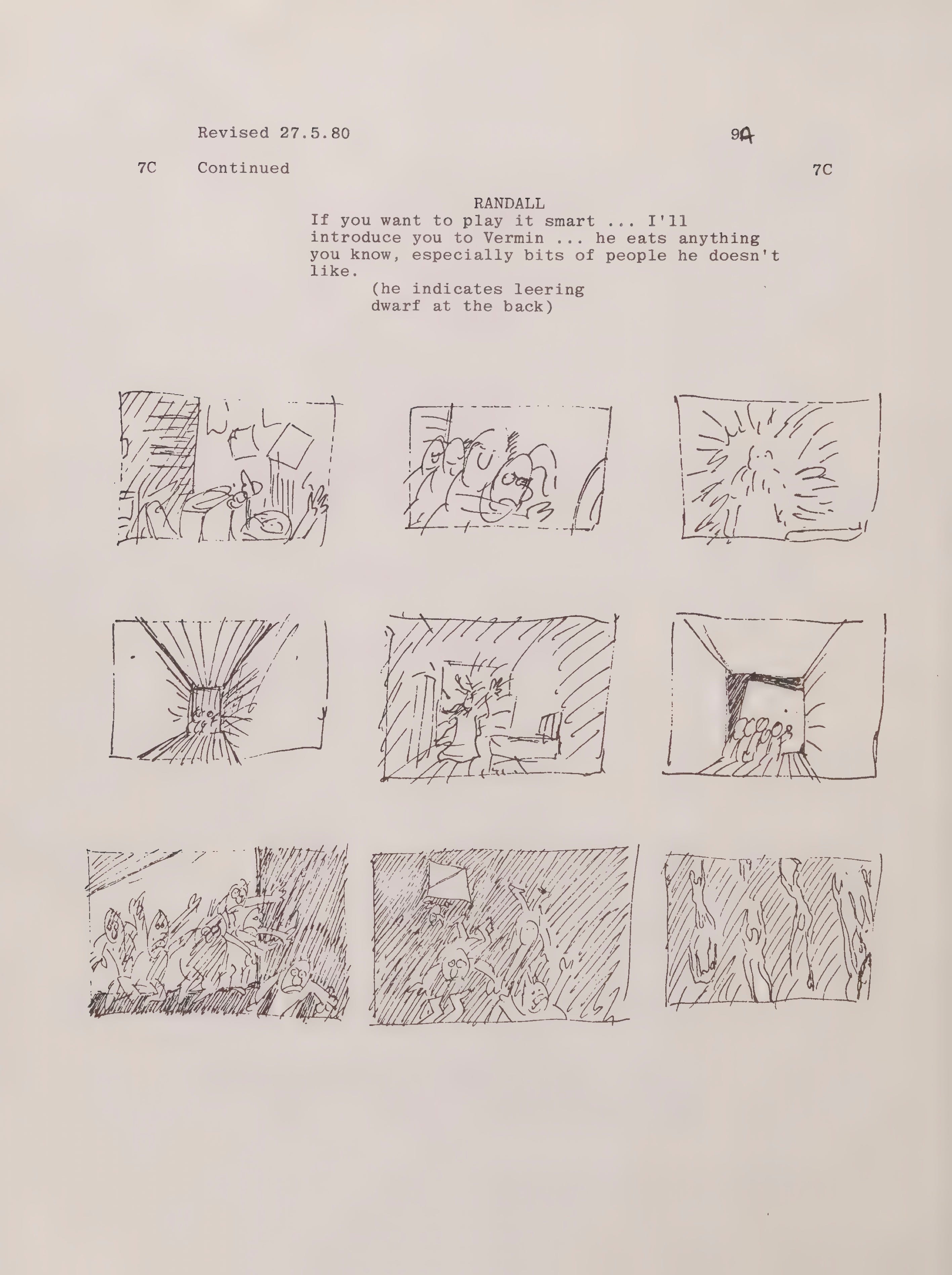
What impressed me was the action and perspective of the images. The story was communicated not only through text but through tiny boxes of doodles.
Reading as Immediate Experience
Michael W. Smith and Jeffrey Wilhelm, in their book Reading Don’t Fix No Chevys: Literacy in the Lives of Young Men, study the literacy lives of 49 middle and high school boys, looking closely at what they chose to read and do outside of school and why those experiences often engaged them more deeply than the reading they encountered in classrooms.
Smith and Wilhelm found that the boys they studied were often deeply engaged in activities outside school—even activities involving substantial reading—when those activities created the conditions for what Mihaly Csikszentmihalyi refers to as a “flow” state. The problem wasn’t simply that the boys disliked reading; many of the conditions that made their out-of-school activities compelling were largely absent from school literacy.
One of the most important findings was that the boys they researched tended to value the immediate experience of an activity rather than a distant payoff. They were more motivated when doing something was satisfying while they were doing it: when they could become completely absorbed in the activity, experiencing a sense of flow.
When we’re designing lesson plans, the authors encourage us to think about the question:
What is the quality of the experience I want [students] to have today?
The combination of text and imagery in Time Bandits captured my imagination as a boy. So much so that when I began thinking about my earliest encounters with storyboards, I remembered a book I had read forty-five years ago. It’s probably no coincidence that I was also an avid reader of comic books, choose-your-own-adventure stories, and Whitman Big Little Books with flip-book animations in the corner.


For me, these books, with their images and interactivity, offered precisely this kind of immediate experience. Later, I would be drawn to theater and performance for similar reasons—they offered a way to interact directly with a text and bring it to life.
The Challenge of Mapping Narrative
You can see, then, one of the reasons I chose to focus on Donna Barba Higuera’s graphic novel Xolo for Habla’s Chicago Teacher Institute. Its bright, vivid illustrations draw inspiration from Mesoamerican codices and stelae.1
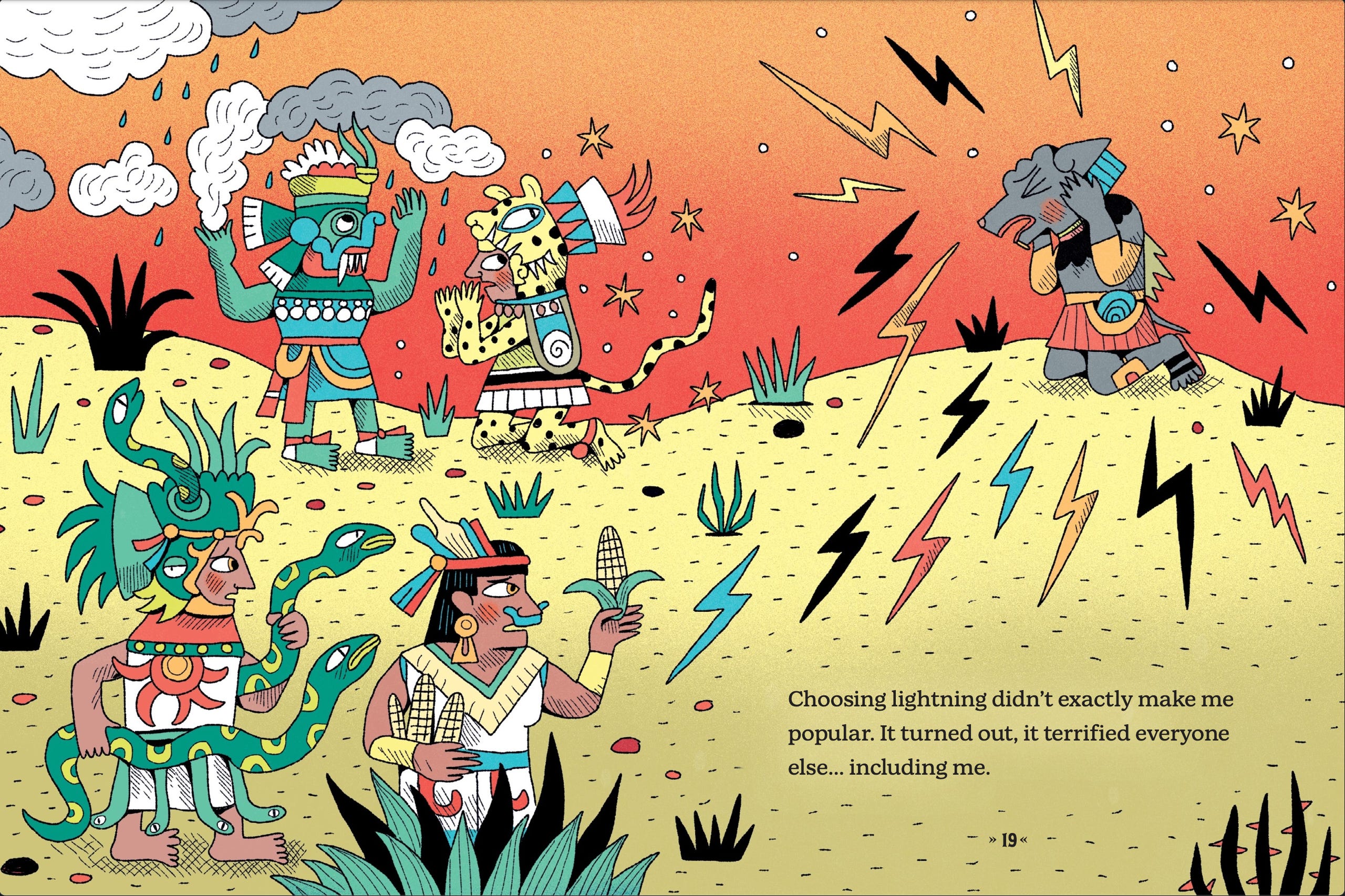
The illustrations, combined with text, provide a rich narrative experience. However, the mixture of text and image can also be confusing, particularly when reading the book for the first time. Characters, especially with names unfamiliar to most readers, can become jumbled and the plot, based in Mesoamerican myths, is also difficult to follow at times.
The central myth retold in Xolo is a reimagining of the Nahua/Mexica story of the recovery of humanity’s bones from Mictlan. After humanity has been destroyed, Mictlantecuhtli, lord of the Underworld, possesses the bones of the dead, and those bones are necessary for humans to live again. Traditionally, Quetzalcoatl is the hero who descends into Mictlan and retrieves them. Higuera reimagines the myth with Xolo, an unlikely hero, at the center of the story.
One of our goals of the institute was to demonstrate to teachers how we can create these experiences of “immediacy” with text that Smith and Wilhelm describe. Part of that experience is reading the text itself. But for many students that’s not enough. How do we shape experiences that help students process and comprehend a text in ways that are vibrant and energizing? The retold myth has a clear narrative filled with action and intrigue, so we decided to have groups share their understanding of the story through performance. Before beginning their performances, groups needed to develop a clear understanding of the key events of the myth. Below I’ll describe the storyboarding process we used and then next week share how we moved from storyboards to high-quality performances.
