

Retrieval Practice is getting quite a bit of attention these days. Retrieval Practice, as described by the Center for Teaching and Learning at Washington University in St. Louis, is:
the strategy of recalling facts, concepts, or events from memory in order to enhance learning. The act of retrieving something from your memory actually strengthens the connections holding it there, making it more likely that you’ll be able to recall it in the future.
For a detailed look at the research and publishing around this practice, read the Bell Ringer’s article here. In an Edutopia video Dr. Jim Heal explains that:
The more times you go to your long-term memory to pull a piece of information back into your working memory, it strengthens what’s called the memory trace between those two parts of your mind. Strengthening that path is part of the act of learning.
All sounds good but like many of the ideas coming out of the “science of learning” the persistent question is, “How do we incorporate these ideas into actual practice?” As I mentioned before, as much as I like books like Daniel Willingham’s What Don’t Students Like School they often lack engaging practices that we can incorporate into our own teaching toolkits.
This practice inspired by one of the core tenets of improvisational theater provides an engaging way for students to remember content they’ve studied.
Yes, and . . .
When actors are improvising a scene, one of the most important rules is to always keep the scene moving forward. Greg Atkins, an improvisation teacher, notes what happens when the opposite occurs, “Saying no stops the action, stops the ideas, stops the story, and is basically a poor choice.” Instead, actors should take an approach where they implicitly say “yes” to what the other actor on the stage offers. Let’s look at a couple of examples:
The “No” Approach
Actor 1: Look at the stars—aren’t they beautiful.
Actor 2: I don’t see any stars. It’s daytime.
The “Yes, and . . . “ Approach
Actor 1: Look at the stars—aren’t they beautiful.
Actor 2: Wow, they really are. And I think I can see Mars!
Actor 1: Wait, is that really Mars? I think it’s moving!
Atkins advises, “Get in the habit of saying ‘yes and’ . . . That way you accept the information and continue the give-and-take.” It’s useful advice not only for acting, but life in general (and something I’m still working on!)
Yes, and . . . In the Classroom
This approach first came to me when I was teaching The Odyssey in a Sophomore English classroom. We know Homer’s epic poem was passed down orally for hundreds of years before it was written—yet today usually our first encounter with the poem is reading it in print in school. In my classroom I’d ask my students to try to take notes on a chapter so as to be able to retell as much of the story as they could. I didn’t grade the retellings—they were meant to be a fun way for students to see how much of the story they could remember. I also encouraged them to actually pretend they were around a campfire hundreds of years ago telling the story to a group of young children. So their telling of the story had to focus on both remembering the plot and engaging the audience in a performative way. Here’s what we would do.
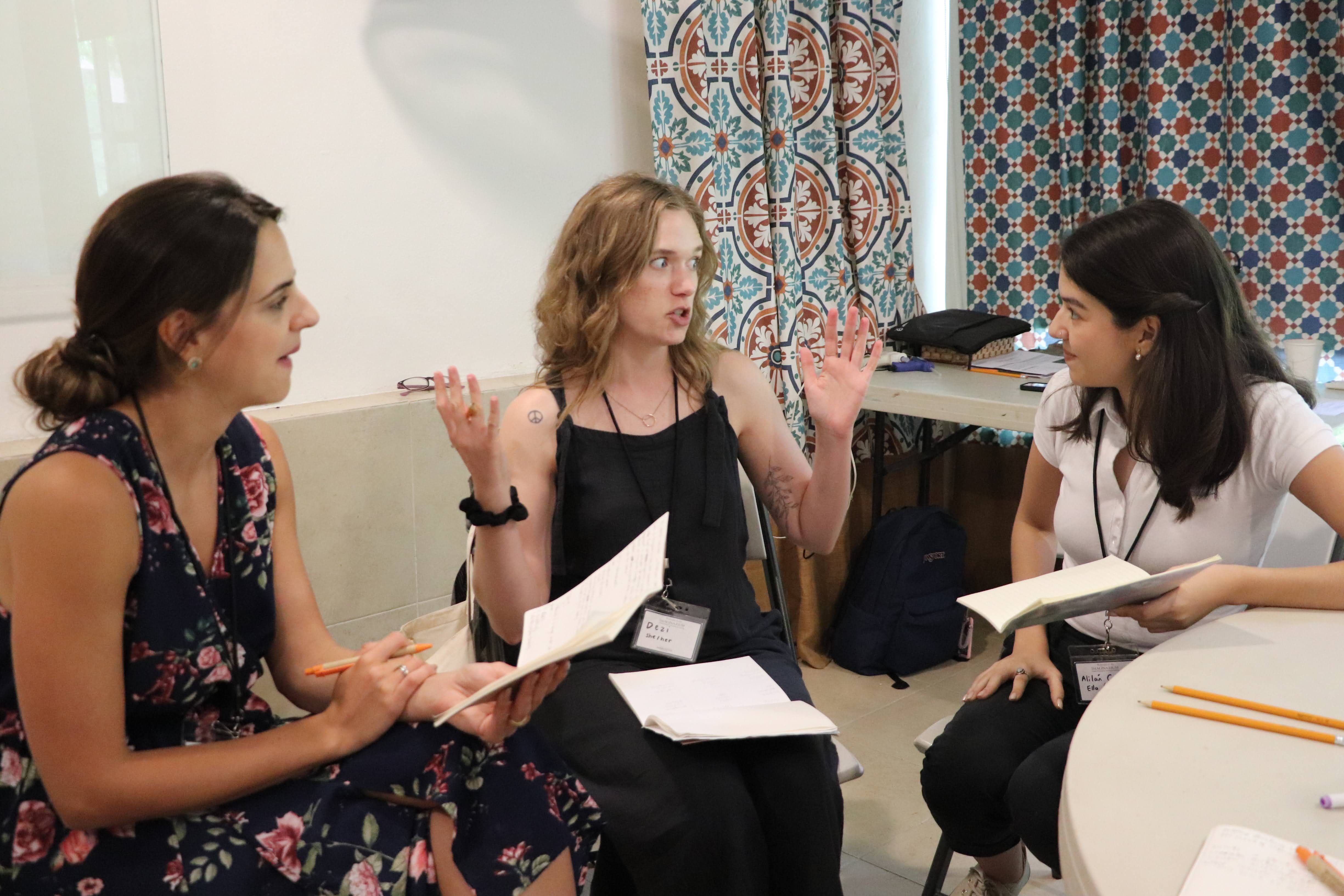
Small Groups. Organize the classroom into small groups of three or four students.
Yes, and . . . Explain that we will be retelling the chapter of the book with each person telling a part of the story continuing around the circle. Approach the storytelling with a Yes, and attitude meaning that if a person skips a part of the story, rather than stopping, continue by picking up where they left off. The storytelling should be continuous without pause or commentary.
Review Notes. After reading a chapter of The Odyssey, give students a few minutes to review their notes with the goal of being able to tell the story as accurately as possible. Note that the goal is to hit the major plot points—not retell every little detail of the story.
Tight Circles. After having had time to review their notes, students put their notebooks aside. The storytelling needs to come from the information they can retrieve in the moment. Push the desks aside and arrange students in a tight circle sitting nearly knee to knee.
Storytelling by beats. Choose a person to begin. That person will start at the beginning of the story and set the scene. Then they will pass to the next person who will tell the first beat of the story. Continue around the circle with each person sharing the next beat of the story. As a general guideline each beat should take no longer than 30 seconds of storytelling. Continue until the students reach the end of the chapter.
Reflection. Ask students to then review their notes, and/or the text, to see what they missed. We are now checking for how much information we were able to retrieve, and noting where the gaps are.
Since this original pilot of Yes, and . . . I’ve used it with different age groups and different subject areas. At the elementary school level, it can work with even the youngest students using read-alouds. Ask students to remember as much of the story as they can as they listen to it. Repeat the story (perhaps reading it every day for three or four sessions.) Then move around the reading circle of students asking them one by one to retell the story “piece by piece.”
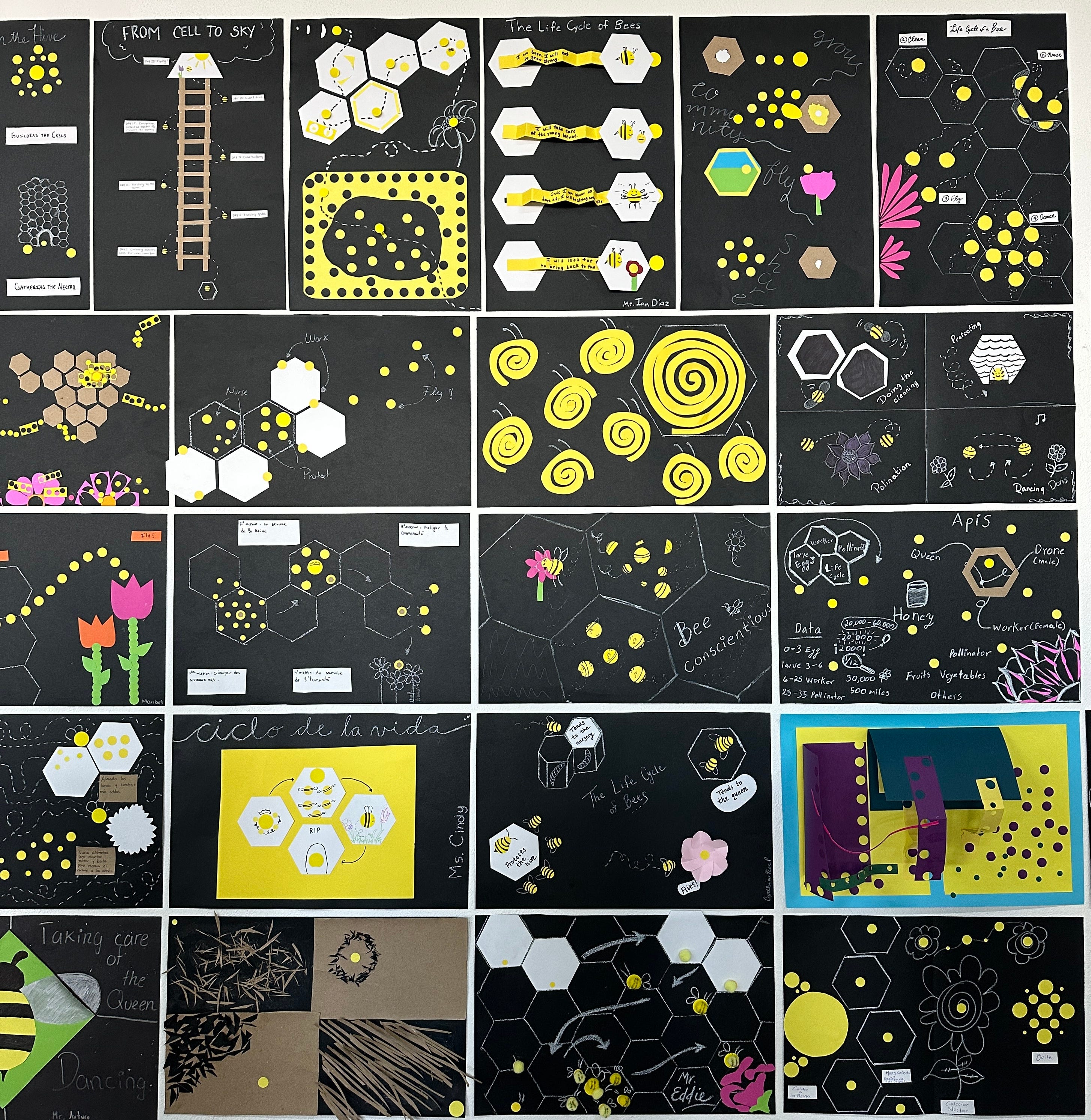
Most recently we used it with a science unit on the lifecycle of bees. We read the book Honeybee: The Busy Life of Apis Mellifera and had participants take notes on the lifecycle of a honeybee with the help of this sequencing template we designed. Participants reviewed their notes and then used the Yes, and . . . approach to retell the lifecycle from birth to death.
Yes, and . . . is one creative approach we’ve developed to help students commit information to their long term memories and self-assess how much they are able to recall. Certainly helping the students to remember content is critical and it’s equally important to develop artful approaches for showing deep understanding of their content beyond memorization. In the bee unit described above, participants then created infographics showing their understanding of the bee’s lifecycle (see my earlier post here). A question I always consider is not just whether students know the content—it’s whether they can use this knowledge for original and creative purposes.
This is great! I’m bookmarking this strategy to use this semester. Thanks for sharing!
Wonderful, I will definitely 👍🏼 se this in my language classroom, gracias