

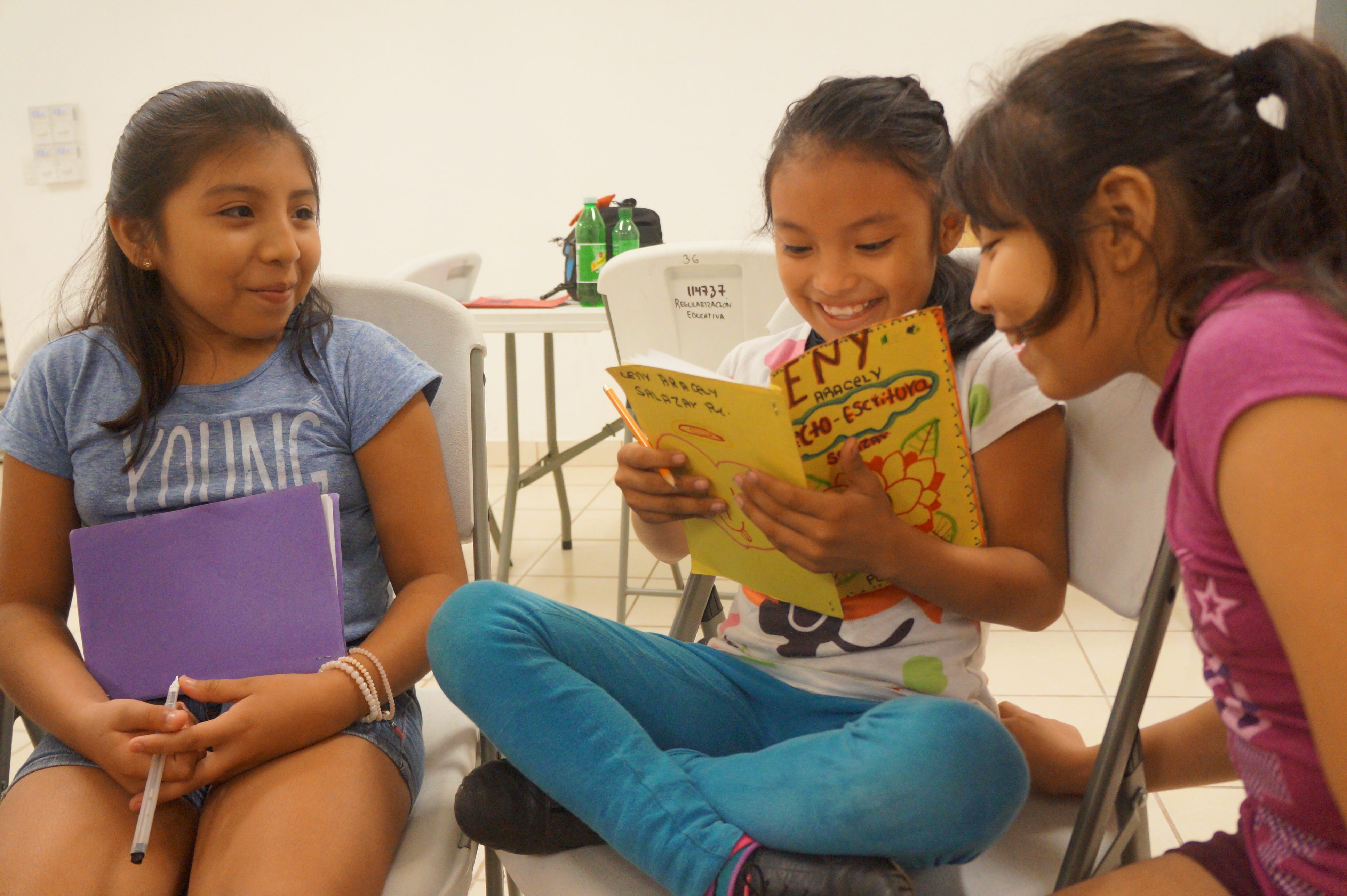
Often our work as educators is driven by what was lacking in our own education when we were younger. A colleague of mine, Sam Seidel on the Branch Speaks podcast, remarked on what drove his father, Steve Seidel, who, for many years directed Project Zero and the Arts and Learning Master’s Program at Harvard University:
My dad feels like so much of what has made him a good teacher or what he’s done in the classroom has come from anger which totally shocked me because, one, I don’t think of anger as a source of great teaching usually, nor do I think of my father as an angry man. He’s a very mild mannered person, very calm, very gentle. He said, “There are things about the world that I’m really upset about. There are things about the way I was educated that I’m really upset about.” So it’s like that is his source—that’s his fuel—that certain things shouldn’t be this way.
I was thinking about Sam’s conversation with his father while having dinner with my friends Miguel and Kali in San Diego. Miguel teaches AP History at a public high school. I’m not sure how we got onto the subject, but, after we finished dinner, he began telling Magellan’s story, a story that ends with Magellan’s dramatic death at the hands of the inhabitants of the Philippines.
I thought about how grateful I was that Miguel’s students experienced history through these rich stories, and at the same time, angry—angry that all of my middle and high school history experiences in Indiana public schools in the 80s consisted of plodding through textbooks, memorizing vocabulary, names, and dates, and taking multiple-choice tests. At the time if you asked me what my least favorite subject was I would have told you “history.”
My grandmother was a dedicated reader of histories, and later in life, I began reading the books she recommended—Stephen Ambrose, Doris Kearns Goodwin, David McCullough. As I read, I discovered history is really about the collected stories of individuals and I was hooked. I still wonder why many of our history classrooms aren’t shaped around these compelling stories rather than discrete facts, especially given the research on the relationship between narrative and learning.
Structuring Learning Through Narrative
Daniel Willingham in Why Don’t Students Like School? discusses the power of stories from a neurological perspective. He writes,
The human mind seems exquisitely tuned to understand and remember stories—so much so that psychologists sometimes refer to stories as ‘psychologically privileged,’ meaning that they are treated differently in memory than other types of material.
Willingham suggests to teachers that “organizing a lesson plan like a story is an effective way to help students comprehend and remember.”
This reminded me of Kieran Egan’s book Imagination in Teaching and Learning: The Middle School Years. He also encourages teachers to “build a narrative” in their classroom, and particularly in the areas beyond language arts, “While literature undoubtedly has such a role in encouraging some social virtues, I think we tend to forget that among the great stories of our culture are those expressed in our science and mathematics and history.”
Both Egan and Willingham then give examples of how we can deliver information to students by organizing our lessons with narrative structures. Egan describes how to teach about eels in the sciences, and Willingham offers the example of examining how the United States entered WWII after Pearl Harbor.
Cognitively both emphasize that teaching content through storytelling and narrative structures help students to find meaning, retain the information, and in Egan’s case form an “emotional commitment” to the material.
Egan notes,
The great power of the story is that it engages us affectively as well as requiring our cognitive attention; we learn the content of the story while we are emotionally engaged by its character or events.
From Storytelling to Storymaking
Egan’s work first made an impression on me when I was in graduate school in the 90s. During that time in Providence, RI an organization, The Coalition of Essential Schools, was founded by educator Theodore “Ted” Sizer. The Coalition was a network of hundreds of schools that were trying to reform the model of traditional “top-down” education. In the spirit of the progressive education movement, they proposed a “student-centered” education. The Coalition had a set of principles that were the pedagogical foundation for its network of schools. When I read Ted Sizer’s book, Horace’s School, one of these principles became, perhaps, my clearest signpost as an educator: Student-as-worker; Teacher-as-coach.
I understood the power of teaching through compelling stories, but I also wanted students to engage in their own storytelling—to, in Whitman’s words, create work of “original energy.” I didn’t just want them to read Shakespeare; I wanted them to be Shakespeare.
I taught English-language learners in Mexico for over a decade, and Paulo Freire’s work deeply informed how I designed classes. Working with farmworkers in rural Brazil, Freire developed literacy programs that began, not with textbooks, but with the lived experiences of students.
In Education for Critical Consciousness, he describes asking students to sketch scenes from their daily lives and using those images as seeds for words and stories. The written word grew naturally out of the world they lived in.
In Pedagogy of the Oppressed, Freire summarizes:
Reading the world always precedes reading the word, and reading the word implies continually reading the world.
One of the most powerful examples of Paulo Freire’s philosophy in action was in Len Newman and Richard Kinslow’s Newcomers class in Central Falls, RI. We describe this class in detail in our book A Reason to Read.
Newman and Kinslow created a safe space for students to tell their stories of coming to the United States. Newman, whose parents were Holocaust survivors, began the class by telling the story of his family’s escape from Europe to the United States in the 1940s. Throughout the school year Newman and Kinslow shared stories about their own lives and invited their students to do the same. Eventually the students staged their stories in the high school theatre with the help of Big Nazo, a puppet theater in Providence. Storytelling wasn’t just a language tool—it was a way to give students a podium, a voice, and a place in their school community.


The Magic of Childhood
Last week I worked with a team of 3rd-grade teachers from Bend, Oregon to help them build a project-based unit. They are teaching Peter Pan in a “classics” unit and were looking for suggestions for a culminating exhibition. (A side note: they were also thoughtfully addressing the cultural and political issues of the text).
We began discussing what the most compelling big ideas in Peter Pan are. We all probably know the heartbreaking ending in which Peter Pan returns to Wendy and asks her to return to Neverland. She has grown older, is married, and has her own child, and she tells Peter, “I can’t come. I have forgotten how to fly.”
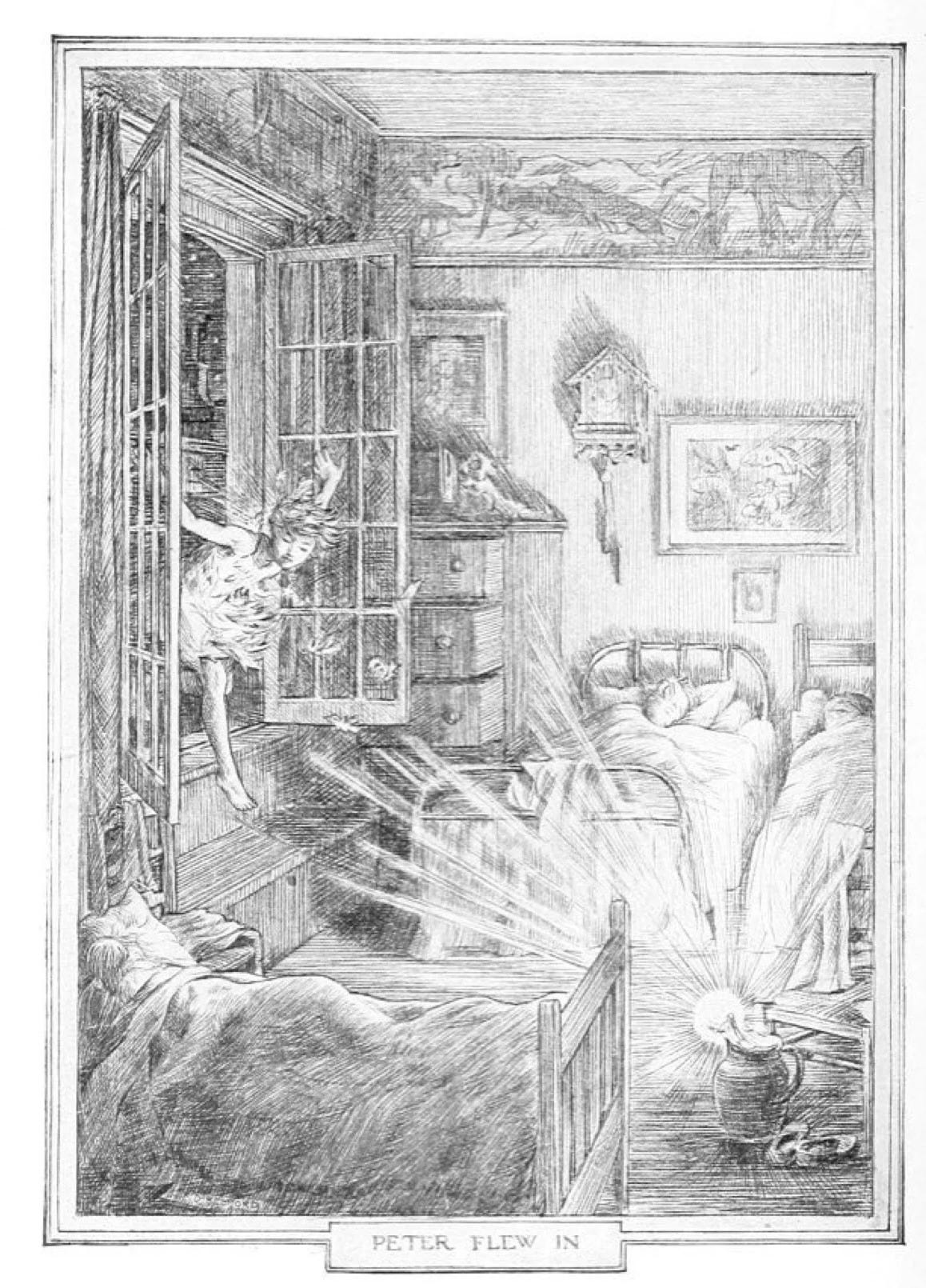
Wendy’s wistful reply reminded me of the stanza from the song “Puff the Magic Dragon" by Peter, Paul, and Mary,
A dragon lives forever, but not so little boys
Painted wings and giant’s rings make way for other toys
One gray night it happened,
Jackie Paper came no more
And Puff, that mighty dragon, he ceased his fearless roar.
We began thinking of ways to help students reflect on what is magical about their childhoods. We brainstormed questions:
What was magical about your life when you were younger?
What is magical about your life now?
What do you think you will miss when you are an adult?
One teacher suggested a beautiful idea: hosting an evening where students share their responses, and parents share what was magical about their childhoods—as well as what magic they see in their children today. I’m not sure where they’ll end up going with this but I’d love to listen to the stories told by both the parents and their children.
In Susan Magsamen and Ivy Ross’s book Your Brain on Art, emphasize, “There are three functions that neuroscientists consider the trifecta of cognitive processing: attention, learning, and memory.” Storytelling—and the act of creating stories—can be a powerful catalyst for learning far beyond its traditional home in literature and language arts.