

Yellow butterflies. In Gabriel García Márquez’s One Hundred Years of Solitude, when the character Mauricio Babilonia appears to the woman he is courting, Renata Remedios, he is preceded by a flurry of yellow butterflies.
Mauricio Babilonia was always in the audience at the concerts, the movies, at high mass, and she did not have to see him to know that he was there, because the butterflies were always there.
The appearance of the butterflies is just one of many clear examples of magical realism in Márquez’s masterpiece. Other examples include Remedios’s floating through the air and then ascending to heaven, the invasion of ants in the house, and the four years, eleven months, and two days of nonstop rain in the town of Macondo, to name a few. My wife Marimar likes to point out that the idea of magical realism isn’t really about magic at all; it’s a way of being in, seeing, and narrating the world.
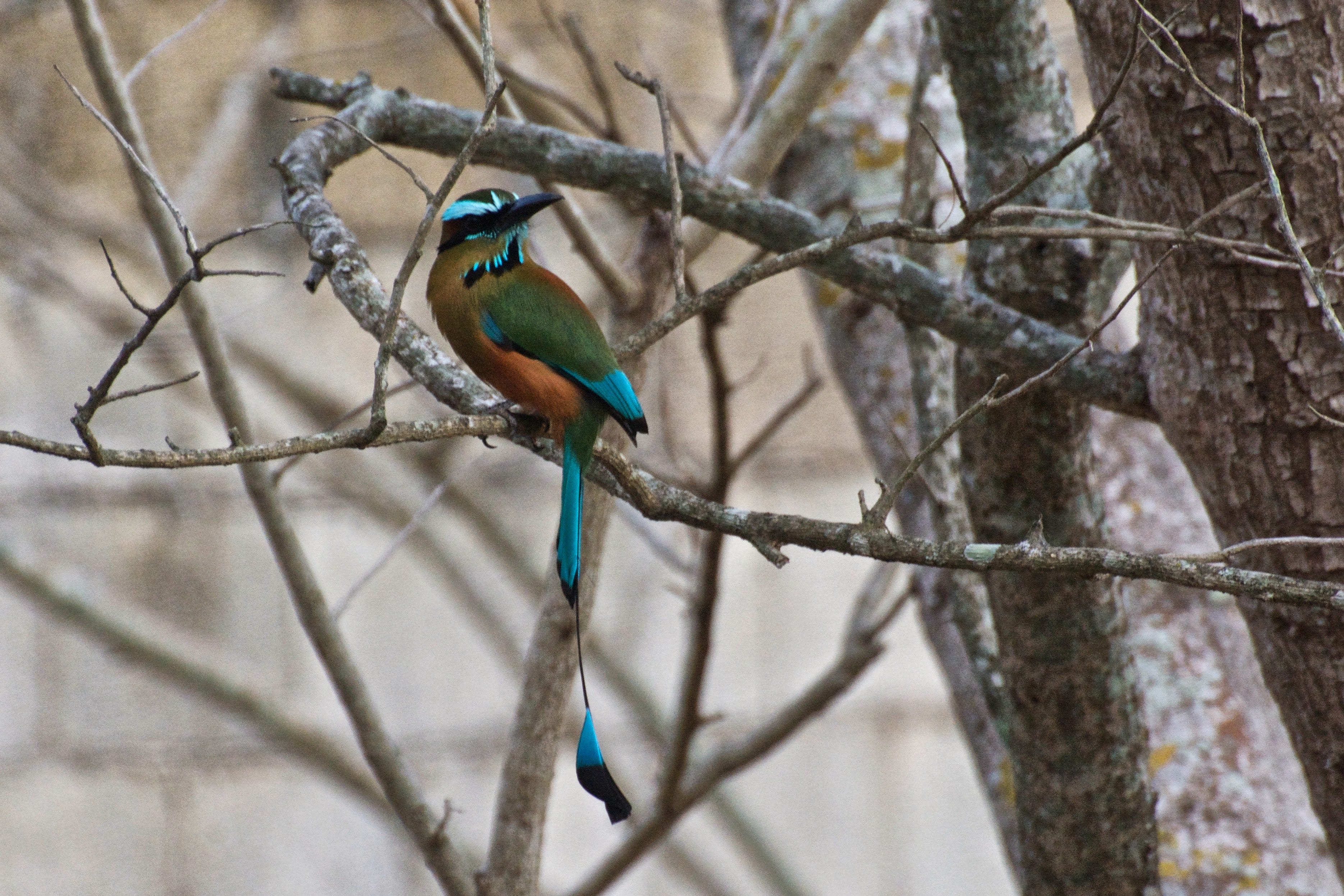
Having lived in the city of Mérida in the state of Yucatán in Mexico for nearly two decades, I’ve been witness to events straight from the town of Márquez’s Macondo. One night in our house a loaf of bread was carried off by ants in the dark. A multi-colored bird, the pájaro toh, appears outside our front door most mornings, waving its pendulum-like tail and crying “ca-ca-wah, ca-ca-wah.” And, yes, in the summertime, swarms of yellow butterflies fill the gardens.
A Magical Pedagogy
I first read One Hundred Years of Solitude when I was working on the ArtsLiteracy Project in the Education Department at Brown University. At the time we were partnering professional artists—filmmakers, visual artists, actors, directors, musicians—with literacy and language teachers in classrooms. Our goal was to find and develop innovative practices for teaching reading and writing, but now I realize that something else was happening as well: classrooms were becoming magical spaces.
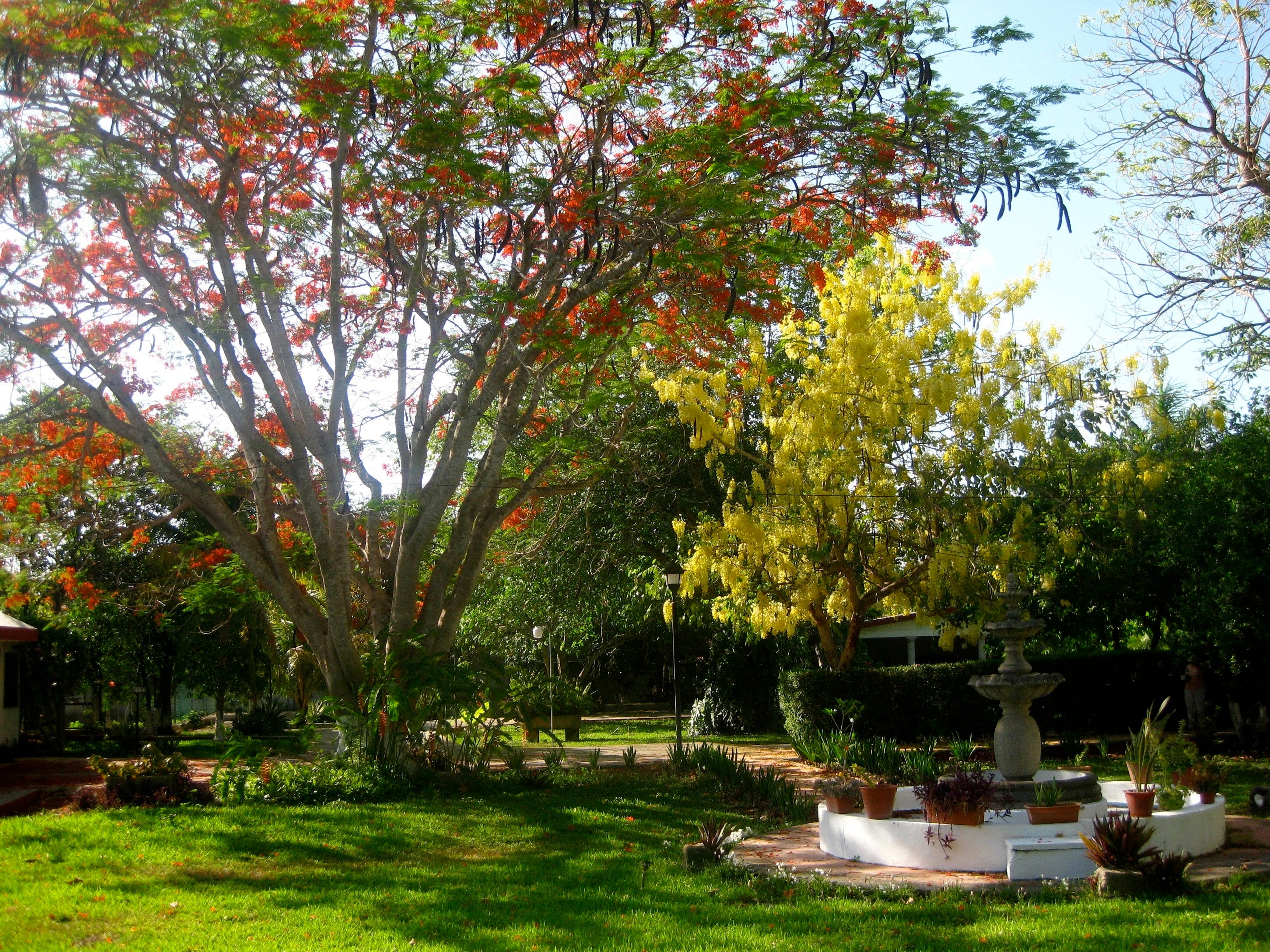
I don’t mean magic in the sense of card tricks and rabbits-out-of-hats (although that sense of wonder and awe is certainly a part of it). I mean magical in a Márquezian sense—the idea of magical realism as a way of thinking about teaching, learning, and life. When I drive around my city, Mérida, in the sweltering heat of May, the streets are on fire with the bright orange petals of the flamboyán and the vibrant yellows of the lluvia de oro, two types of trees that bloom at that time of year. A routine drive to school becomes luminescent—transforming the stagnant into the brilliant. This is what I hope for our classrooms.
Before we go further, let’s consider what we often see when we walk into schools, particularly secondary schools: white walls, well-intentioned slogans, trophy cases, perhaps a few appropriate holiday decorations, and bland mission statements—”a community of lifelong learners, responsible global citizens, and champions of our own success.” The same is true of many classrooms with standard premade posters (“Growth Mindset—Believe You Can!”), blank walls, and rules (1. Be ready to learn. 2. Be respectful of others. 3. …).
Education policies of the last thirty years have pushed us toward pedagogies that feel equally sterile: adherence to state and federal standards emphasizing discrete skills; scripted curriculums that must be followed “with fidelity,” to quote a common administrative directive; textbooks that drain the imaginative power from beautiful stories and compelling content.
There are, of course, many schools and classrooms that are exceptions to this. I’ll share several below. Yet when I walk into most schools, they reflect many of the characteristics I’ve just described.
So what’s the alternative? In a graduate research class, our professor Ted Sizer framed an essential question as we shadowed students in eight public schools: “What do ‘aha’ moments look like in schools?” (There were very few—but that’s another conversation.) I’m going to propose a similar question here: “What does magic look like in a school environment?”
Content
Let’s go deep right away, to avoid a shallow or superficial idea of “magic.” Approaching this as a language arts educator, my first answer to the question is to find a “magical” text to build a curriculum around. By magical, I don’t mean one with literal magic—wizards and dragons—but one that is compelling and meaningful for students (recognizing that no single text works for everyone). A “magical” text often:
is complex yet accessible
has a compelling narrative
is paired with beautiful artwork (mostly in the case of children’s books)
presents different perspectives and ways of seeing the world
offers interdisciplinary and project-based ideas (for example, see my post about the book Shellsong)
Beyond texts, we can also think about a constellation of artifacts to design learning experiences around—images, videos, music, and objects. In this post I discussed ways of using image and video. As with texts, we look for content that:
is of high quality
doesn’t feel like it was made “for school,” and
conveys the actual content of the subject-area.
Here are just a few of the many texts at the elementary school level we’ve often based units, workshops, and institutes around.


And some of our favorites for building experiences for secondary, university, and adult learners.


Multitextured Learning
When we look into a classroom at almost any grade level, we usually see a familiar scene: students at desks reading, writing, solving problems, talking in small groups, or listening to the teacher. All of this matters; there are classrooms in which deep thinking happens through text and discussion alone, and I love a good seminar-based class. So I’m not arguing against that. This is more of a “Yes, and . . “
When I taught Shakespeare’s Tempest to sophomores, we attached ropes to the school’s balconies and recreated the ship-in-a-storm scene. Students screamed lines—“All lost! To prayers, to prayers! All lost!”—as they rocked on an imagined vessel. We were no longer in the classroom or even in this world. Wind and rain surrounded us. Yellow butterflies.
Shakespeare’s plays were meant to be performed. Whenever I’m teaching literature or content in any area, I’m looking for opportunities for students to move from text to original work—exhibitions, creative responses, performances—so they feel a sense of agency and ownership.
A few examples of a multitextural approach to learning:
In Theresa Toomey Fox’s classroom at Nathanael Greene Middle School in Providence, RI, her 7th grade students read Othello. They chose a character to analyze, performed their chosen character in a rehearsed scene (with full props and costumes), and wrote an essay analyzing their character’s development throughout the play.
In a humanities class I taught with Deb Christenson at Souhegan High School in Amherst, NH, we asked students to analyze The Great Gatsby and the decade of the 1920s through the lens of light and dark. They created an artistic piece and wrote an abstract explaining how their piece represented the lightness/darkness during that historical period. The unit culminated in an art exhibit for their parents and the school community.
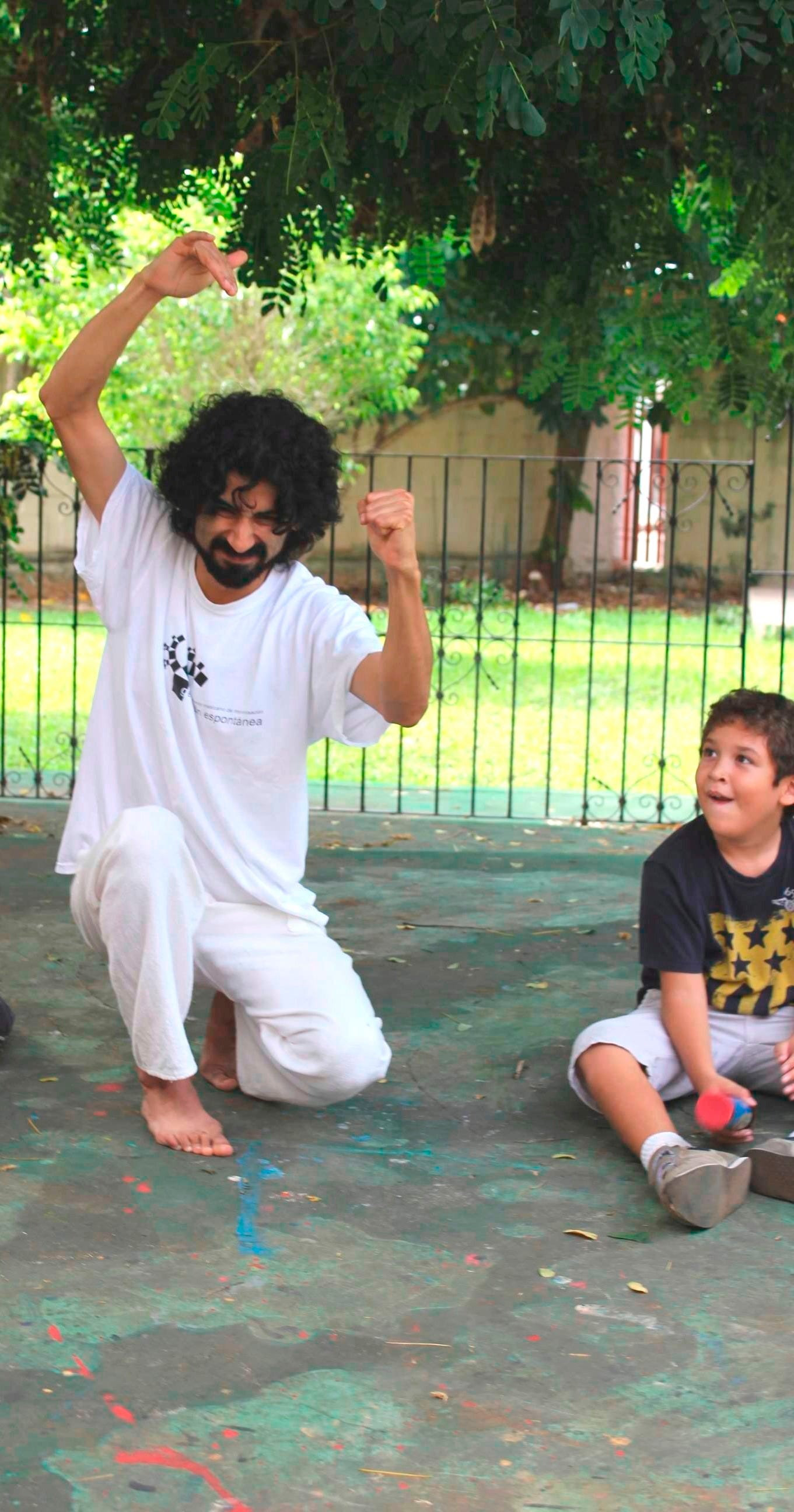
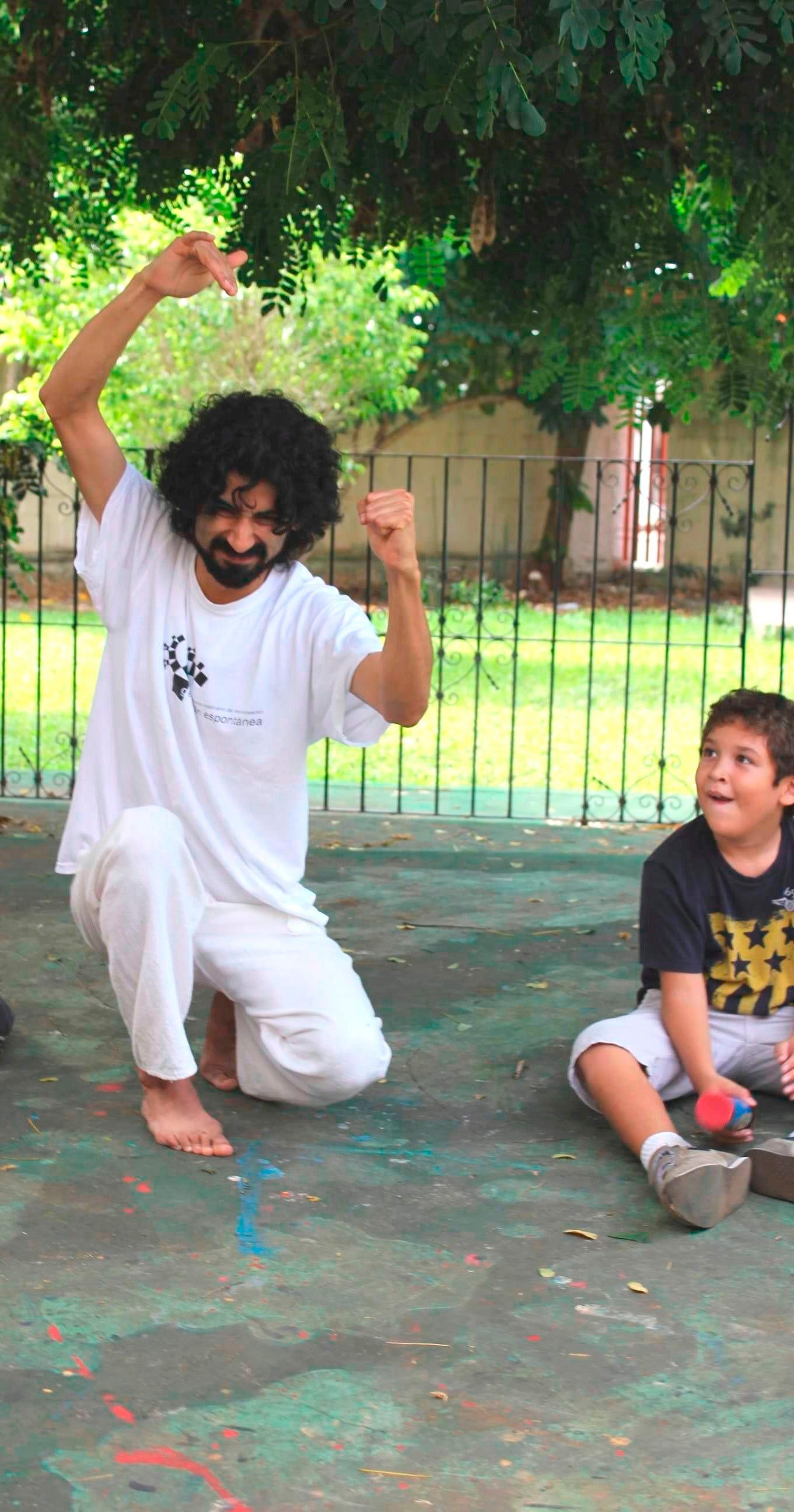
Sound artist Darío Bernal Villegas teaches students how to create improvised sounds with the objects around them. (photo by author) Sound improvisation artist from Mexico City, Darío Bernal Villegas gave groups of students creation stories from across the Americas written by Eduardo Galeano in his epic historical trilogy Memory of Fire. Using found objects from nature, students performed a textual and sonic interpretation of their given myths. They then explained in a paragraph how the sounds they chose enlivened or reflected the tone, mood, and development of the text.
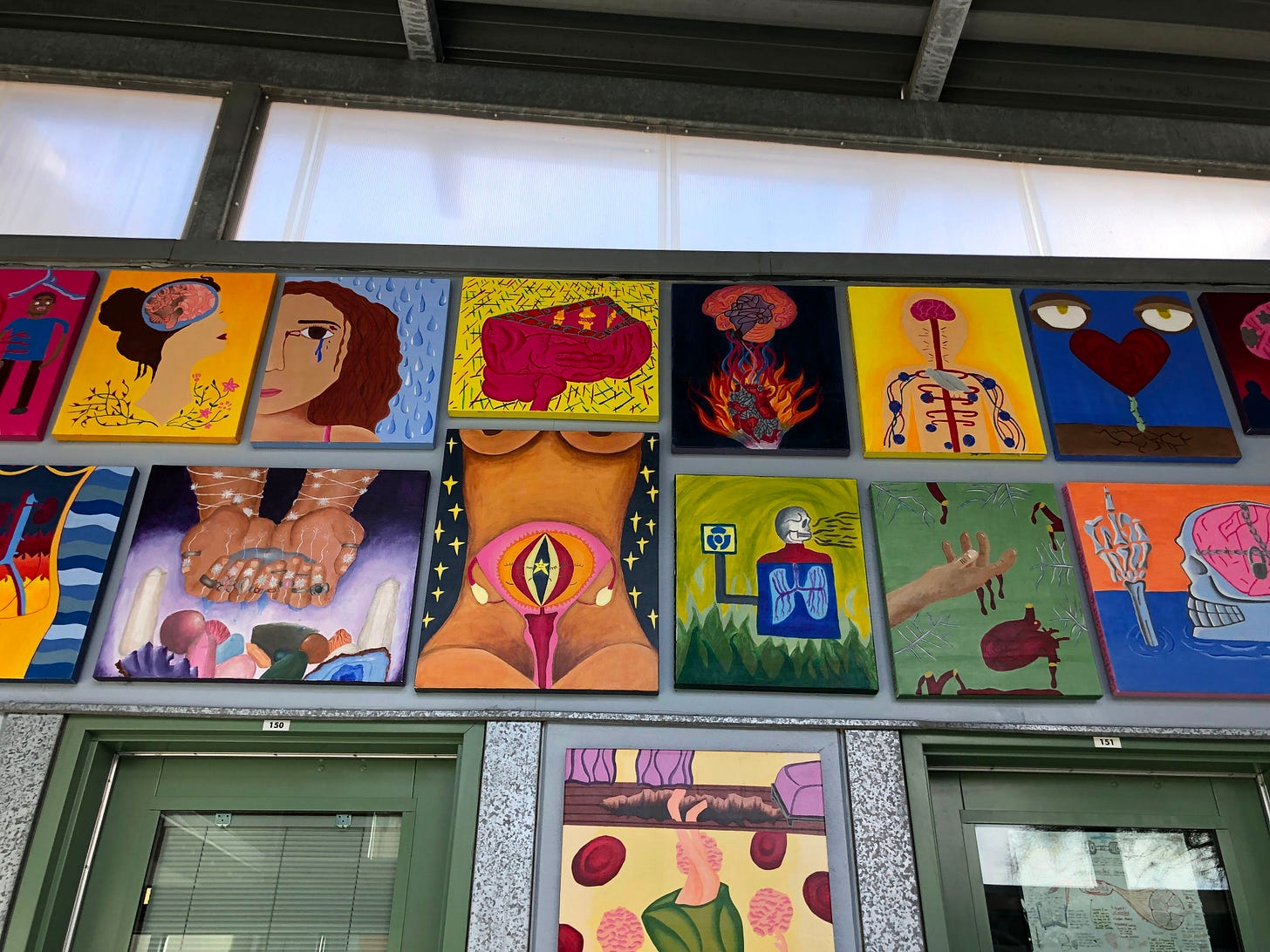
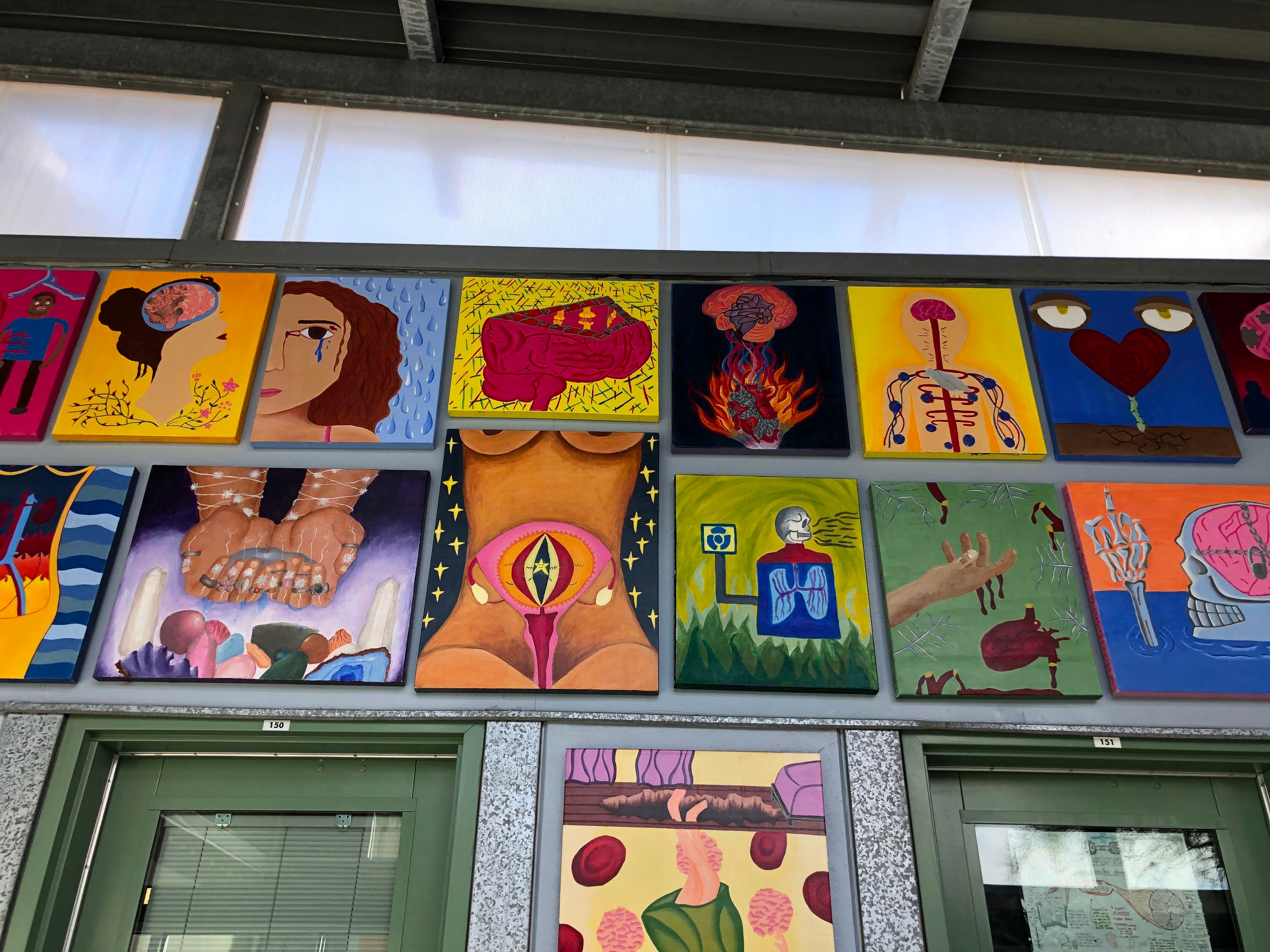
Student exhibit from Nuvia’s classroom in the walls of High Tech High Chula Vista (photo by author) In Nuvia Ruland’s biology class at High Tech High Chula Vista, students explored the essential question “Where does your power come from?” To show their understanding, they created artworks and written explanations that “demonstrate student’s expertise on the associated organ system, tissue and/or cells and show what they’ve learned about maintaining health of their power, and a deep understanding of possible negative effects when an imbalance of homeostasis occurs (e.g. environment, disease, trauma, malnutrition, pollution, chemicals, etc.)” In the humanities classroom, this scientific work was paired with both a written assignment and a performative component, culminating in a seven-minute monologue.
In a Providence high school moving to portfolio-based assessment, the English department head emphasized that all artistic projects needed strong written components. In arts-integrated classrooms, I’ve often seen engaging projects that miss the depth of disciplinary learning—in the examples above, the written component clearly grounded the creativity in content. These were magical experiences and rigorous ones.
Space
Yellow butterflies. When Remedios walks into the movie theater, she sees the butterflies and knows Mauricio is there. The space is transformed. We can also create magical spaces in our schools when we begin to reimagine what might be possible with white walls and sterile hallways.
Student Work. Walking into a High Tech High school feels like a breath of fresh air. Across all sixteen schools, the hallways display beautifully curated student work with project descriptions. Two things struck me on my first visit: the consistent quality across classrooms, and the clear depth of content learning.


Design Elements
I love when teachers attend to the design elements that make a classroom feel inviting (confession: I’ve never been very good at this). In elementary classrooms, where teachers truly “own” the space, this is often done beautifully.
Here is an example from an elementary classroom at High Tech High Chula Vista.
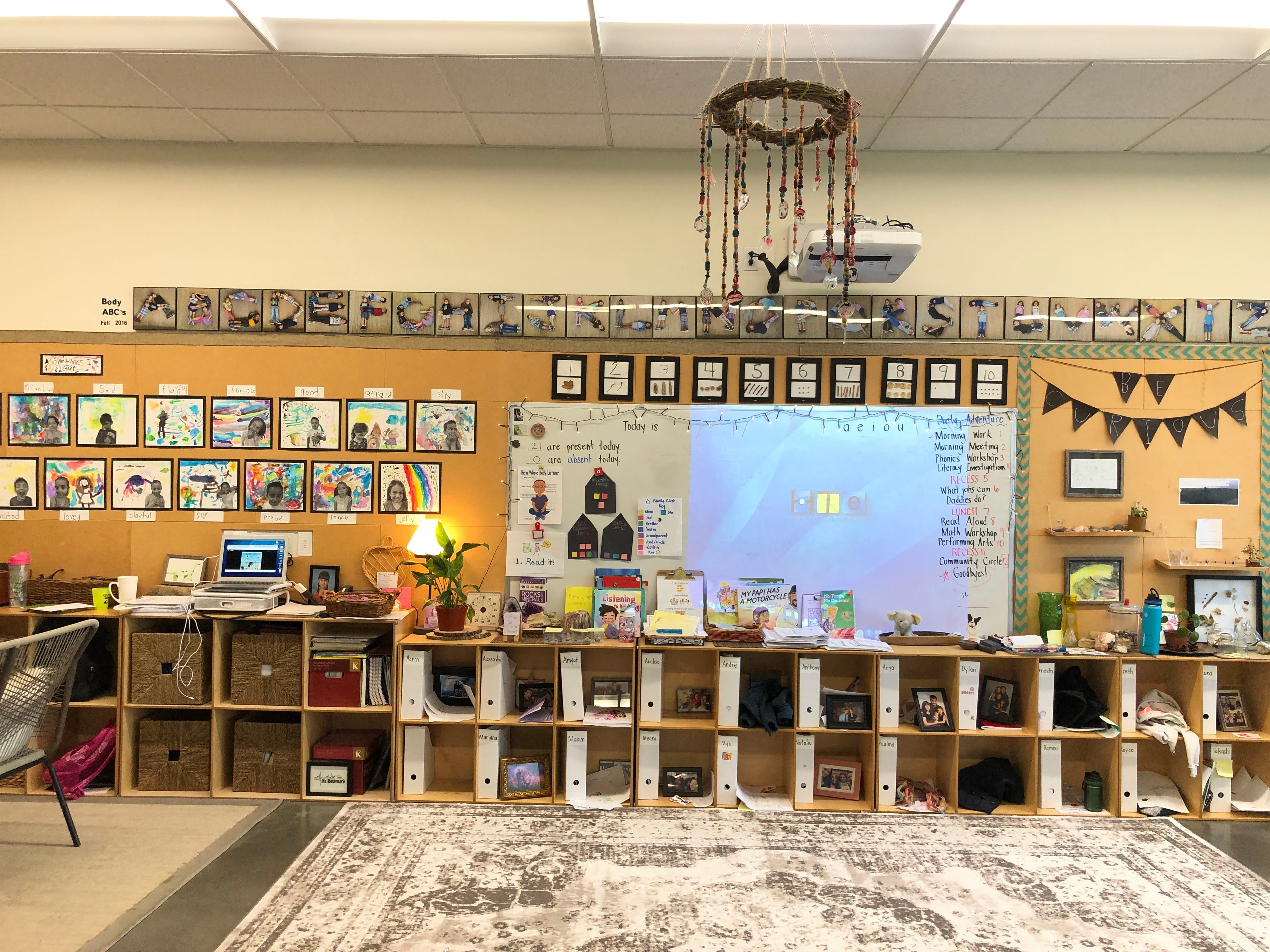
In this photo we see many elements that can enhance classroom environments:
Lighting. A warm lamp draws attention to the front.
Plants. Even the smallest house plants around the room make it feel like a more organic, and less institutional, environment.
Student work. The examples of student work are either framed with actual frames or attached to paper with a black background. The work is curated, arranged beautifully, and is original (no two pieces of student work are alike i.e. hand turkeys.)
Objects. Other objects are added to the space including the carpet and the decoration hanging from the ceiling.
The other element that is critical for a classroom space is sound. I have Spotify playlists for many of the activities we do in the classroom: writing, reading, performing, artmaking, and playlists for the opening and closing of sessions. For a powerful example of using music in a classroom, read 5th grade teacher Adrian Neibauer’s piece on “attentive listening.”
Beyond the Classroom
Dan Bisaccio is the biology teacher featured in Robert Fried’s The Passionate Teacher. Even in his retirement Dan leads nature walks in the woods, fields, and around the lakes in his New Hampshire community. His high school biology class spent every day in the woods behind the school identifying plants and animals and tracking changes in the habitat. It’s nearly impossible to be in nature with Dan and not absorb some of his passion for biology. He uses no textbooks. There are no tests. His students and he do actual fieldwork in New Hampshire and in the Yucatán peninsula, and they send their research results to the Smithsonian. There is no better way to transform classroom spaces than moving beyond the everyday walls.
The woods behind the school. A ship on the sea. A house plant. Yellow butterflies. Each a way of turning the quotidian into something a little more extraordinary.
Wow, I think the sentence “turning the stagnant into the brilliant “ says it all. That for me is a pedagogy of magic.
Your piece made me think of Ms Paty, my 9th grade language arts teacher. We read the odyssey by seating in a circle and listening to the text being recited. The classroom transformed for those 50 minutes, and I felt that my understanding of the Odyssey was deeper because of that.