

This post is part of an ongoing series of multimodal approaches we used to work with various texts at the annual Habla Teacher Institute in Mérida, Mexico.
Schoolishness is a term coined by Professor Susan Blum that she defines as “educational practices that emphasize packaged ‘learning,’ unimaginative teaching, uniformity, constant evaluation by others, arbitrary forms, predetermined time, and artificial boundaries.” When I first learned about this term from Adrian Neibauer’s article Scutwork, it seemed to perfectly capture the teaching and learning experiences I’m always seeking to avoid—tasks we give to students simply because that’s what’s always been done in schools: worksheets, multiple-choice tests, having everyone around the room “report out,” writing a response paper after reading a book.
Instead, when we’re introducing an activity in the classroom, one question we always ask is “Is it authentic?” My colleagues at the Habla Teacher Institute, Cynthia Weiss and Tommaso Iskra de Silvestri, always root their visual arts teaching in real-world models. For instance, in Mexico when we teach photographic portraiture to students, we introduce them to Mexican photographers Flor Garduño, Graciela Iturbide, and Juan Rulfo.
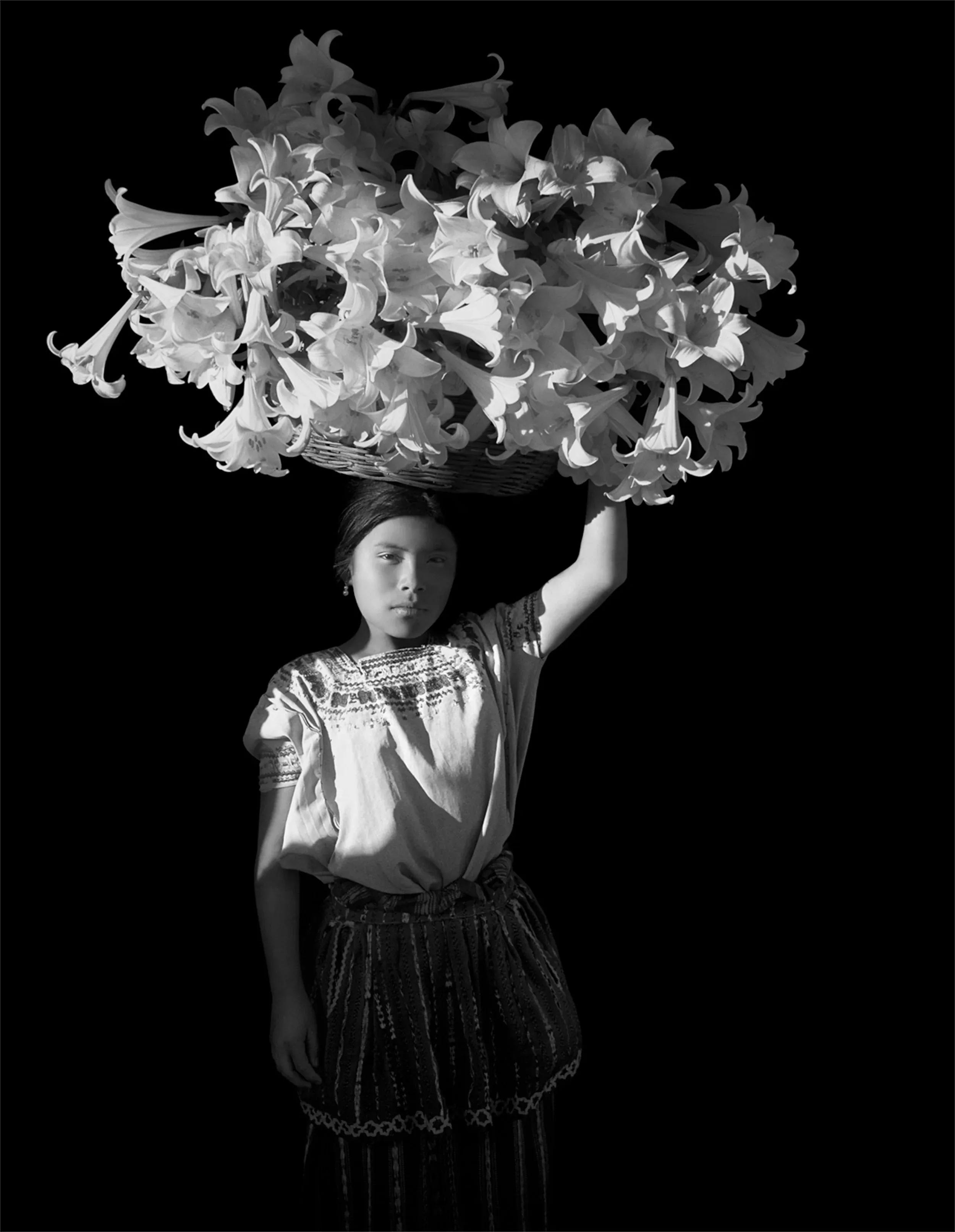
By showing students model photographs, we give them a much richer visual vocabulary to draw from when they take their own photographs, rooting their own work in an authentic tradition of photographers who came before them.


Authentic Models
Because I often lead theatre and performance activities, the challenge for me is how to build these experiences from authentic theatrical practices. There are many theatre games and activities that have been passed from educator to educator. Even though students are moving, I’ve found these activities often lack purpose and meaning in much the same way as traditional “busy work” in the classroom. When I lead performance activities, I try to root them in actual theatre practices. Since the models for theatre are, well, in the theatre, this has often been a challenge in the classroom.
I recently watched David Byrne’s performance of American Utopia directed by Spike Lee on HBO. For this year’s Institute, It occurred to me that Byrne’s staging would be an ideal model to stage performances in the classroom.
There were several elements of American Utopia that caught my attention.
A) Sound. The instruments are on the stage and the musicians are part of the choreography. Byrne actually has a song in which he introduces every musician and each one begins playing their instrument until, after all are introduced, they launch into the song, “Born Under Punches (The Heat Goes On).”1
B) Text. Byrne and his band are performing a range of songs and Byrne often comments on various topics. Of course we’d expect him to share his music, but what caught my attention was how seamlessly the words of the song, the choreography on stage, and the music all formed a unique whole.
C) Dance. Although the entire cast, musicians and all, are part of the choreography, there are two primary dancers who are often performing their own choreography. It was actually these dancers that inspired the activity I describe below.
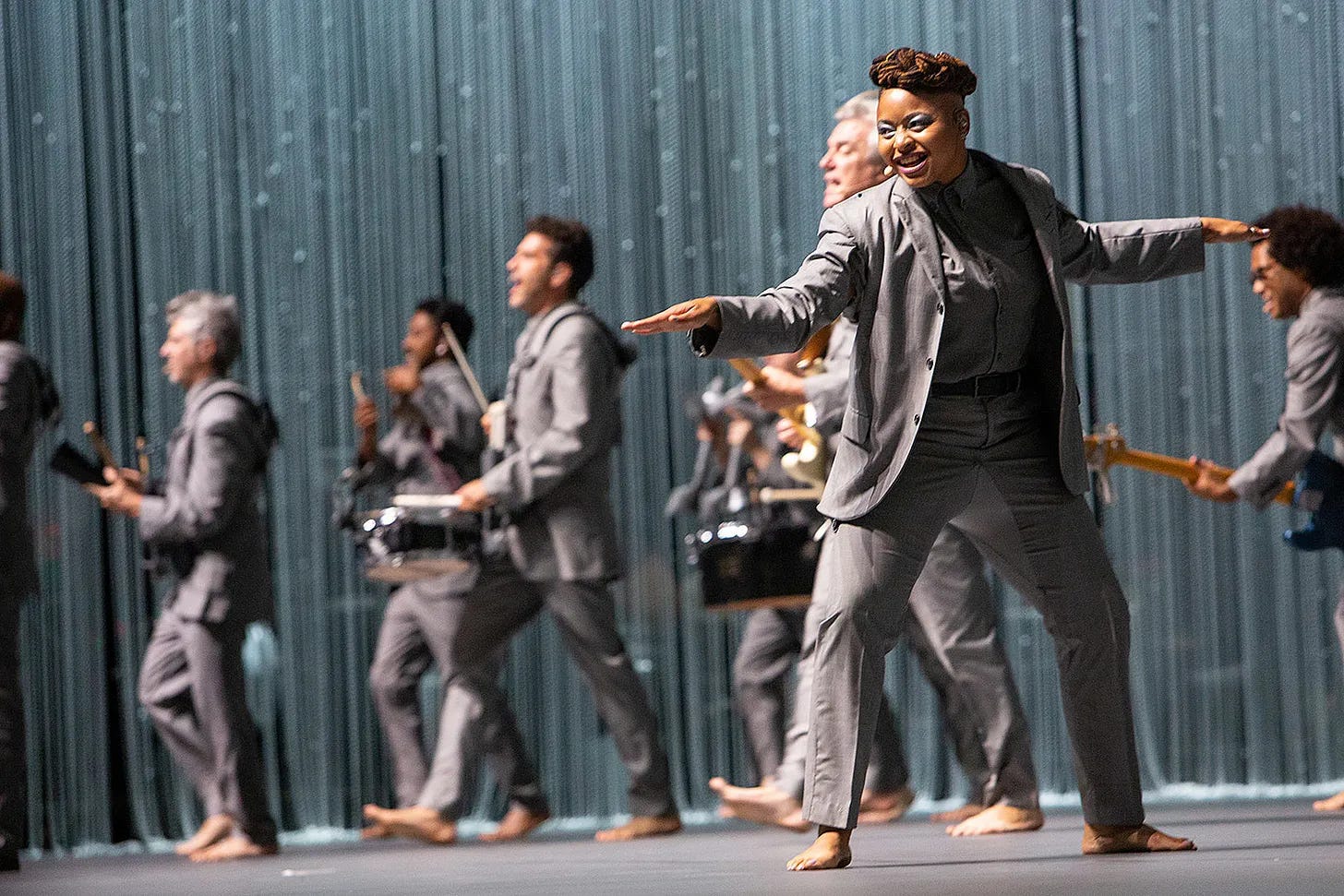
All of these elements—sound, text, and movement—would be incorporated into our final performance. At the beginning of the week I was laying the foundation for each of these in the approaches we were using for entering text. I’ve previously described how we entered text by performing portions of the text itself and how we entered the text through the sounds of words.
Taking inspiration from David Byrne’s dancers, here is the process we used to combine text and movement.
