

When it’s time to design a learning experience—a lesson, a unit, a curriculum, or a professional development workshop—we almost always begin by looking for just the right text. For longer experiences, we might build around a constellation of texts, but even then, those larger experiences (say, a semester-long unit) are still rooted in an anchor text.
This article is the first in a series exploring some of the key texts we’ve built learning experiences around—and the ideas and student work they’ve inspired. My goal is to offer teachers ideas for books, activities, and approaches that can help them design meaningful learning experiences at various grade levels. Most of these texts work across ages; we often use picture books with adults and older students just as readily as we do with younger ones.
With each book in this series, I’ll provide:
an essential question—an open, generative question that invites collaborative exploration for both teachers and students
a project-based approach to teaching the text, involving original student work and a culminating performance or exhibition of learning
complementary readings for various grade-levels
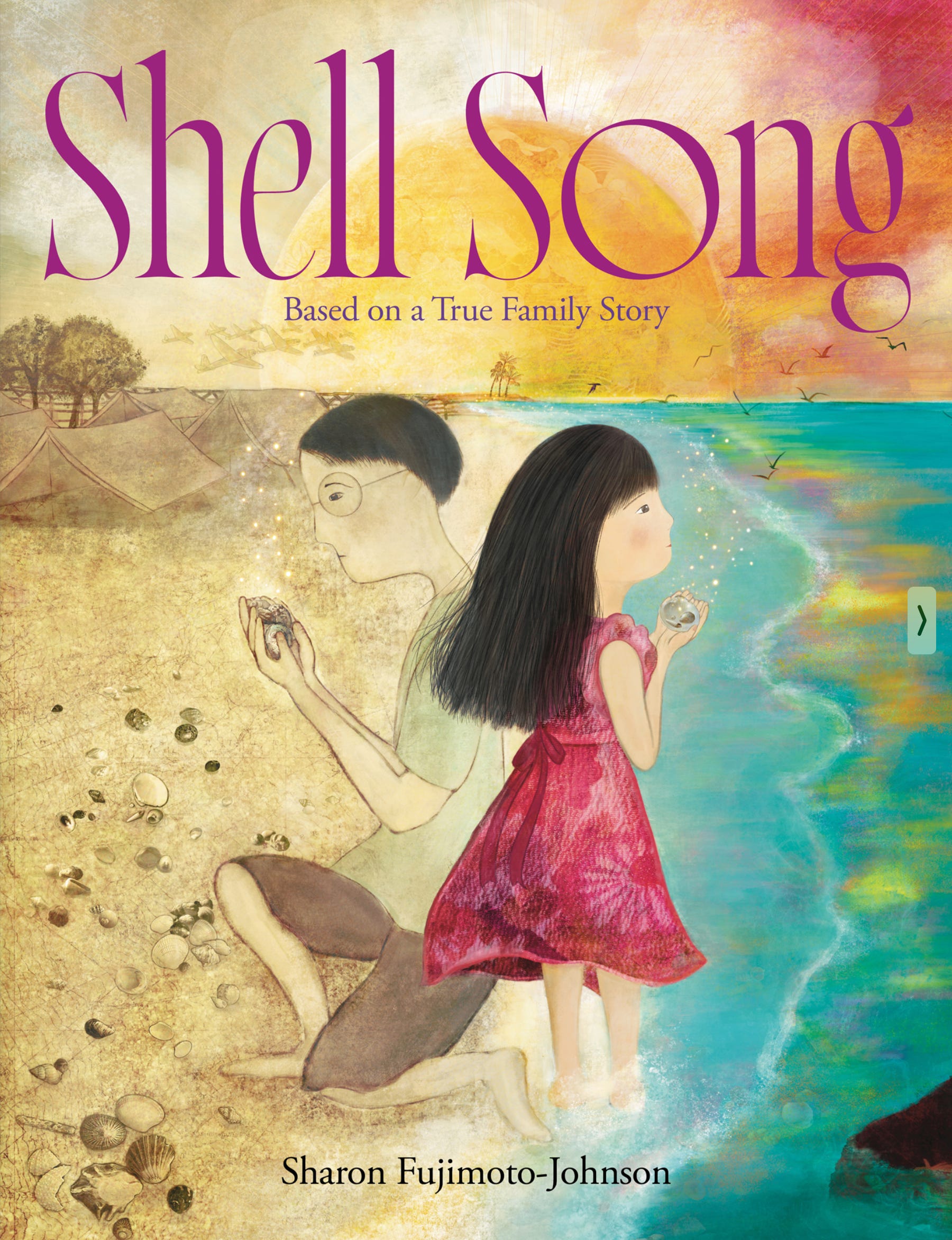
Shell Song
The first book in this series is one we haven’t yet worked with directly, but that we’re planning to use at our Winter Institute in Chicago. Shell Song by Sharon Fujimoto-Johnson tells the true story of her grandfather’s internment in Honouliuli Camp in Hawaiʻi during World War II. In the camp, the grandfather spends his time collecting shells:
When he wasn’t forced to work,
my grandfather walked the perimeter of the fence.
Every now and then, he stooped to pick up a glittering shell.
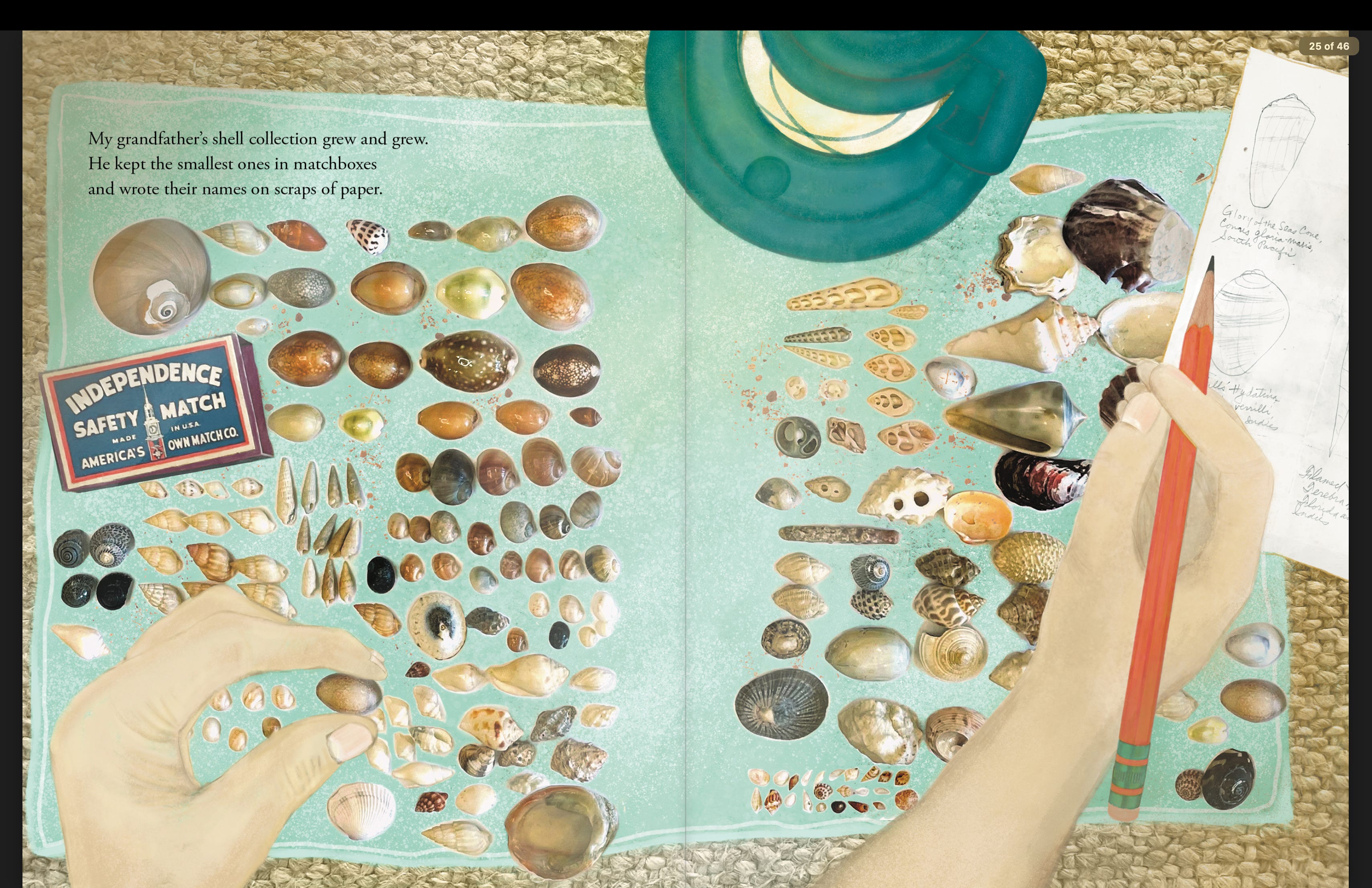
The book is beautifully illustrated with a blend of photographs of her grandfather’s actual shell collection collaged with Fujimoto-Johnson’s luminous drawings. Throughout the text, she pairs each shell with its scientific name:
This one, a bowl filled with sun,
like his beloved Mercenaria stimpsoni.This one, a strong, slender spire,
like their firstborn, Oxymeris cerithina.
One full spread in the book shows the complete shell collection—an image of careful attention, inheritance, and remembrance.
IDEA 1
Essential Question: What do we inherit?
In our book A Reason to Read, we described a unit led by Jan Mandell in St. Paul, Minnesota centered on the concept of inheritance. When I read this book again it reminded me of the essential question we used for that unit, What do we inherit?
Fujimoto-Johnson’s illustrations include not only her grandfather’s shells, but also photographs of “soil from Sand Island Internment Camp and Honouliuli Camp, fabric from my grandmother’s wedding kimono and obi, family photos, and fabric textures from my father’s wardrobe.”
This layering of materials invites further questions:
What do we leave behind in this world?
How do we wish to be remembered?
How do we connect with our ancestors?
These questions open up a rich terrain for writing narratives about our ancestors and the legacies—tangible and intangible—we’ve inherited.
Student Work
Ode to an Object. Students bring a family object (or a photograph of one) and write an ode to it in the style of Pablo Neruda (see Ode to the Onion and Ode to my Socks).
Stories of our Ancestors. Students interview relatives or people they know in their community to write the story of one of their ancestors. Community members as an option for interviewees is important for students who might not have direct access to family members.
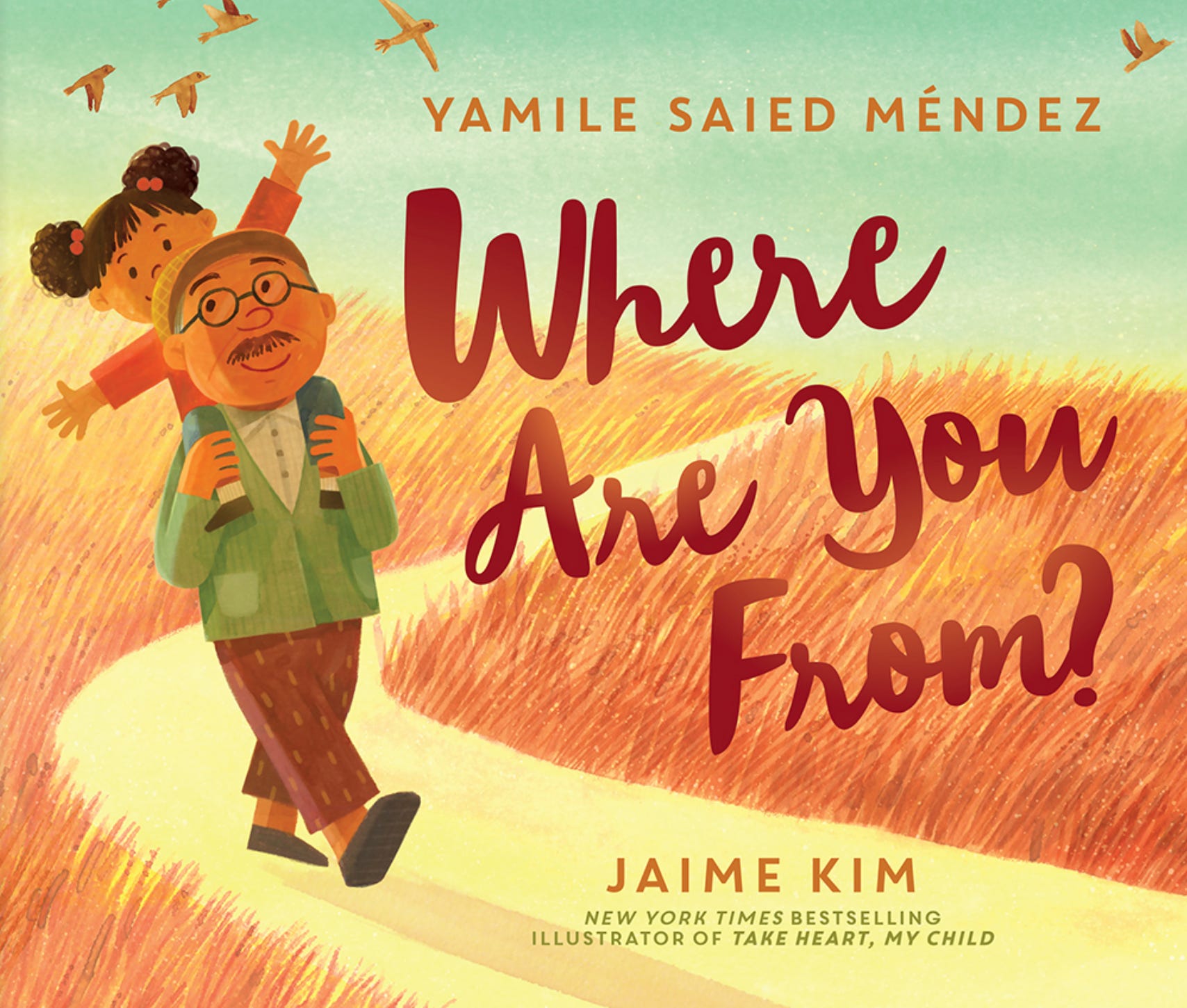
Where I’m From. Poet George Ella Lyon’s iconic poem “Where I’m From” has inspired countless others to reflect on the people, places, and objects that shaped them. Students can use this brainstorming sheet to create their own poems. For younger students pair Shell Song with the book Where Are You From by Yamile Saied Méndez and Jaime Kim.
IDEA 2
Essential Question: What are the small wonders of our world?
The grandfather’s shell collection in Shell Song invites us to notice the small wonders that surround us. Alejo Medina and his students in Chicago used magnifying glasses and microscopes to collect and analyze small objects from both the natural world and their homes. This kind of work can lead to deeper questions about collecting, curating, organizing, and naming.


Student Work
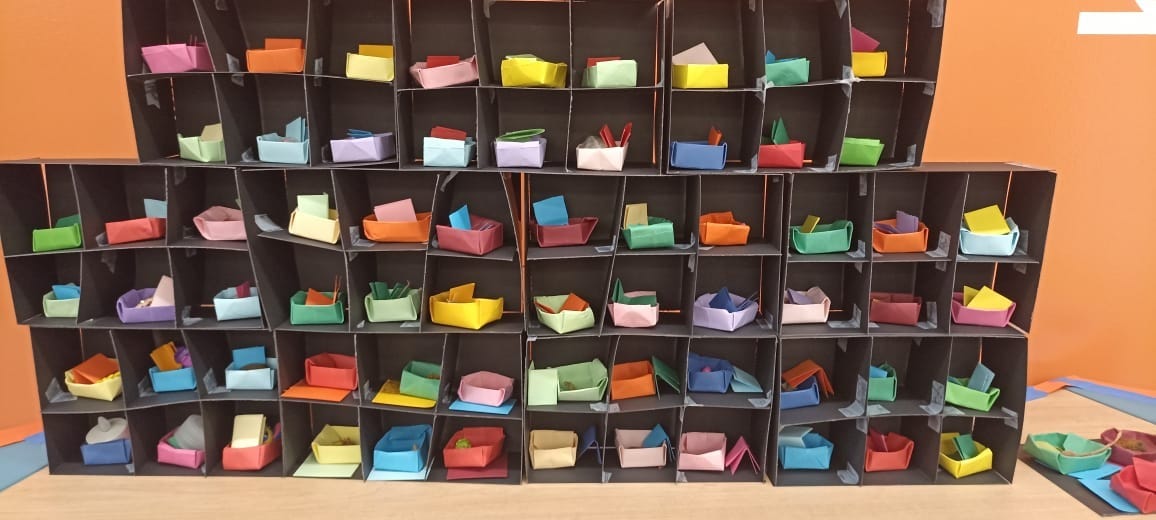
The Cabinet of Wonders (also known as a Cabinet of Curiosities or Wonder Room) began in sixteenth-century Europe, when explorers and collectors assembled rooms full of objects from around the world. Some of these collections were gathered for scientific study; others reflected colonial power and wealth.
From today’s perspective, students can explore both the wonder and the ethical implications of collecting. In the classroom, they can create their own Cabinet of Wonders with tiny natural objects—shells, stones, leaves—carefully gathered and labeled. Fujimoto-Johnson’s naming of each shell offers inspiration to consider how naming and classifying are acts of observation, respect, and relationship.
Paired Texts
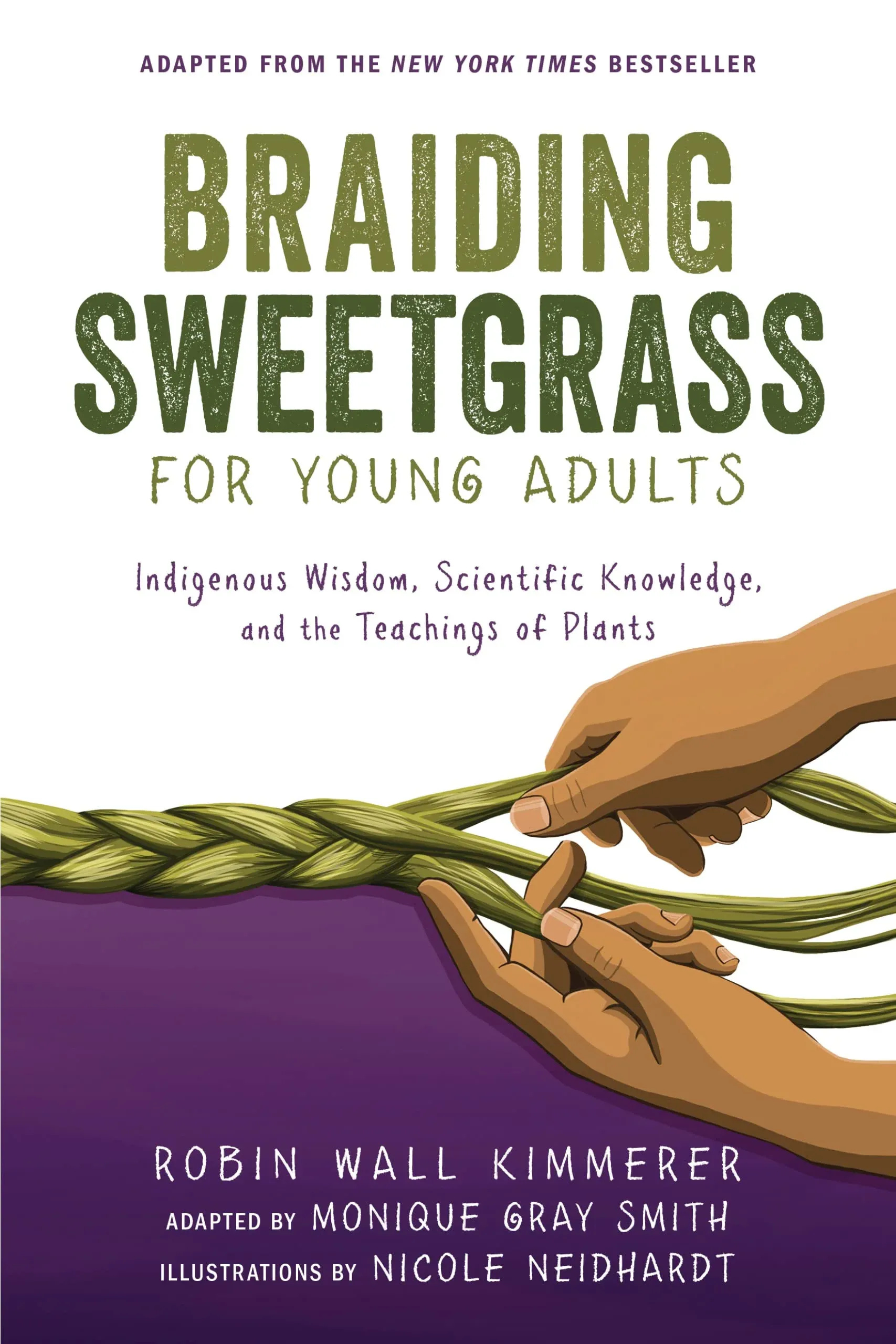
In Braiding Sweetgrass, botanist Robin Wall Kimmerer writes about the importance of naming and knowing the living world around us:
“Names are the way we humans build relationships, not only with one another but with the living world.”
As students collect and study natural objects, selections from Braiding Sweetgrass help them to reflect on how naming and caring are deeply connected.
Several children’s picture books also resonate beautifully with this theme:
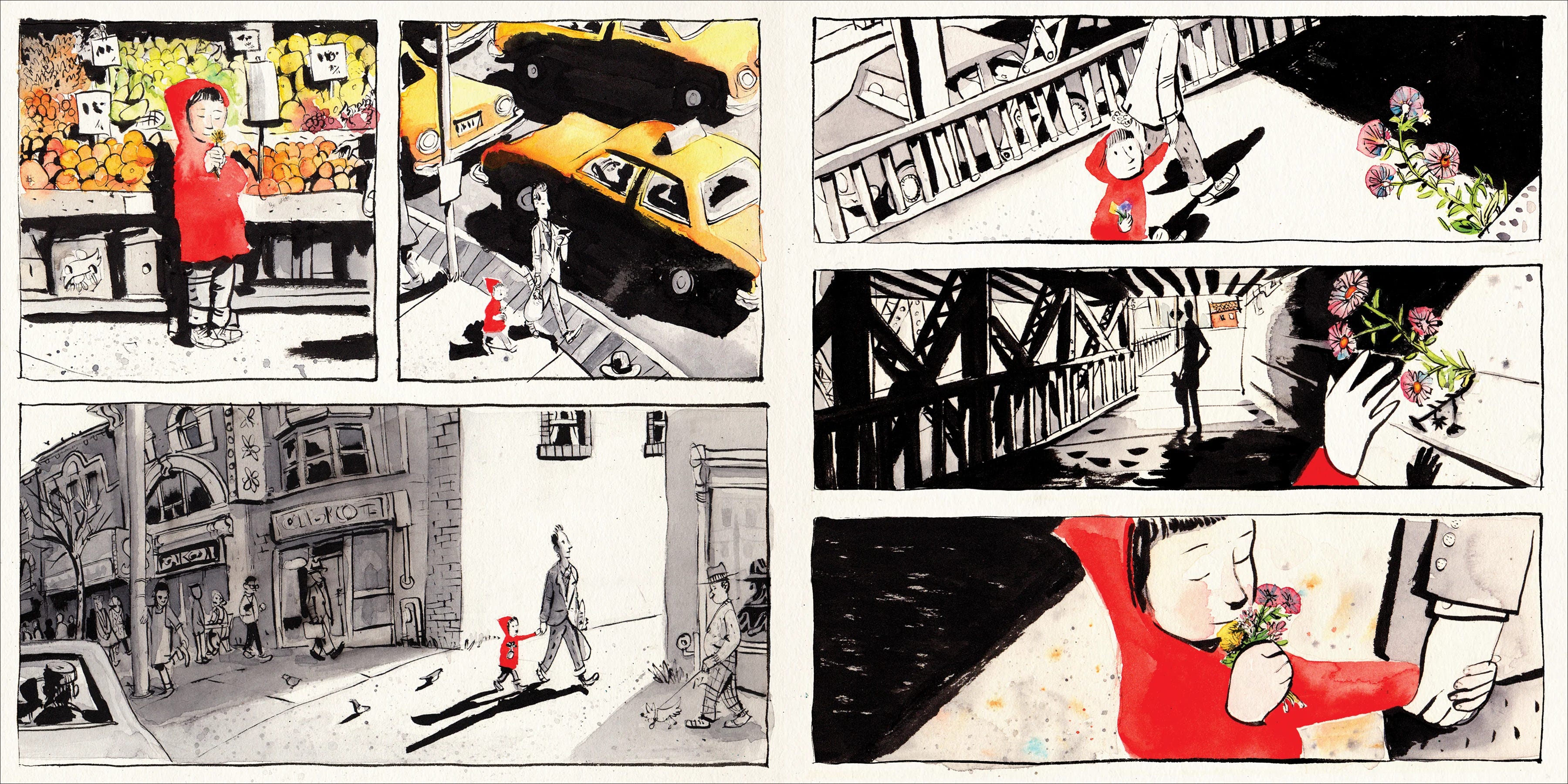
Sidewalk Flowers is a wordless book that follows a little girl and her father through a city. While the father stays absorbed in his phone, the girl quietly gathers flowers from the cracks in the sidewalk—a celebration of noticing and care.
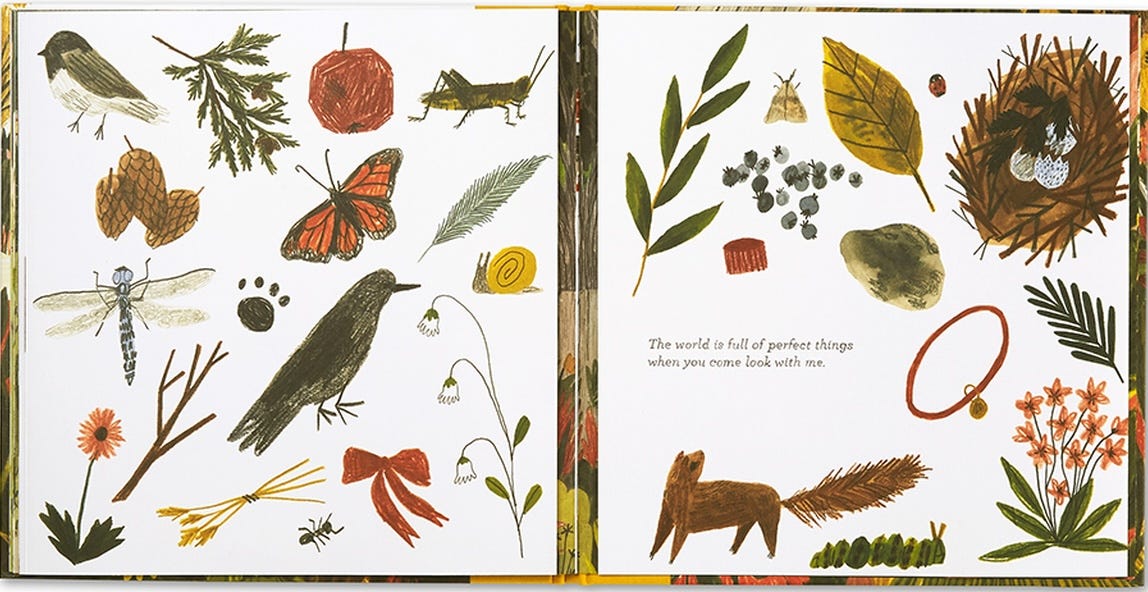
Tiny, Perfect Things is another book about an adult and child heading out for a walk.
Today, we keep our eyes open for tiny, perfect things.
Like here, on the ground, a yellow leaf that the wind blew down.
By the book’s end, the author reminds us, “The world is full of wonders, no matter where we go.”
Shell Song and these paired books are about paying close attention and honoring the natural world—they are about embracing the small things that brings us joy.
Thank you for sharing these beautiful resources and ideas! Love it all.