

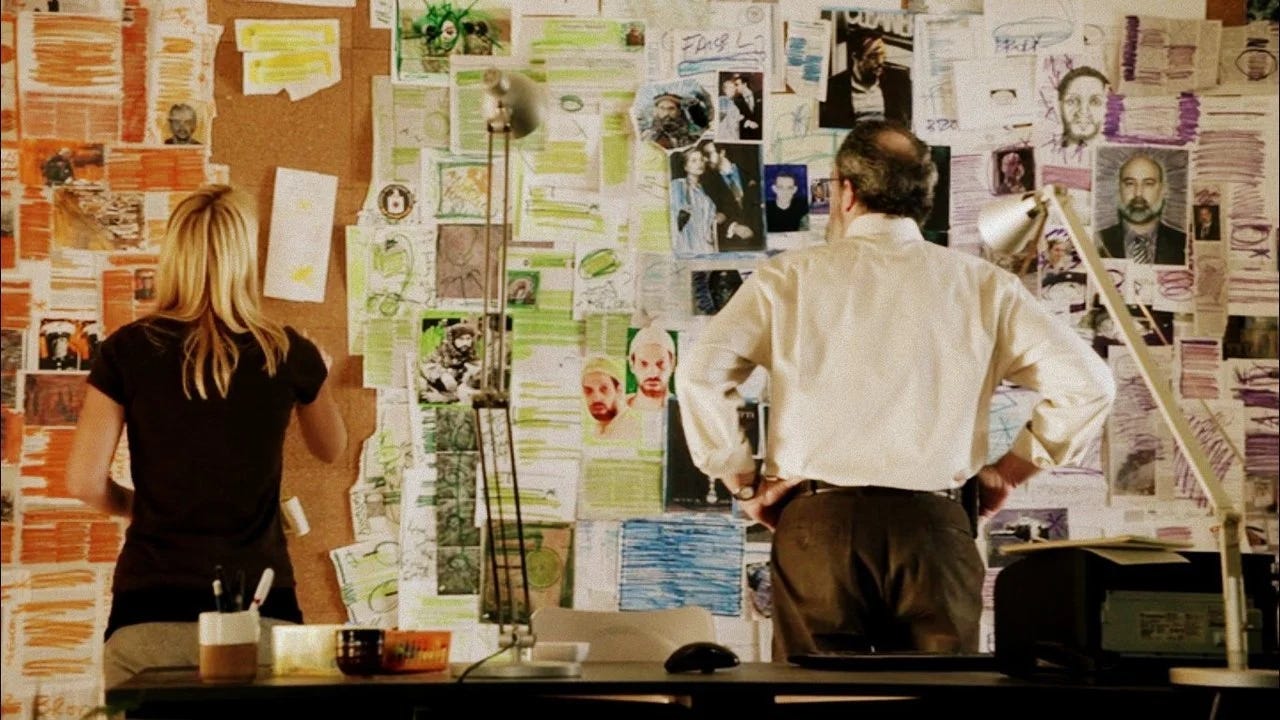
One of my favorite moments in a movie is when detectives (i.e., Mulder and Scully) stumble upon a cork board in a secret room covered with a character’s obsessive research on aliens, vampires, or some massive hidden government conspiracy. I’ve always loved the organization of a multitude of photographs, articles, maps, and various ephemera. The walls reveal the thinking of a character—how that person organizes images, how they annotate text—they are windows into how their mind works and how they see the world.
This is especially evident in boards created by mathematicians. Stephen Hawking had a blackboard in his office at the University of Cambridge filled with ideas. It’s a wild collection of quotes and doodles including lines like “DON’T FORGET TO DOUBLE-CZECH YOUR RESULTS” and an alien Pan-like humanoid exclaiming “IT DOESZ WORK!!!” The blackboard was from a conference in 1980 that Hawking attended with colleagues, all seeking the answer to the “theory of everything”—theorizing how it might be possible to combine the rules of general relativity and quantum mechanics. The blackboard was a playful and welcome distraction from the heavy ideas of the conference.
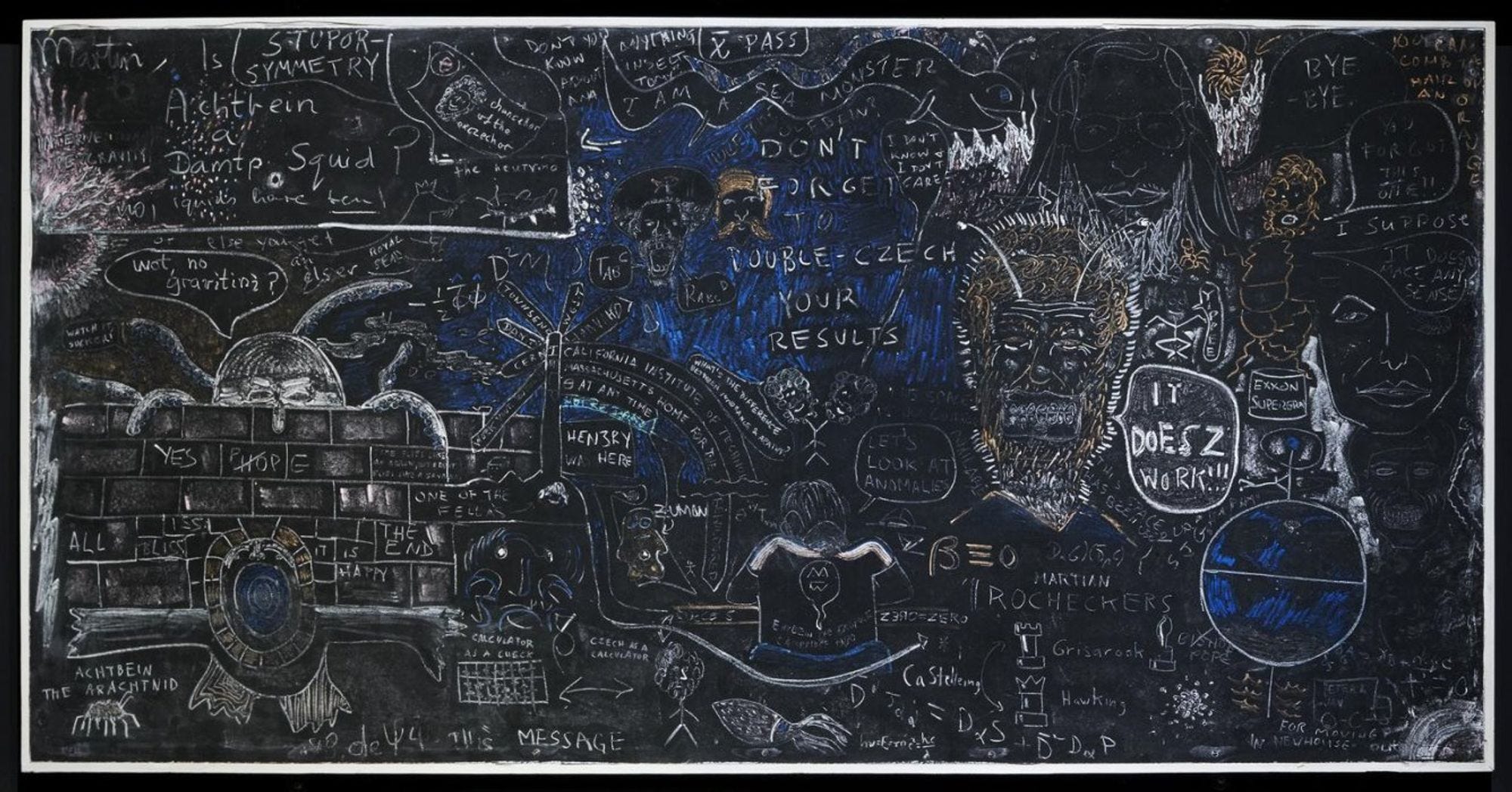
Juan-Andres Leon, a curator at the Science Museum in London, the current home of the board, writes:
None of this blackboard’s scribblings are by Hawking’s own hand (he had stopped writing on blackboards in the mid-1970s), but were made by a dozen collaborators during the workshop.
This deepens rather than detracts from the interest of the blackboard and indeed one of the reasons we chose it for the exhibition was to evoke the collective nature of scientific work, where Hawking’s co-authorship is evident, even if not drawn by his own hand.
He further explains that “senior researchers rarely work on their own but are rather part of a distributed cognition system.”
Distributed Cognition Systems
Traditionally, classrooms in the United States have been organized around the idea of the student as an individual performer. This idea grows out of a long history of schooling shaped by industrial models of efficiency and measurement. From the early 20th century, as public education expanded, systems were designed to rank individuals in the form of timed tests, grade point averages, class rankings, and high-stakes exams. Even the physical design of classrooms—rows of desks, forward-facing, spaced just enough apart—reflects this. How many times growing up did we hear “Keep your eyes on your own paper.” (I’m talking to you Mrs. B.!)
And yet, that’s simply not how the world works beyond school. In nearly every profession, knowledge is constructed and applied through “distributed cognition.” If a doctor is facing a complex case, they might consult a multidisciplinary team. In high-stakes litigation, lawyers work collectively. Harrison Ford, known for his iconic roles, stated in an interview,
Acting is not about competing. Acting is about cooperating. Acting is about collaboration. It's about your utility, your usefulness, your capacity to add to the work that has already been done and will be done. You're just part of a team.
Which raises the question: why is so much of learning in our schools still focused on the individual student? I’d rather my classroom look like that quantum physics conference, with groups of researchers taking on difficult questions, exploring solutions, and occasionally taking breaks to draw squids and other wondrous creatures on inventive boards in the break room.
Research Boards
I had Hawking’s board in mind when I thought of the idea of Research Boards. In January, a group of Brown University students visited our school Habla in Merida, Mexico for a short study-abroad experience. We took them through a series of pedagogy workshops that connected deep content to meaningful engagement. Our key questions were:
What sustains life? What sustains us?
We guided them through an inquiry-based experience (described previously in this article) learning about the Europa Clipper mission—a NASA mission designed to determine whether Jupiter’s moon, Europa, has the conditions necessary to support life. The question, “What sustains life?” gave us our focus for scientific research, while the question, “What sustains us?” informed our reading of poet laureate, Ada Limón’s, poetry. As part of the mission, her poem “In Praise of Mystery” was commissioned by NASA and inscribed on the spacecraft.
After learning about the Europa Clipper mission, students gathered in small groups around circular tables. On each table was a blank piece of butcher paper. They had around 45 minutes to research the question from a scientific perspective, “What is needed on a planet to sustain life?” The table was to serve as their collective answer to that question. We asked them to cite specific sources and not simply plug their question into AI. They were also free to doodle and draw in the spirit of the physicists’ blackboard. Because each student was concentrating in a different discipline, it truly felt like a distributed cognition system.


Although this was our first foray into Research Boards, I can imagine using this approach in many different ways: with online platforms, on classroom whiteboards, or—my preferred method—on an actual blackboard with chalk.
Research Boards have several implications for student learning:
Students focus on a key question, diving deeply into content and often discovering new and surprising insights—sometimes beyond even the teacher’s knowledge.
They use diverse modes of research, particularly the technologies available to them, and discuss together what counts as a valid source.
They learn from one another, especially those with deeper or broader knowledge in the area of focus. (In the example above, one student was specializing in biochemical engineering.)
They are at the center of the learning process. Ted Sizer’s maxim of “student as worker, teacher as coach” becomes fully visible—students do the heavy lifting of research while the teacher guides when needed.
They have permission to be creative and playful. Illustrations, drawings, and doodles illuminate group thinking.
If we want students’ thinking to reflect the way we actually work in the real world, then we need to create classroom spaces where students can work through ideas and work on products with each other. A research board is simple—a guiding question, an open surface (digital or analog), and time for discussion and note-taking. What matters is that students are doing the work of thinking together, not just staring at their own paper in fear of incurring the wrath of Mrs. B..
Download the Research Boards “How To” PDF here.
Inspiration and Resources
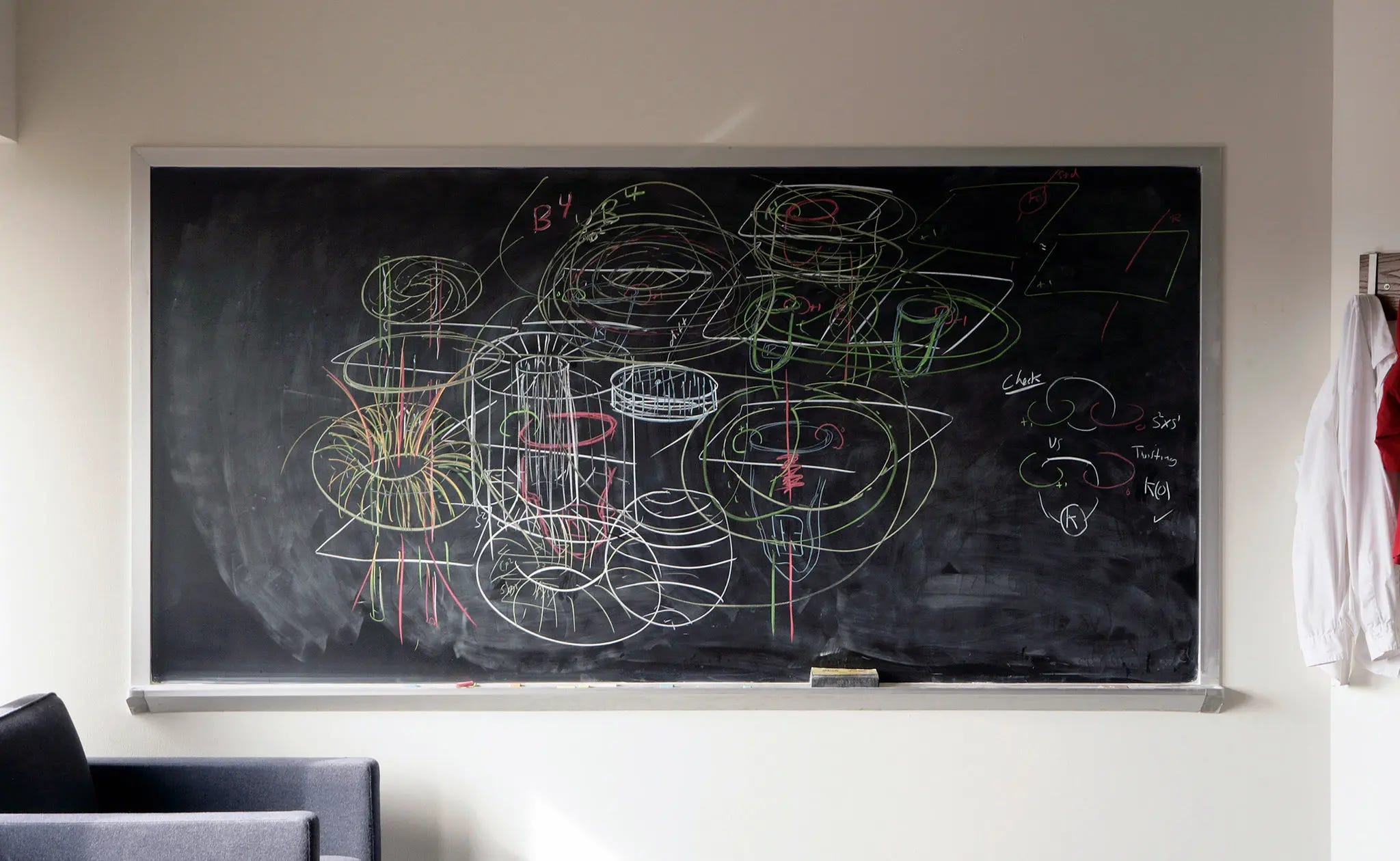
Mathematicians’ Blackboards
In researching different kinds of boards, I found this article in the New York Times featuring blackboards of mathematicians, stunningly photographed by Jessica Wynne. If I knew more about math teaching, I’d love to build an experience around these!
Note Taking
Reading Jenna Vandenberg’s article on note-taking and see the playful marginalia reminded me of how we can combine “serious” ideas with Stephen Hawking’s sense of playfulness.
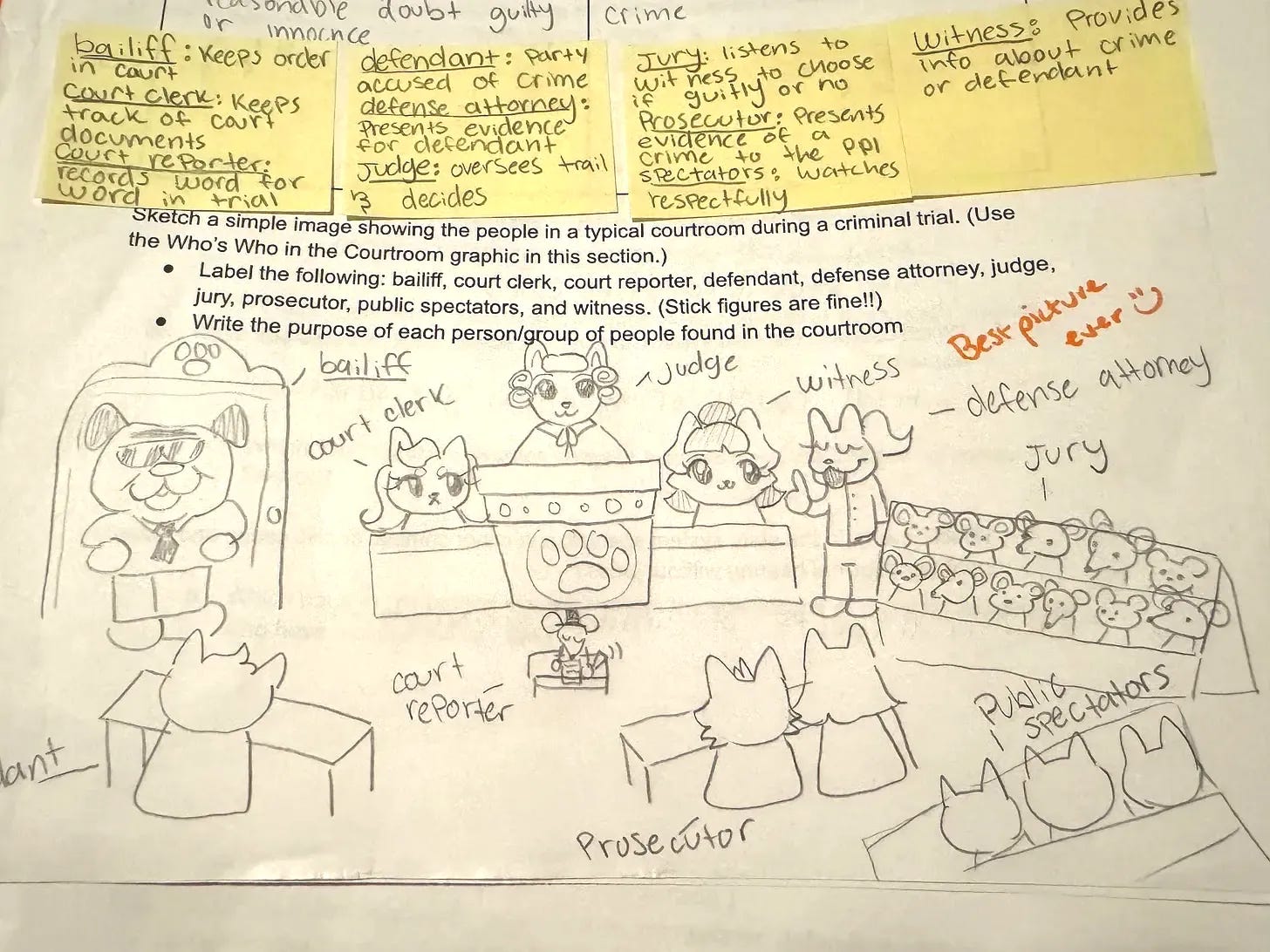
My Daughter’s Science Notebook
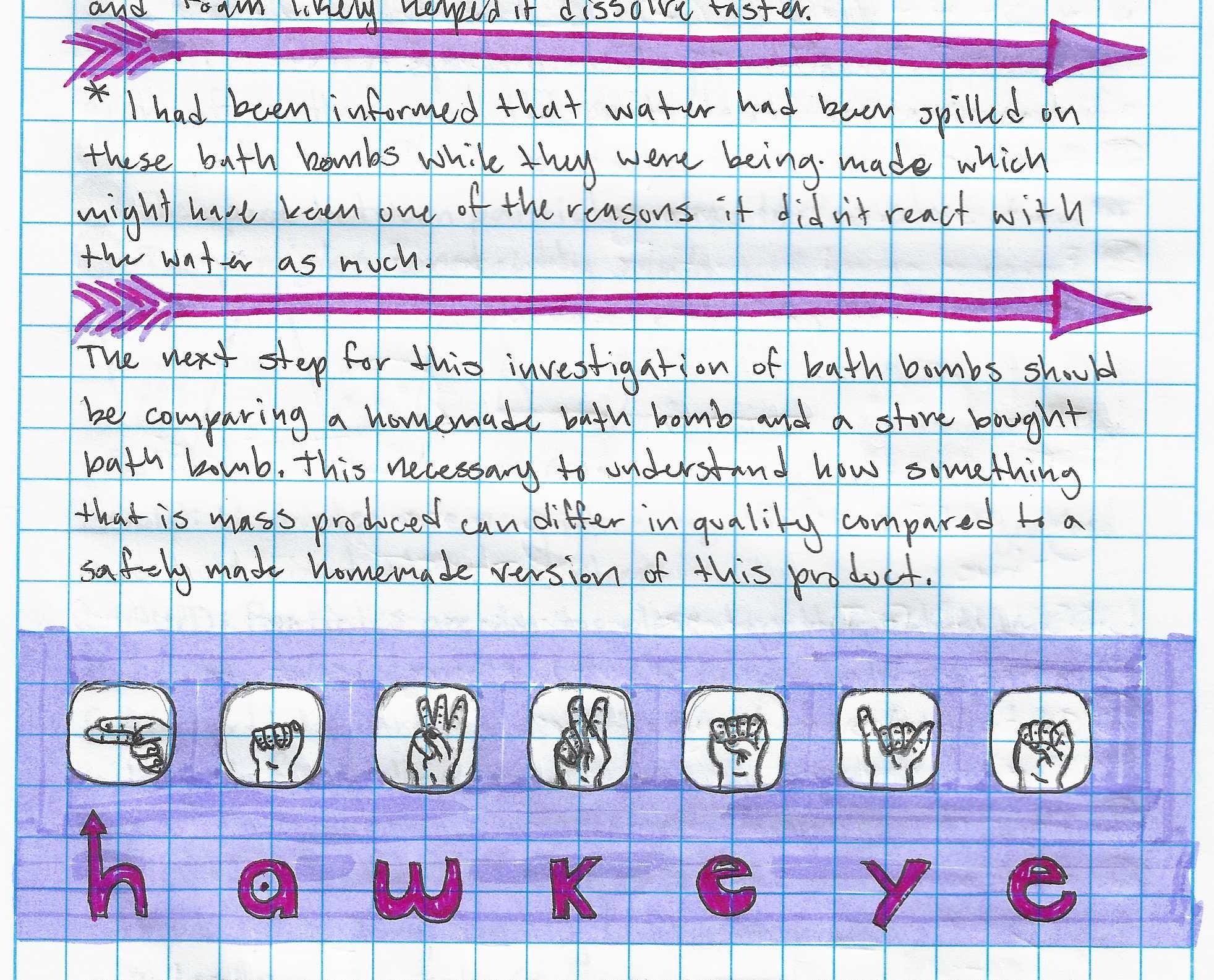
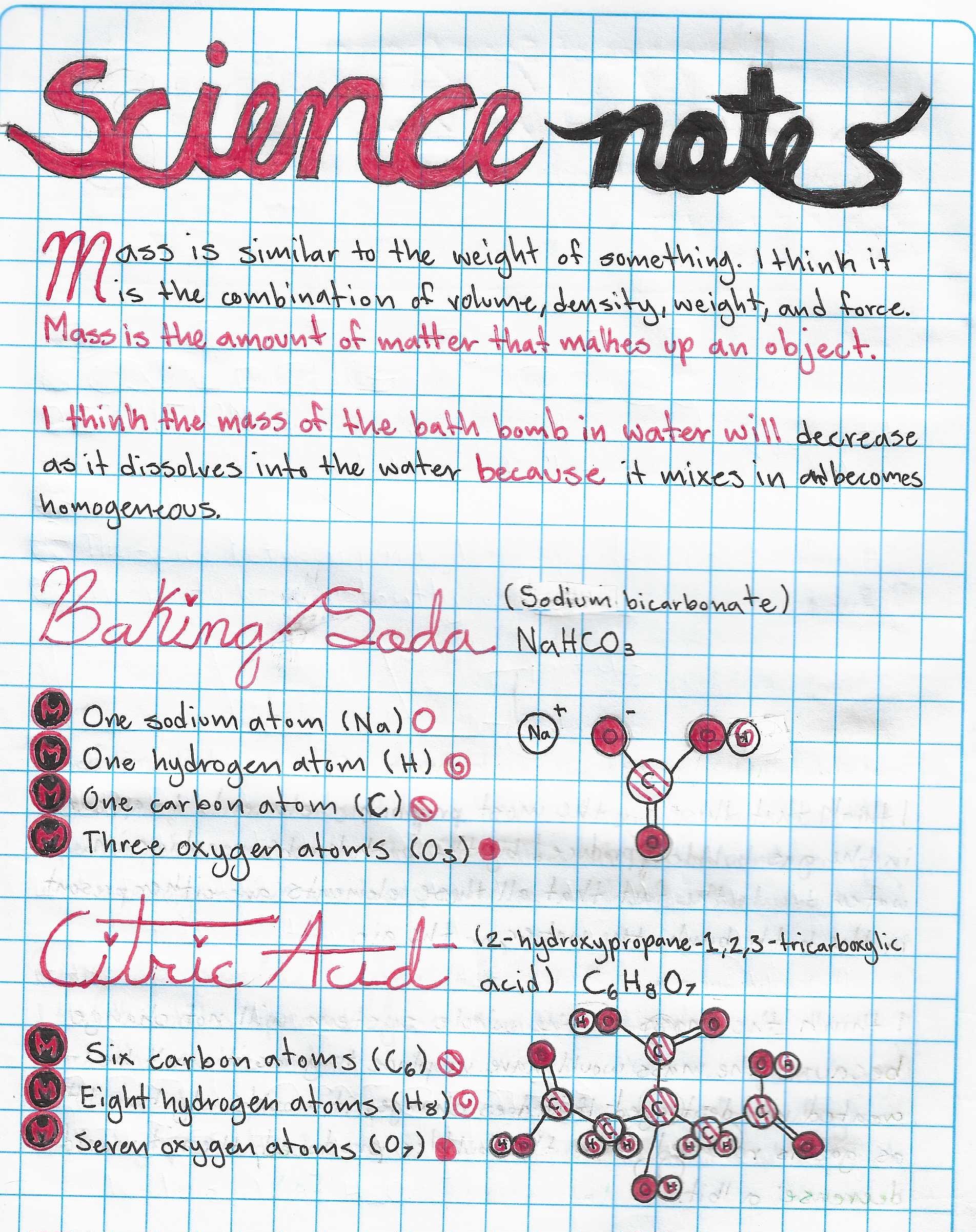
Just for fun, my daughter annotates all of her notes from her 9th grade science class in the style of different characters from the Marvel Universe. This inspired me to think about ways we can open up our classrooms to students’ individual passions, even in everyday tasks that might not initially seem creative. Can you guess the Marvel characters that inspired each illustration?
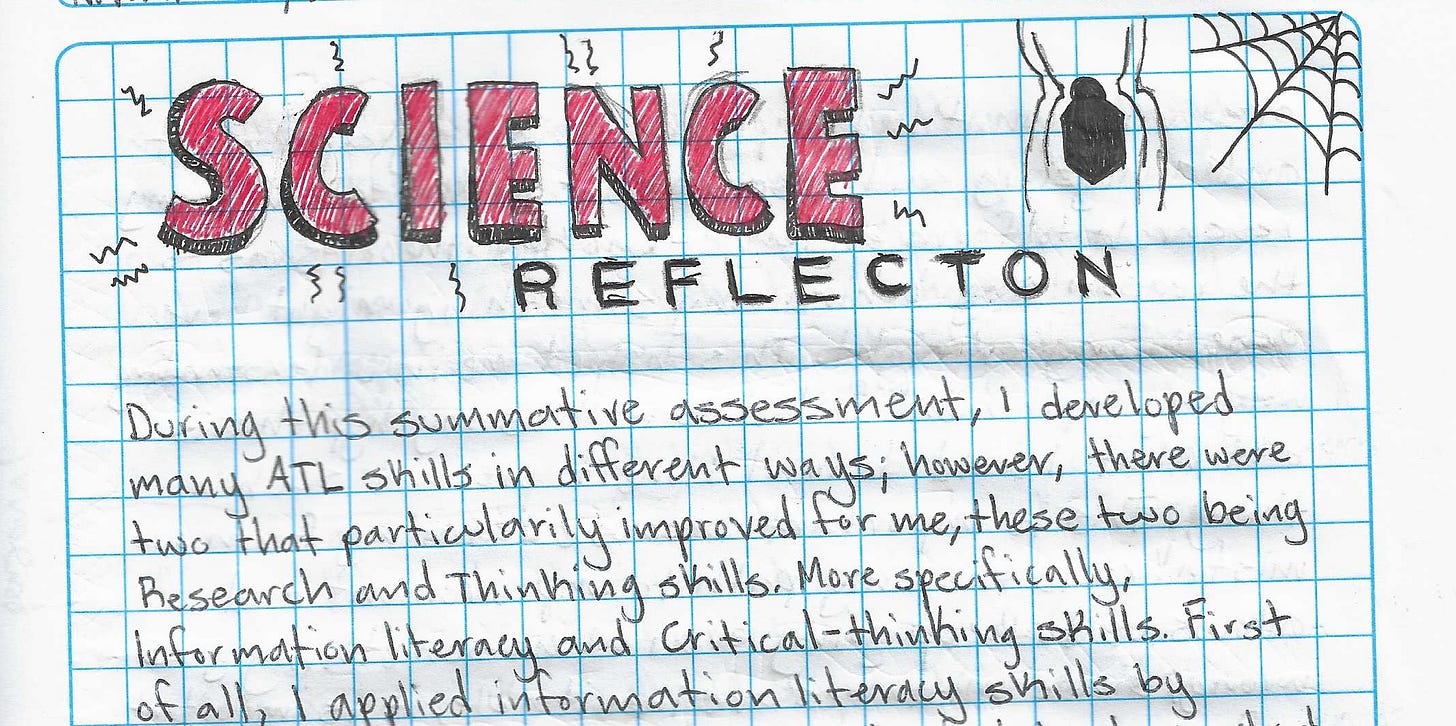
my favorite when I was a kid 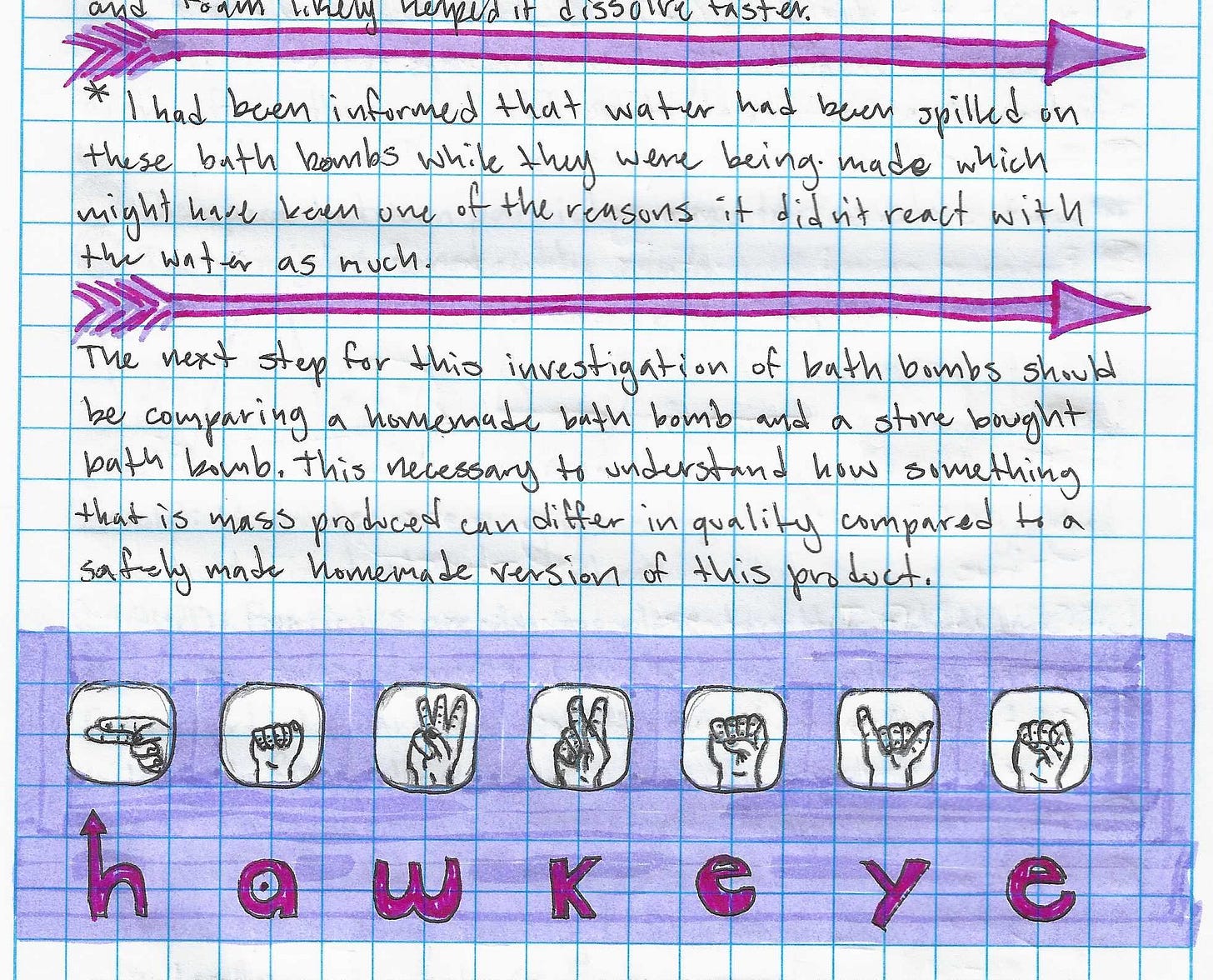
well, this one shouldn’t be hard 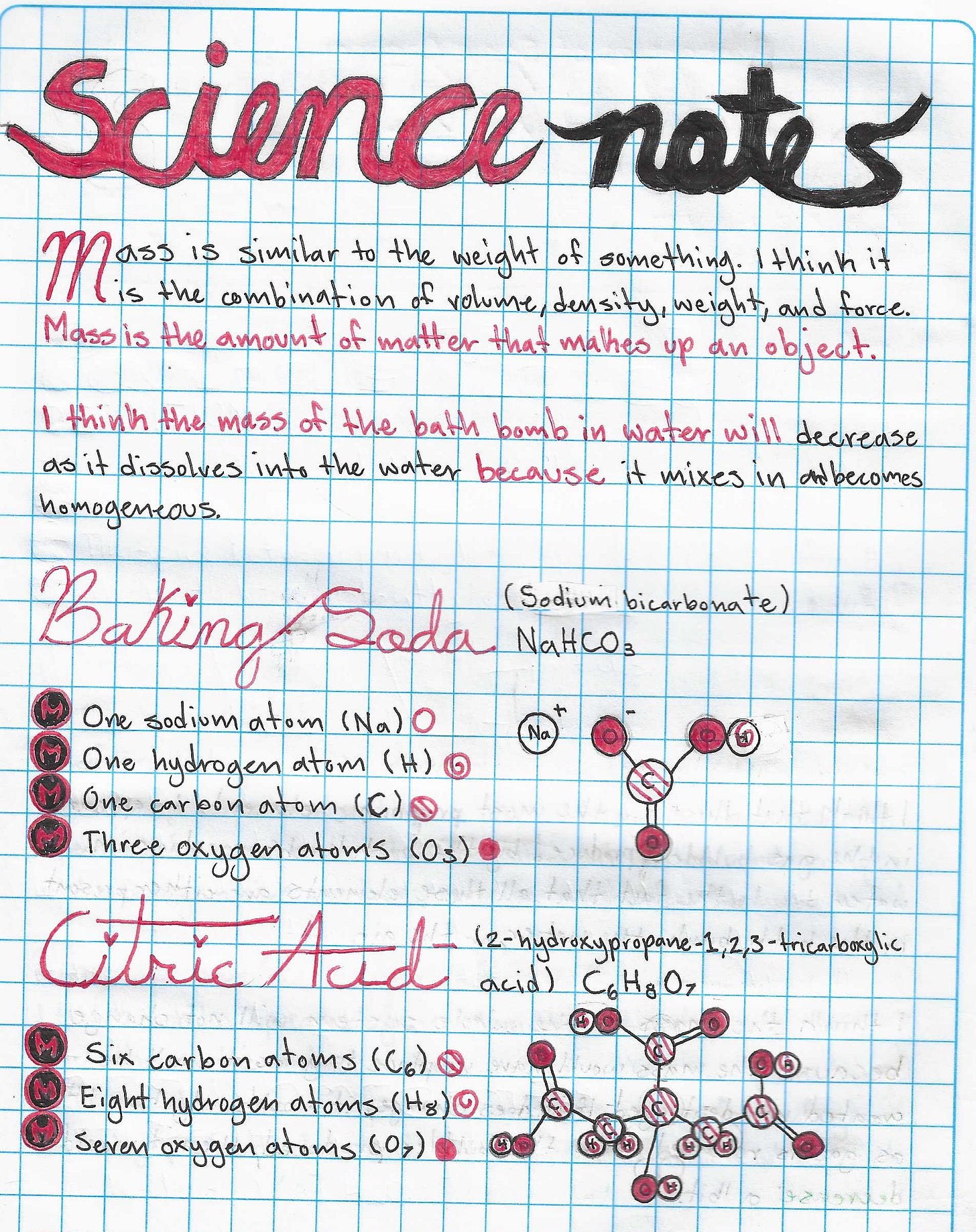
the challenging one
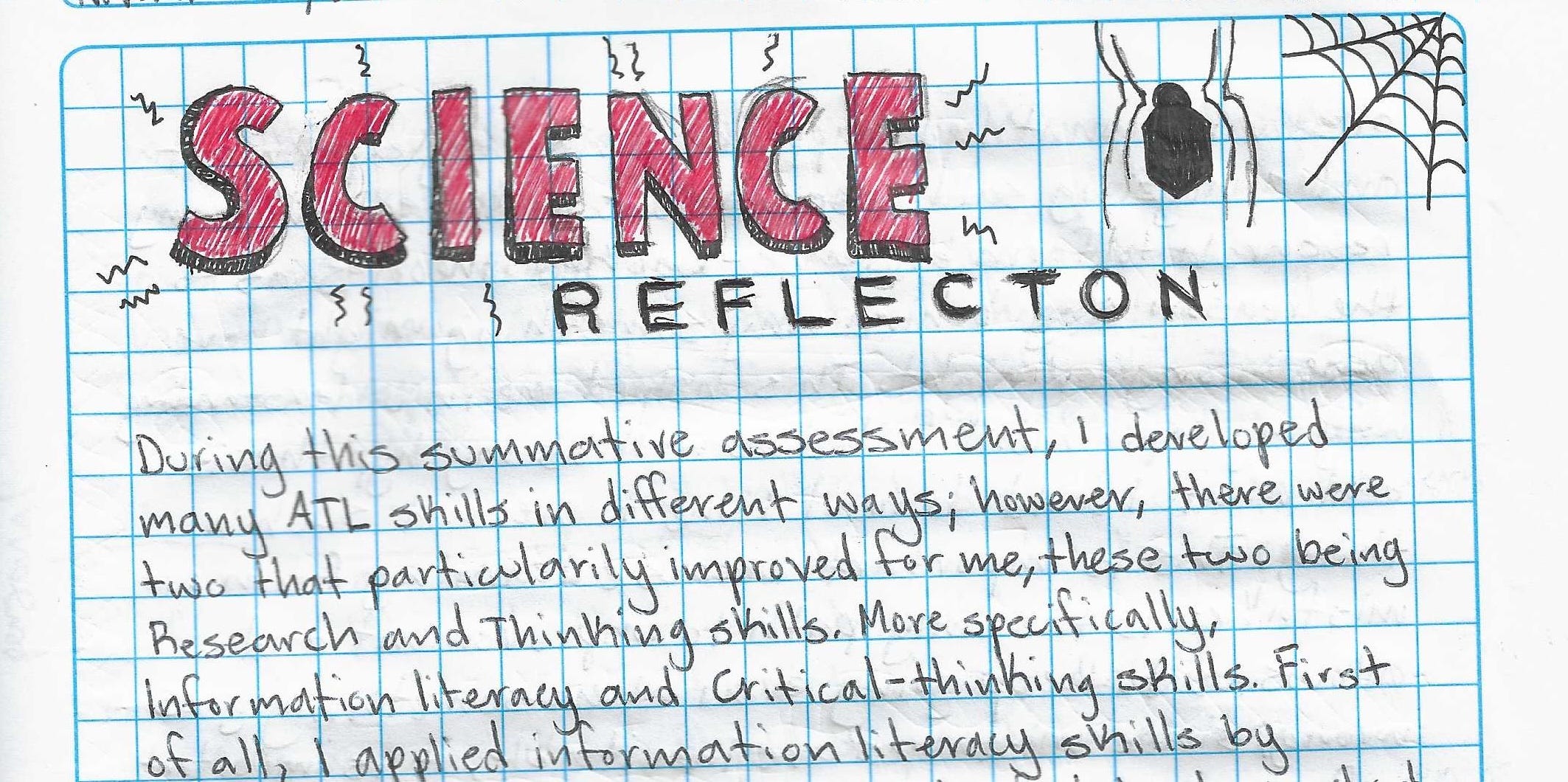
The notes in Sandra's notebook are fantastic! Thanks for sharing. I think they are even better than Stephen Hawking's.
This is also why I love using small whiteboards with students. I used to ask students to put down their ideas individually, then form a group of 4 and swap whiteboards to see each others' ideas and contribute to another small whiteboard forming a group model, and then gallery-walking the group models before ultimately creating a class model. Students who had many ideas could show them and those with fewer could pick them up along the way.
I'd love to hear an other routines people love using to make students' thinking visible in the classroom during the learning.
I'm not sure I belong in the same sentence as Stephen Hawking, but thanks for the nod :)
I LOVE your daughter's science notebook! I hope she has a spectacular pen collection.