

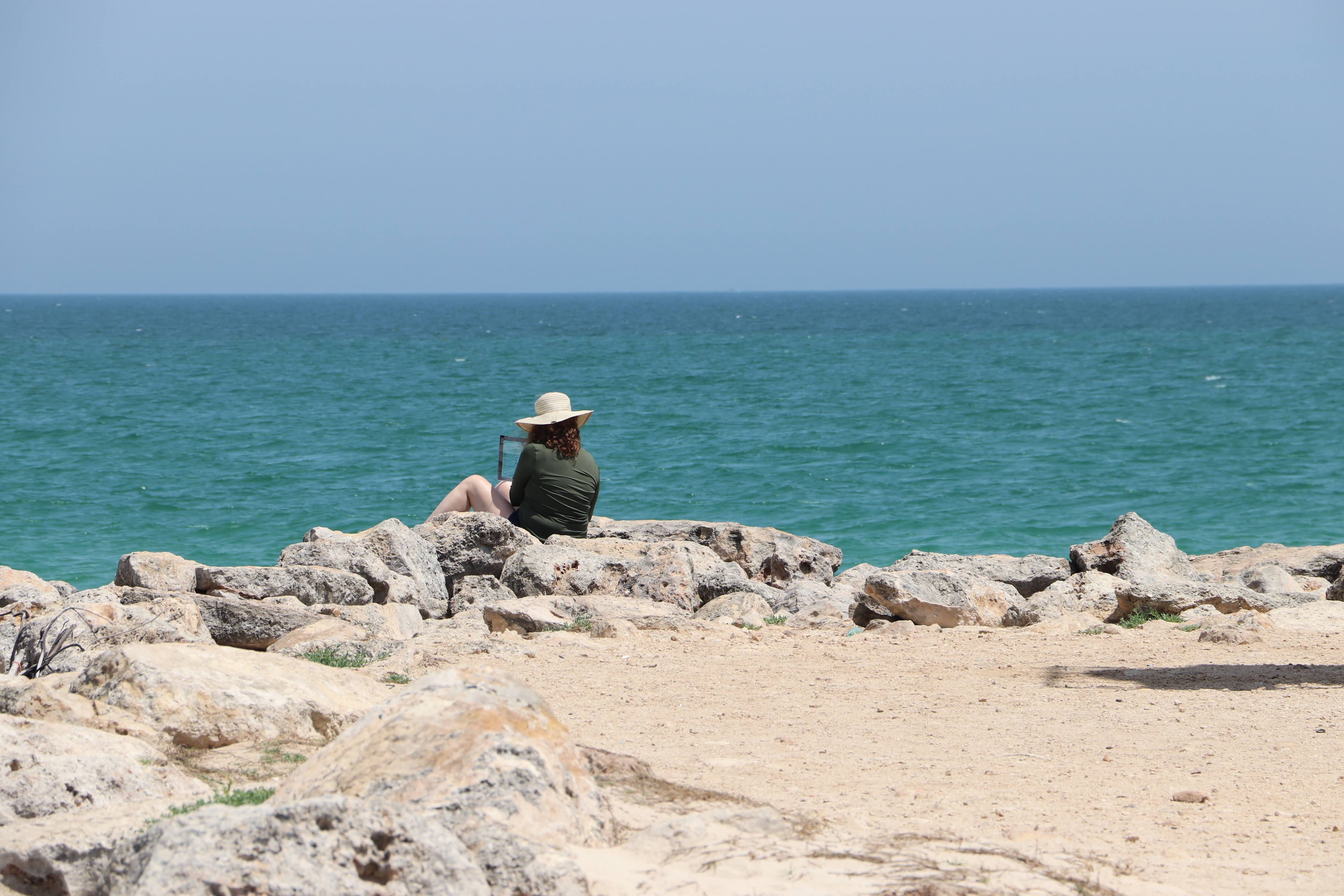
Creating art in all mediums starts in a similar place. As writers we begin by looking at a blank page. Painters face a white canvas. Theater and dance performers see an empty stage. Staring at this emptiness is both intimidating and exhilarating. Intimidating in the sense that we might always ask ourselves: Are we up to the challenge? Will we be able to contribute something worthwhile? And perhaps the toughest question we face is, “Will it be good?”—by our own standards or by others?
At the same time, if we are able, we might also embrace the possibility of what might be. It is a godly act to make something out of nothing—to create. And although we are not gods, just maybe, what we make will contain a spark that might ignite something that makes someone’s life just a little bit better—a reader, a viewer, an audience member.
And so it is with teaching. When we walk into a class for the first time, we are, of course, not facing a blank page. Our students arrive with full and robust lives. They bring their own talents, passions, interests, hopes, and fears.
It’s at this moment that Mary Oliver’s lines from her poem “The Summer Day” always come to mind:
Doesn’t everything die at last, and too soon?
Tell me, what is it you plan to do
with your one wild and precious life?
We have a precious power as a teacher—we have the ability to decide what we will collectively do with our time together. We must tune out the white noise—a cacophony of standards, district mandates, packaged curricula, the latest educational theories and fads. At the same time, our classrooms don’t exist in isolation. What students take with them must also lift them from where they’ve been and help them with the next steps of their journey which might be Ms. Maria’s classroom next year, college, or the beginning of a work life.
With all these considerations—and sometimes seeming contradictions—we set out as a classroom community to create something extraordinary.
When I enter the classroom (or really any space I’m facilitating), looking at all the faces in the room, I think, “What extraordinary work will we do together?” I don’t think about questions like, “Will you know what a metaphor is when you leave my classroom?” Content is important. It is absolutely necessary for creating exceptional work, but it isn’t the entire journey. The first question we ask might be ,“Tell me, what is it we plan to do with our one wild and precious life?”
Outside of Louisville, we were asked to kick off the year for a middle school. My parents coincidentally live in Louisville so I was staying at their house. My father, a retired public school English teacher, said to me, “I always hated when someone else came from outside to lead a PD day. I’d rather be in my classroom getting things ready for the year.” (Thanks for the inspirational talk, Dad!)
That morning when I left to drive to the school, I thought about what my dad had said. And standing in front of the sixty or so teachers in that middle school, I told them what my dad had said to me and acknowledged that they all probably would rather be in their rooms prepping rather than spending the day with me. I then told them, ‘At the end of the day, my goal is for you to feel that there was nowhere better you could have spent your workday than right here, together in this room.’
Our students’ lives—their time here on earth—our time here on earth, is precious. We certainly can’t make every experience we have in our classroom extraordinary. I’m sure some of those teachers near Louisville, at the end of the day, still wished they would have had the time to prep in their rooms. But that doesn’t mean that we can’t try every day to bring a little magic to our experiences together. I hope when someone leaves my classroom they feel a little bit taller. I hope they feel inspired, and I hope they feel like the time we spent together was well worth it—perhaps even precious.