

At this time of year, we have an underlying tension in our family regarding holiday decorations. Since Thanksgiving isn’t generally celebrated in Mexico, where we live, my wife is ready to begin putting up Christmas decorations after Halloween. She inherited her decorating style from her mother, who has a more-is-more philosophy. For my mother-in-law, one nativity scene isn’t enough—during the holidays her house looks like a museum of nativity scenes of different styles and materials.
Having grown up in the Midwestern United States, I’ve always tried to keep the Christmas decorations in the closet until after Thanksgiving. Luckily, my daughter agrees with me because, as she says to her mom, “Don’t ruin my fall.” For her, fall is about cozy teas, sweaters, comfy board games, and books.
Whether we have Christmas decorations up or not, the overall spirit of this time of year is kindness and gratitude. One Thanksgiving tradition I particularly look forward to is gathering with friends and family around the table. Before dinner is served, we take time to go around the table, with each person sharing something they are grateful for. As I thought about what to write this week, I began thinking about the ways we make room for kindness and gratitude in our classrooms. I was inspired by fifth-grade teacher Adrian Neibauer’s article “Afternoon Tea.” He writes about the English custom of tea time and how tea is a part of his classroom culture, especially for students who might enter class feeling a bit off kilter.
I have had a tea station in my classroom for five years. I keep an electric kettle, a jug of water, and a collection of green teas. I created the station for me as I drink tea all day. Over the years, I have collected a number of student-gifted mugs. Whenever a student arrives feeling gloomy or a bit unwell, I always offer a cup of herbal tea.
I love how this offering of tea to a particular student has become such a gracious way for the class to understand a student might be having some trouble that day. The kindness of this act still brings tears to my eyes when I reread this passage in Adrian’s article.
When I first began offering tea, I was reticent, believing other students would clamor for this privilege. In reality, however, without me explaining, students intuitively understand that drinking a cup of herbal tea is not a privilege for a favorite student; it is a comfort given to someone in need. Students see a cup of tea on a peer’s desk and immediately recognize their classmate is not feeling well or in need of consolation.
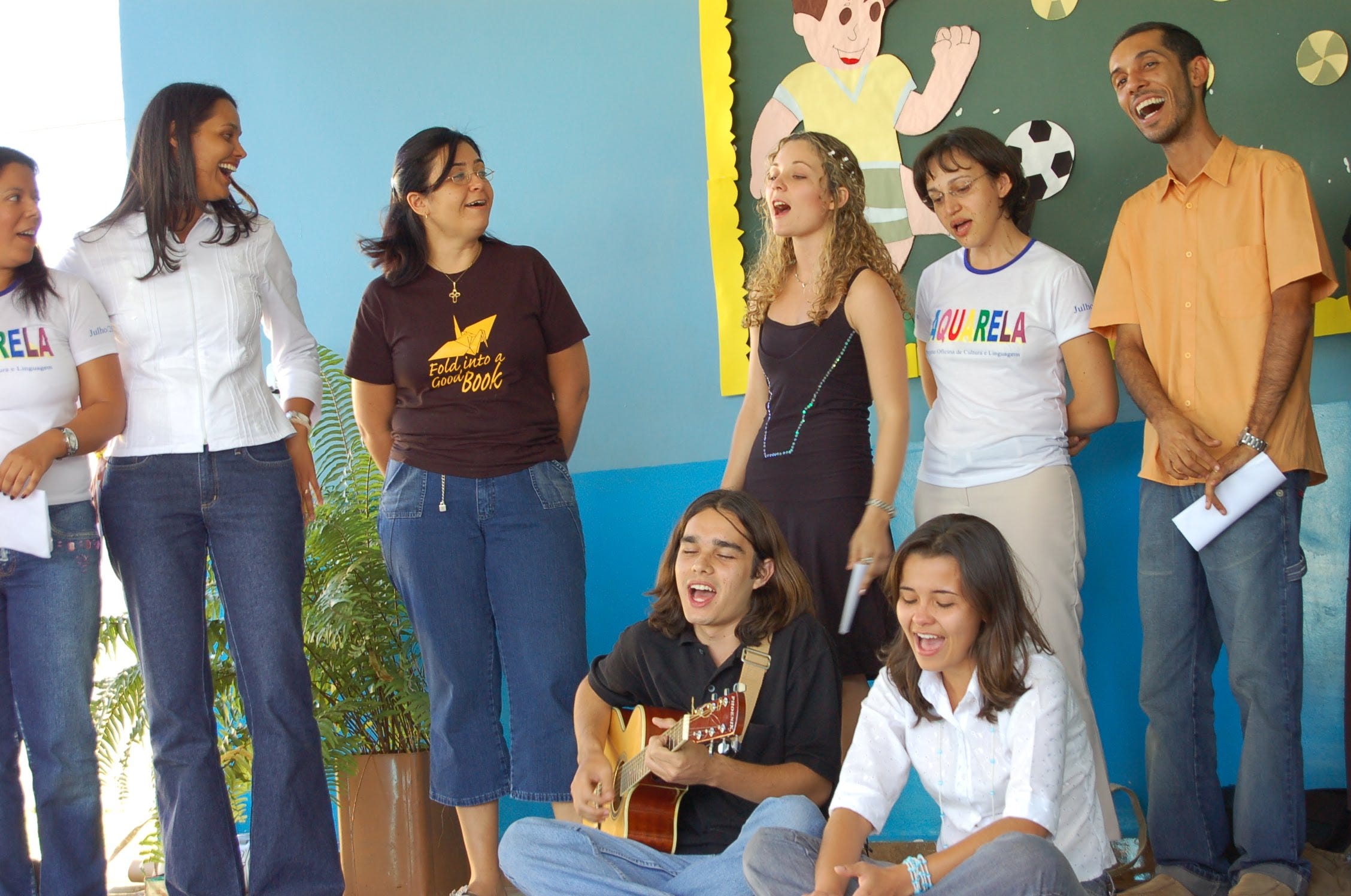
Adrian’s article reminded me of one of the most powerful experiences I’ve had in a school setting. In 2006, we ran a summer lab school in Brazil in partnership with educator Daniel Soares, bringing together teachers and students from the United States and Brazil. For our last meeting together, Daniel had prepared a surprise for the teachers. He gave each of us a capanga.
Capangas
A capanga is a shoulder bag used in Brazil, often by workers, to carry the practical tools or everyday necessities they need for a day at work. They are made of everyday materials such as leather, burlap, or cloth.
In the Brazilian tradition of capoeira—an Afro-Brazilian martial art that mixes dance, music, and movement—there is a song called Quando eu cheguei de Aruanda that is often sung in a call-and-response style. The song’s opening lyrics are:
Ai, ai, ai, ai.
Quando eu cheguei de Aruanda
Trouxe muito remédio
Dentro da minha capanga.
Ay, ay, ay, ay.
When I arrived from Aruanda,
I brought plenty of medicine
Inside my capanga.
The capoeira song uses the capanga as a metaphor. After singing about carrying medicine, singers can replace medicine with other items or even with feelings or ideas. In this version of the song, a berimbau (the instrument that accompanies capoeira), capoeira (the art form itself), memória da África (memories of Africa), and minha alegria (my happiness) are all carried in the capanga as well.
The Last Day of Class
We had brought teachers from the United States and Brazil together for the summer in rural Goiás, Brazil. In our summer school classrooms, we combined ideas and teaching practices from both countries to teach literacy and language development in English and Portuguese.
At the end of the summer, Daniel Soares, the director of our partner school, OLY, brought us all together for a final reflection and celebration. Looking back at my photographs, I mostly have images of the singing and dancing from that afternoon, but you can also see a group of capangas waiting for the next part of the session.
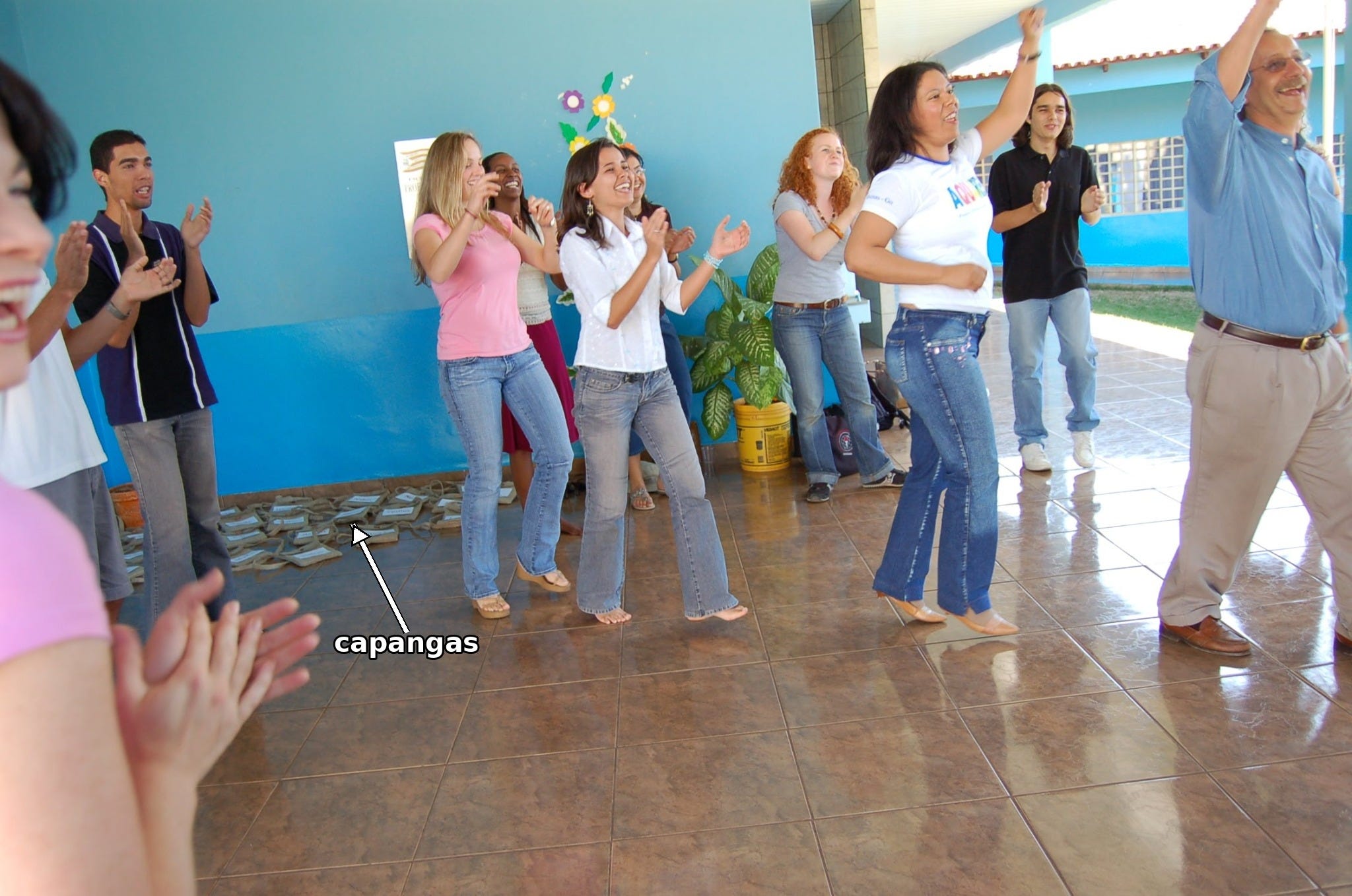
Daniel explained that everyone needed to find something kind to say to each person in the room—to express their gratitude for having that person in the community and note their contributions to the summer program.
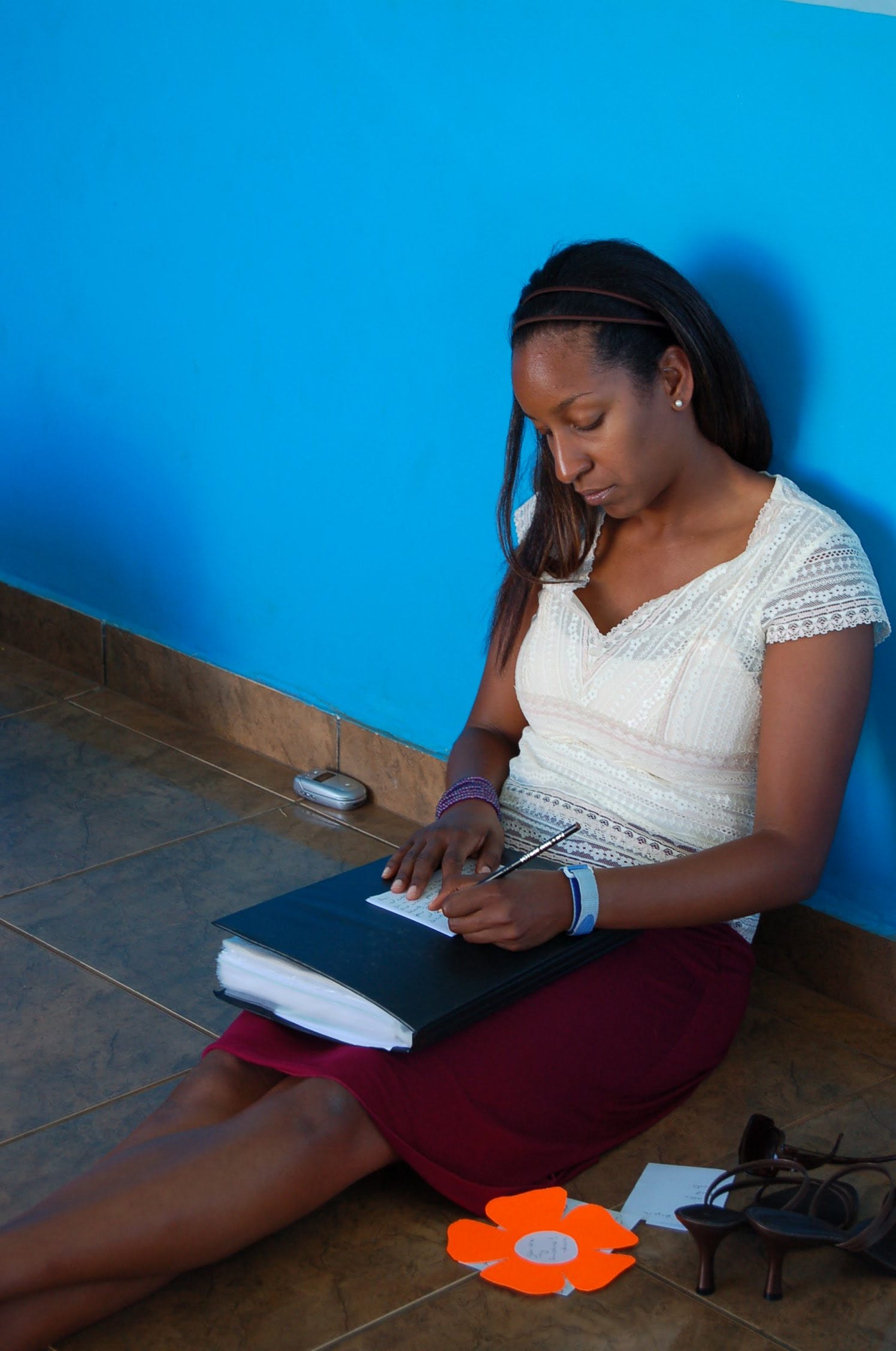
We wrote a separate note to every other person in the room, each on a small sheet of paper, and placed each note in that person’s capanga. It took some time, but the room was silent, intentional.
Then each person took their capanga, settled in an area of the courtyard, and opened it taking the time to read every note.
Daniel closed with these sentiments:
“These are the tools you will take with you back to your schools, back to your communities. These are the things that make you a beautiful person. These are the tools that make you an amazing teacher. Remember them.”
Capangas: The Process
This activity works particularly well at the end of a semester, a collaborative project, or the school year, when students have spent enough time together to recognize and appreciate one another’s contributions to the classroom community.
Materials: One bag per student, small sheets of paper, and pens. You might have students make their own bags. Good-quality pens can make the notes easier to read and creates a consistent feel across all the capangas.
1. Introduce the capanga. Share the song Quando eu cheguei de Aruanda. Discuss how a bag traditionally used to carry practical tools can also metaphorically carry our own tools—things that bring us joy, things that we might take with us in our hearts or minds, or even practical things we need for our everyday lives. (I’d also delve deeper into capoeira. Some students may already be familiar with the art form or even practice it.)
2. Give everyone a capanga. Either have students label their own bags or prepare labeled bags ahead of time.
3. Write notes of appreciation. Before students begin writing, explain that every note should be kind and specific. Encourage students to consider the contributions of classmates beyond their immediate circle of friends. A class checklist can also help ensure that every student writes to everyone and that no one is left out. Each student writes a separate note to every other student in the room.
Sentence starters might include:
Something I appreciate about you is . . .
One moment I remember with you is . . .
Something you bring to our classroom is . . .
Something I’ve learned from you is . . .
Give students plenty of time for this process—it might even be done over the course of a week, with some time dedicated to it every day. Depending on the classroom, you might have students give you their notes first so you can check that each one is supportive before it goes into a capanga.
4. Fill the capangas. As students finish the notes, they quietly move around the room, placing their notes in one another’s bags. It’s important for the teacher to participate in this process as well (perhaps writing notes to each student ahead of time). As the teacher, ensure all students’ bags are receiving notes.
5. Find a quiet space to read. Once all the notes have been delivered, invite students to take their capangas, find a comfortable place in the classroom or outside, and read their notes in silence. There isn’t any need to have them share, although you might ask them to find one phrase they find powerful and then, after reading time, share the phrases around the room.
6. Close the experience. Remind students that the words in their capangas are theirs to keep. These are the things others see in them that they might not always see in themselves. Students can take their capangas with them beyond the classroom and look back on them to remember their time together as a community.
Please note that I have led this experience with high school and college students and with adults. I haven’t yet tried it with elementary-age students. If you do, I’d love to hear how you adapt it and how it went.
What a wonderful learning experience! Even though it isn’t an academic standard, gratitude and appreciation are such important concepts to practice. I may try this activity at the end of the school year with my students. I’ll let you know!