
When elementary curriculums focus on mythology, they are typically designed around a study of Greek myths. Then later, most students read at least a portion of The Odyssey in their first couple years of high school. These stories are so embedded in our culture that we encounter them again and again, often without even realizing it.
In an opinion piece in The New York Times, author Viet Thanh Nguyen describes the concept of narrative plenitude. Narrative plenitude is when so many stories are told about a particular cultural group that no single piece of media or art needs to carry the burden of defining that group. In the case of Greek mythology, students might encounter multiple versions of myths from Percy Jackson to the new film version of The Odyssey to modern retellings such as Madeline Miller’s Circe and The Song of Achilles.
The opposite of narrative plenitude is narrative scarcity: when a particular cultural group has few representations in media. These limited roles then reinforce existing cultural stereotypes.
Viet Thanh Nguyen writes:
I, and most other Asian-Americans, grew up and still live in the opposite of “narrative plenitude.” We live in an economy of narrative scarcity, in which we feel deprived and must fight to tell our own stories and fight against the stories that distort or erase us. Many Americans will take these Asian images — which are usually awful — and transfer them to any Asian-American they encounter.
As educators, we sometimes unintentionally reinforce narrative scarcity in our curriculums. In our efforts to broaden what students read, we might add a book representing a perspective that has traditionally been left out. But a single book can’t represent an entire culture or group of people. Narrative plenitude asks us to think beyond representation toward abundance.
After learning about this concept from my colleague Jon Baricovich, I’ve focused on making narrative plenitude a key idea that drives how I choose texts and other artifacts for learning.
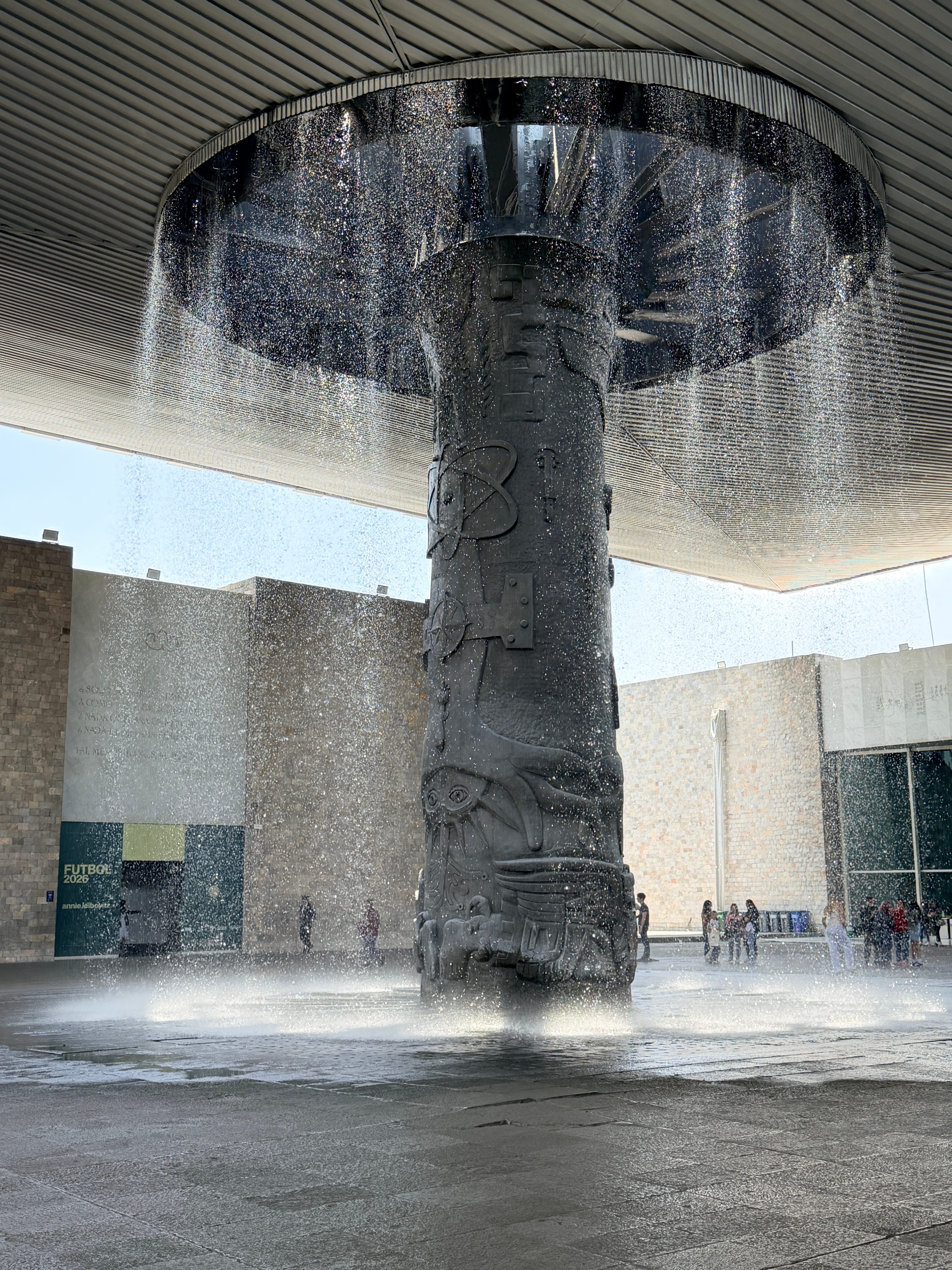
We recently visited the Museo Nacional de Antropología in Mexico City. The museum brings together artifacts from Mexico’s Indigenous civilizations—from the Olmec, Zapotec, and Mixtec to the Mexica and Maya—while also presenting the cultures of Indigenous peoples living in Mexico today. As I wandered through the museum’s vast halls, I was struck by how much of this history is left out of our school curriculums. It’s perhaps not just an instance of narrative scarcity, but of narrative omission.
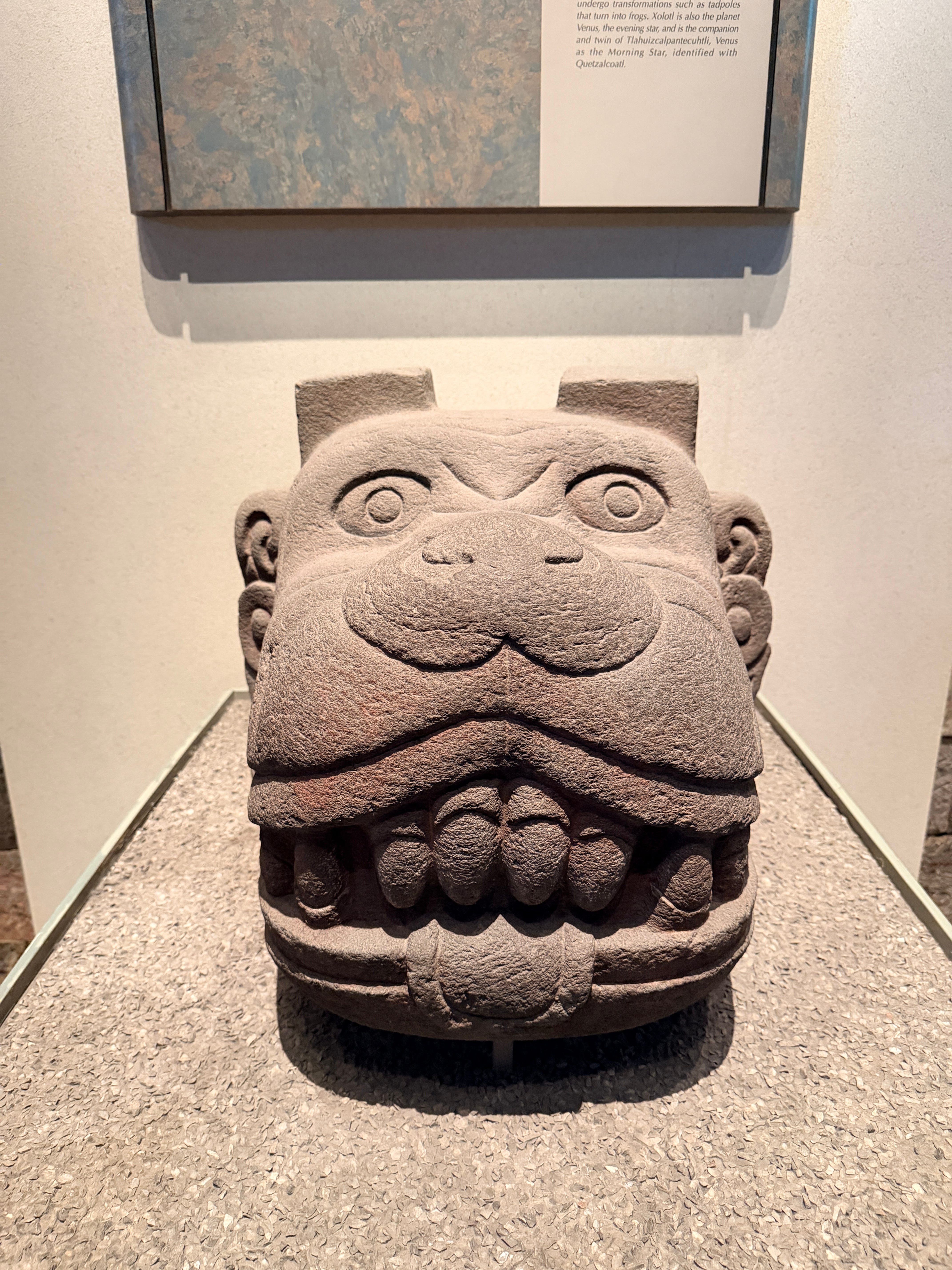
As a quick self-quiz, think about what you know about Zeus, Poseidon, and Athena vs. Quetzalcoatl, Xolotl, and Tlaloc.1
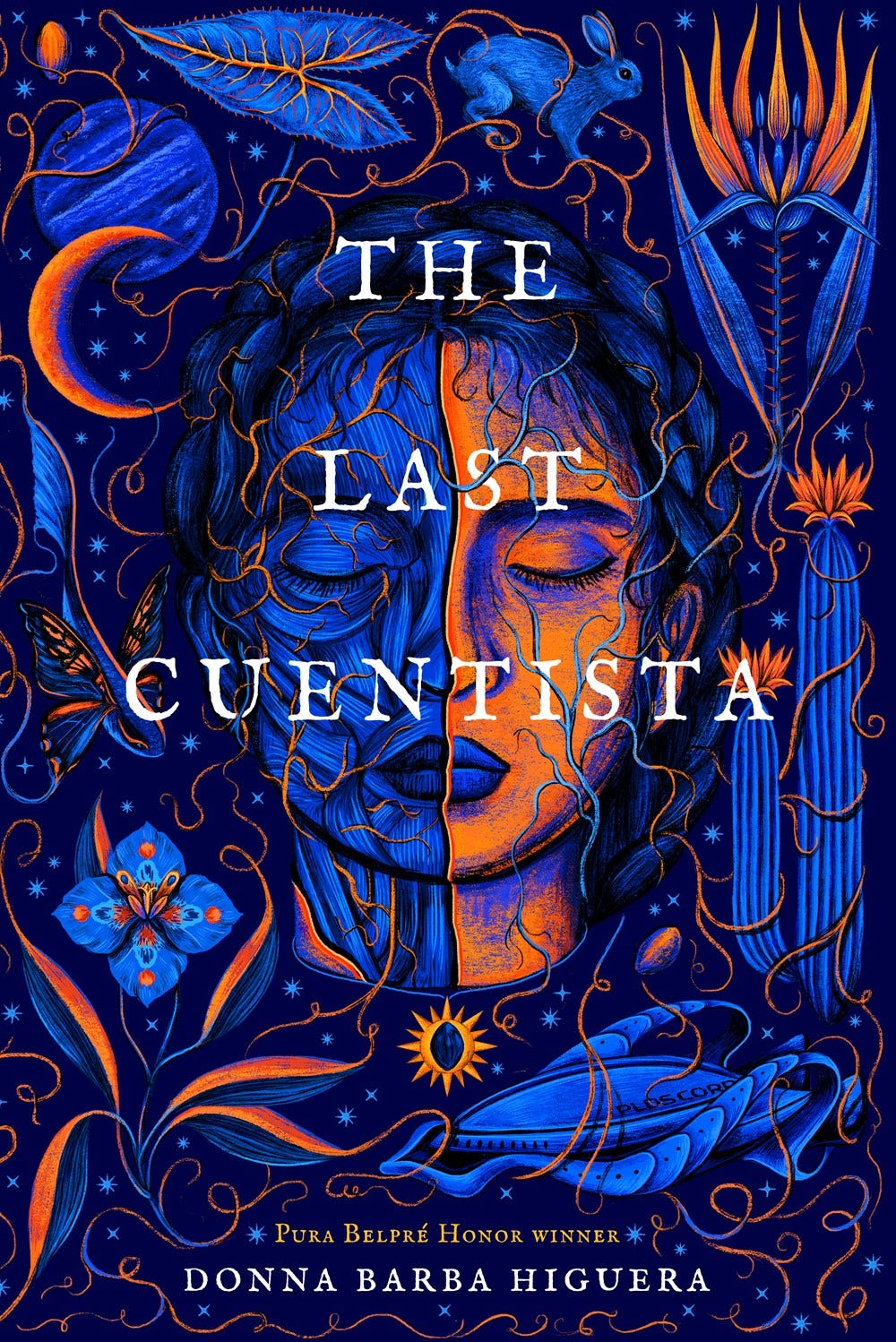
Donna Barbara Higuera’s novel The Last Cuentista is a book we’ve built curricular units around in the past. The protagonist, Petra Peña, carries with her the stories her grandmother Lita told her, keeping them alive as she leaves a destroyed Earth with the few humans chosen to rebuild humanity on another planet. The novel asks us to consider which stories we carry with us—and which stories matter enough to keep telling.
In Higuera’s more recent novel Xolo, she returns to the idea of stories worth telling by reaching back into the myths of Mesoamerica. She reimagines the story of Xolotl and Quetzalcoatl’s journey to recover the bones of humanity, but with a twist—Xolotl, a secondary character in the original myth, becomes the hero instead of Quetzalcoatl.
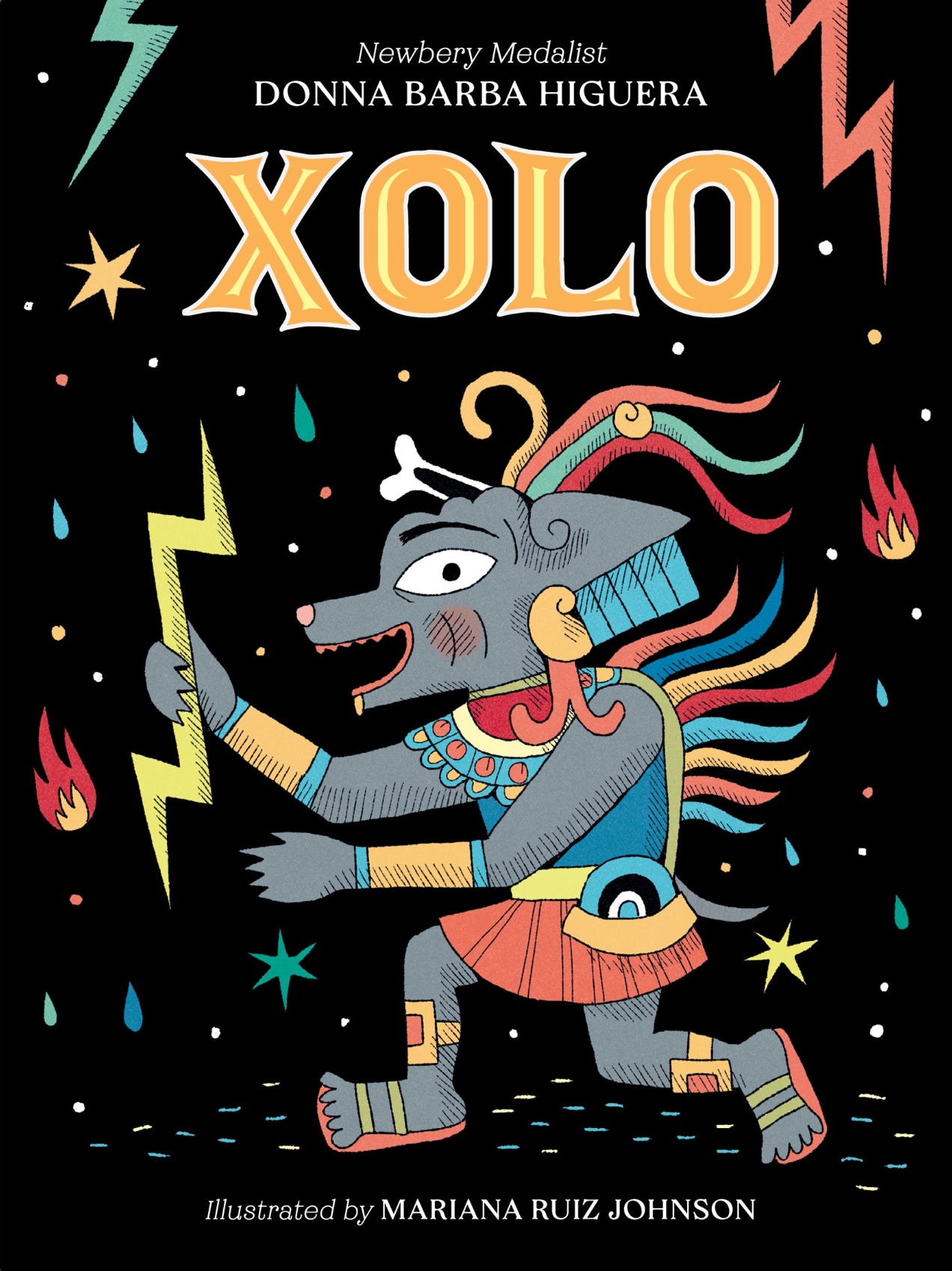
We centered our Chicago Teacher Institute on Xolo, focusing on the question,
“How do stories travel across time, cultures, and forms?”
During our visit to the Museo Nacional de Antropología we realized just how complicated the histories of Quetzalcoatl and the other Mesoamerican deities are. They change names over time, and even from region to region. They take different forms and serve different purposes. For instance, Quetzalcoatl is closely related to Kukulcán among the Yucatec Maya and Gucumatz among the K’iche’ Maya, while in Central Mexico he is associated with figures such as Ehécatl, the wind god, and Tlahuizcalpantecuhtli, the Morning Star.
Many of the world’s origin stories and myths began in oral traditions. The stories that eventually became The Odyssey were told for centuries before the poem took the form that we read in print.
Higuera is then joining in this tradition as she takes a myth that has traveled through centuries and tells her own version of it. In her author’s note, Higuera describes the inspiration for her retelling and the question that drives her book: “But what if Xolotl was the real hero?”
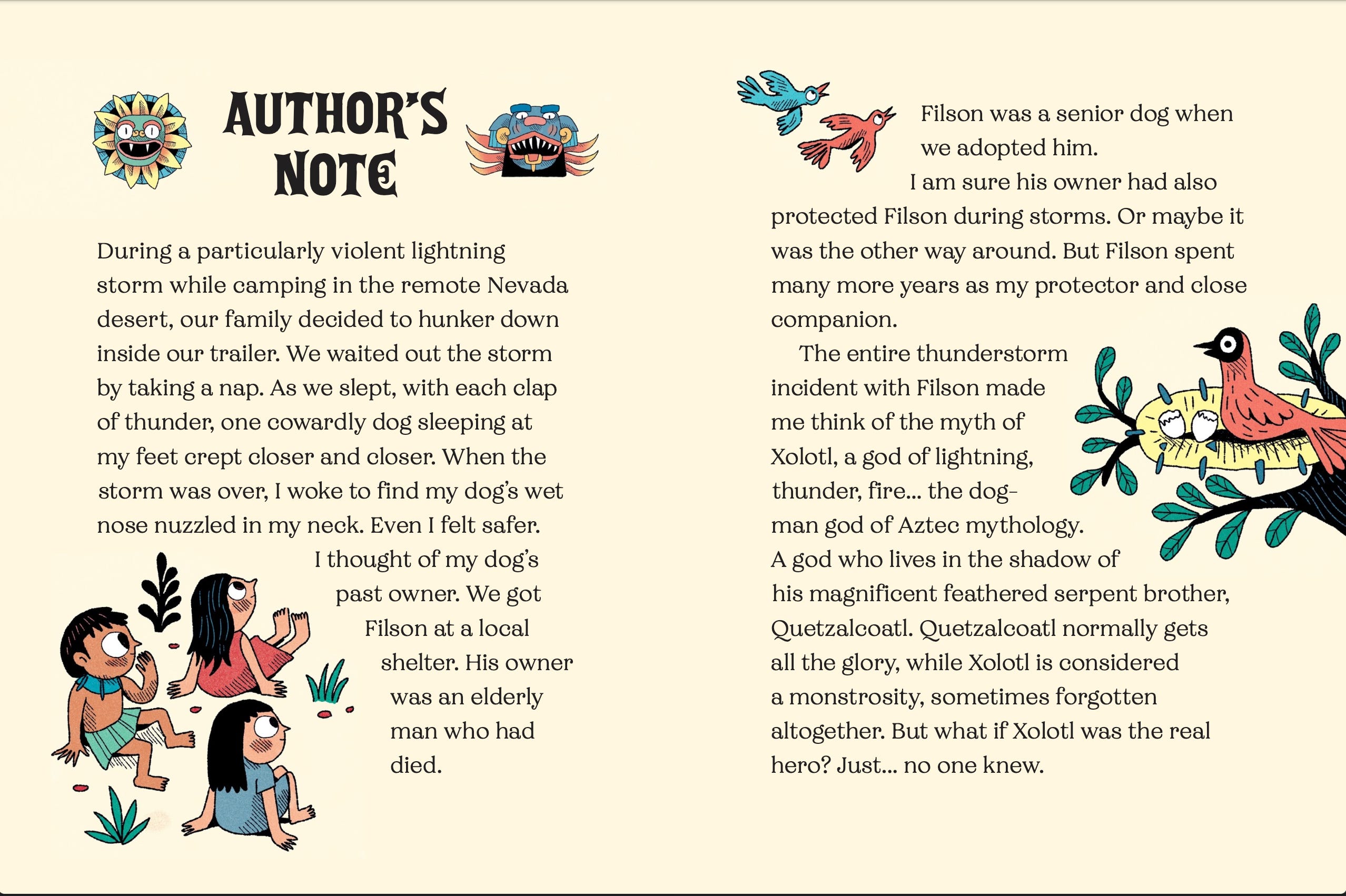
Higuera’s recentering the hero of the story is similar to what we are doing when we bring to the center narratives that have traditionally been omitted from our curriculums.
Mesoamerican myths are a subject I knew very little about. That’s precisely why we decided to build an institute around them. It is up to us, to the best of our abilities, to foster greater narrative plenitude in our classrooms, so our students experience an ever-expanding world of stories and histories.
So how did we build learning experiences around Xolo? Join me here next week to see some of the approaches we used in the Chicago Institute. We have decided to focus next year’s institute in Merida, Mexico around the same text and concept with visits to local archeological sites. To read more and register visit us at hablateacherinstitute.org.
In Mexica (Aztec) mythology, Quetzalcoatl, the “Feathered Serpent,” is a major deity connected to creation and knowledge. Xolotl, his canine twin, is a guide through the underworld and plays an important role in the creation of humanity. Tlaloc, the god of rain, was central to agricultural life and one of the most important deities in the Mexica world.
Beautiful post Kurt! Great reminder and encouragement to us educators to take on the challenge and gift of moving narrative scarcity into plenitude!!