

In my last post I wrote about how I select books to bring to educational communities whether I am teaching a class, building a teacher institute, or designing a curriculum. One of the critical aspects of selecting a book is looking for a key concept that can inspire a broader experience.
We can’t take for granted that students will intrinsically want to learn the content. I think this is particularly true for older students, as the late Ken Robinson famously noted, schools often kill creativity and curiosity. After years of “receiving” content in schools—more content, more stuff to learn, more tests are simply more ways to go through the routine of “doing school.”
My ongoing quest has been to find ways to break this routine; to find ways to show students that, at least in this classroom (and we hope in this grade-level and even in this school), this is not “business as usual.”
Finding the Concept
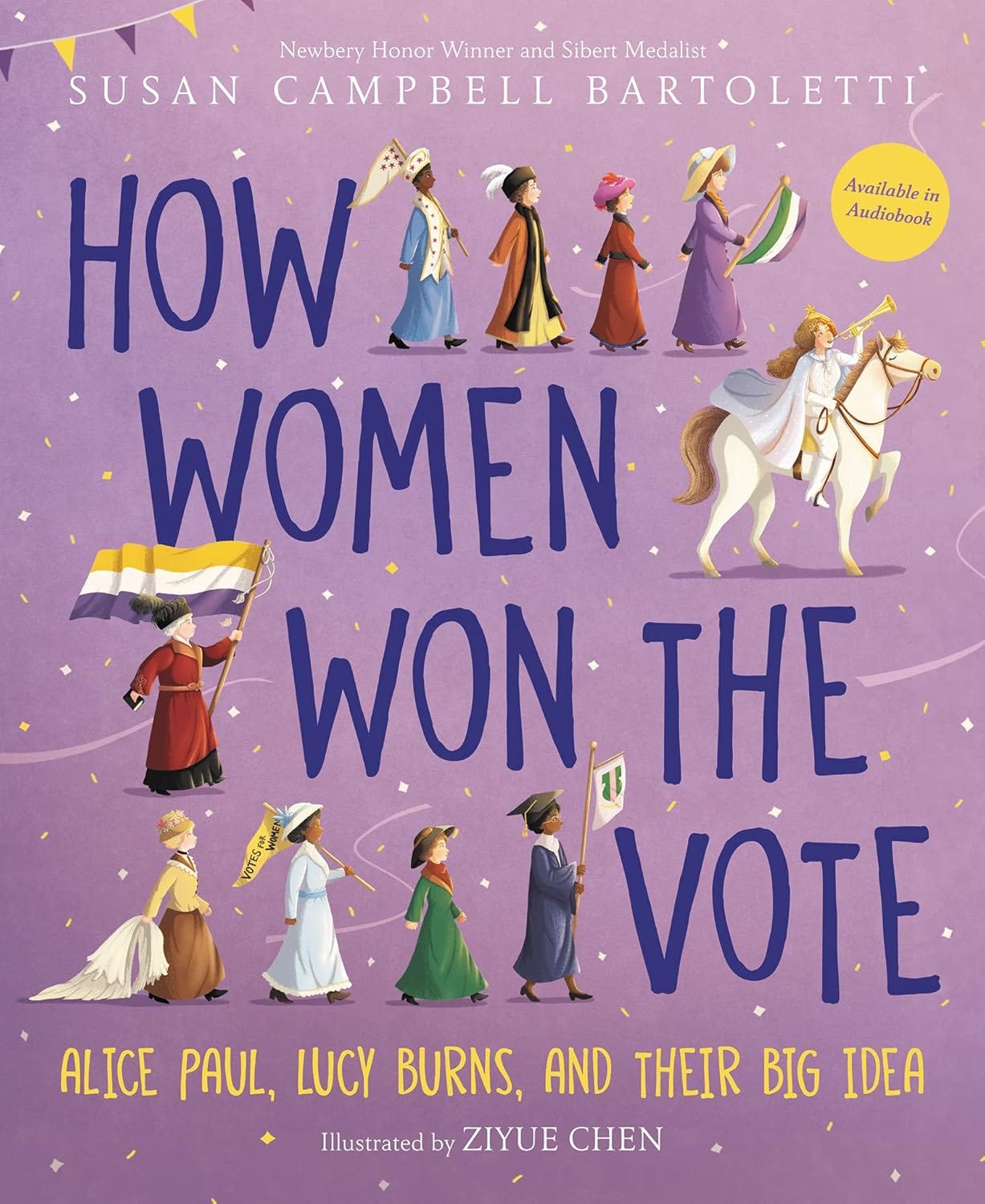
When we were reading How Women Won the Right to Vote: Alice Paul, Lucy Burns, and Their Big Idea, we were looking for that larger concept to draw students in.
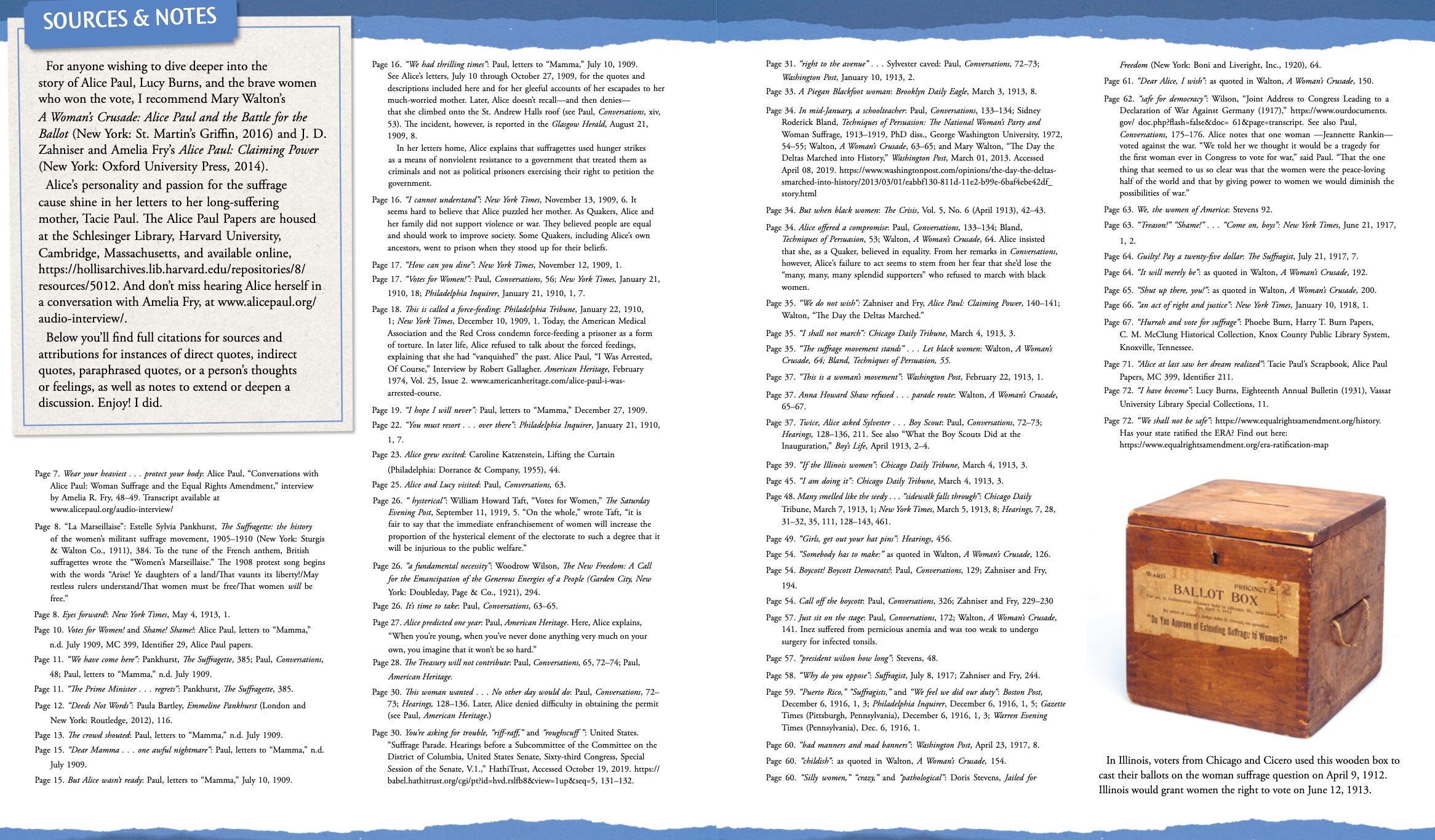
First of all the book is rich in content. It tells the story of Alice Paul, Lucy Burns, as well as other suffragists, and positions them in the larger suffragist movement. The book is filled with information including a rich appendix with sources, resources, and a timeline.
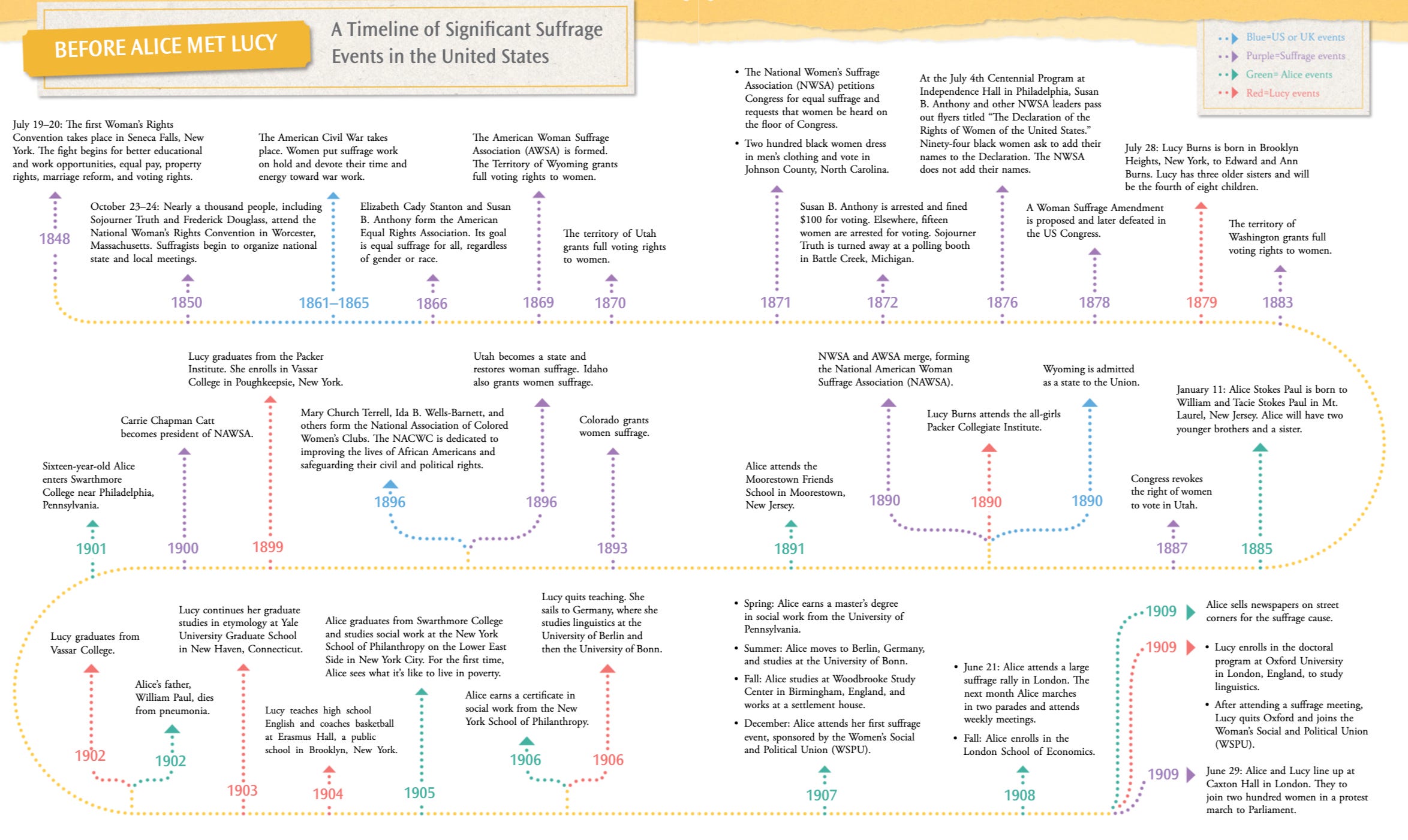
I mentioned in my last post, What Makes a Book Worth Teaching?, how sometimes the concept for the unit—the big idea—is right there on the surface, and, well, surprisingly, in this book, it’s in the chapter titled, “The Big Idea.”
The author writes:
Alice told Lucy her big idea: It’s time to take our fight to Washington.
It’s time to demand a federal amendment to the Constitution.
It’s time to guarantee and protect a woman’s right to vote once and for all.
It’s time for a —Parade!
A double-page spread in the book then lays out the “THINGS A SUFFRAGE PARADE NEEDS.”
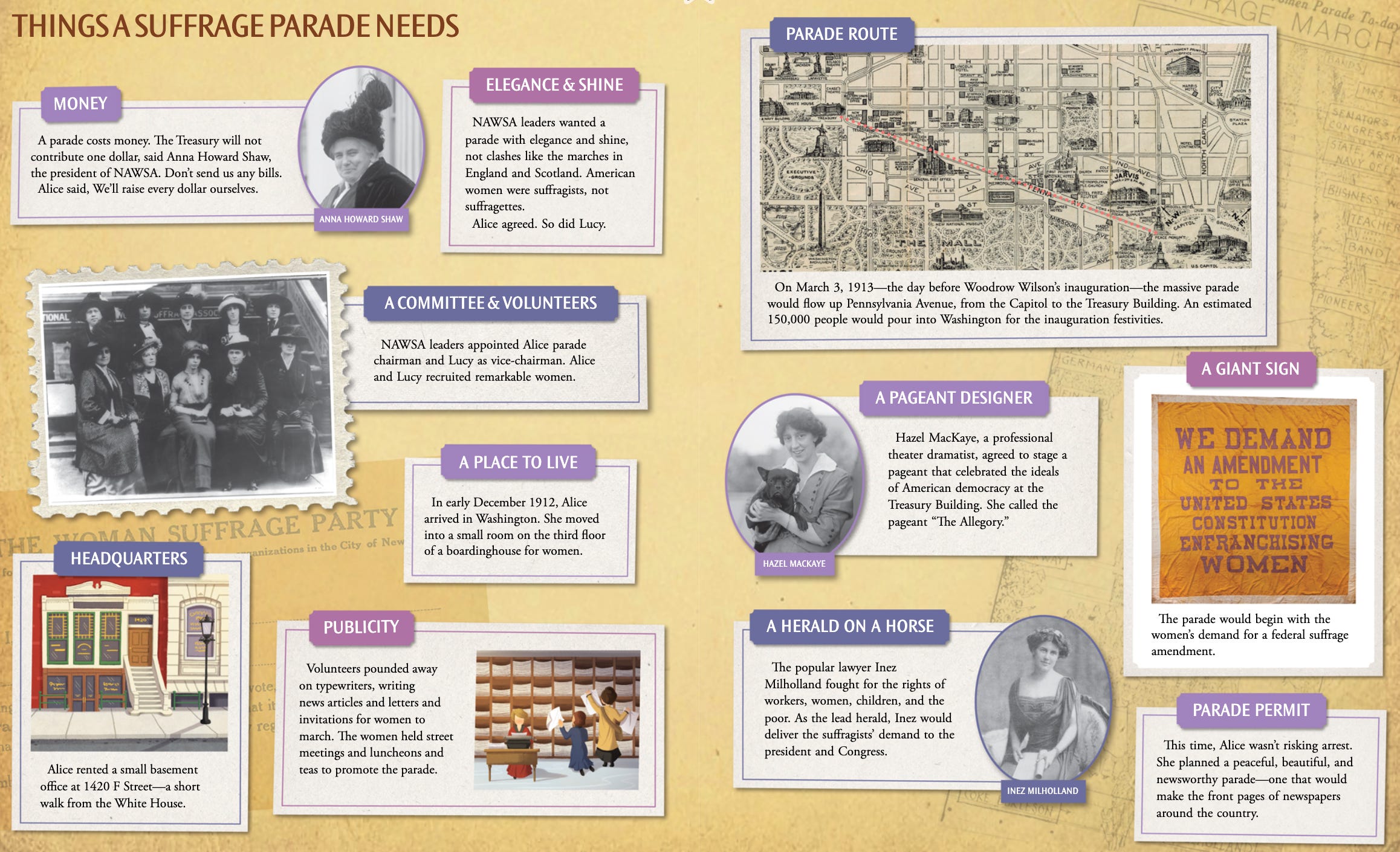
Over half of the book is dedicated to the planning of the parade and the day of the parade itself.
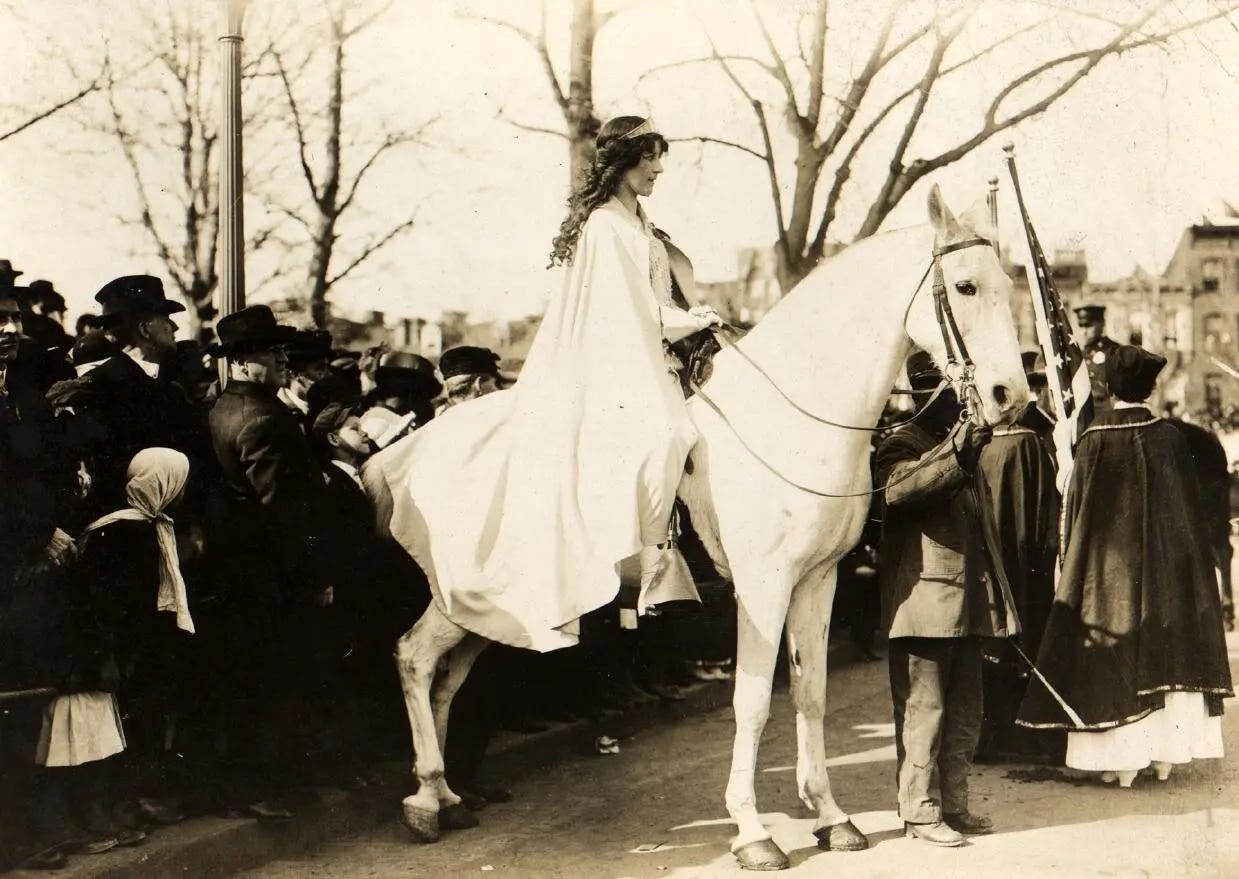
The 4th grade teaching team at North Star Elementary School in Bend, Oregon and I were working on developing a unit on the 19th Amendment and the suffragist movement. We discussed what it would take for the students to plan a parade themselves, using the suffragist parade as inspiration. We looked at the planning pages pictured above and imagined students selecting their own parade headquarters, organizing a committee and seeking community volunteers. We even discussed Inez Milholland who led the parade on a white horse—what form would the students’ grand marshal take?
Planning a Parade
One of the most challenging aspects of designing the parade was actually figuring out what the parade would be about. The women’s suffragist parade resulted from an immediate need in a particular historical context—years of diligent advocacy led up to the event itself. Asking students what issues they want to take action on can be difficult because it often leads to a familiar set of topics. I’ve seen many project-based units on “taking social action” that are often about the same issues—trash in the community, pets in the streets, the need for recycling, saving endangered species. It’s not that these issues aren’t important, but what I’ve witnessed is often these projects lack depth. Students quickly embrace the issue for the sake of the assignment, and then put together a quick presentation or poster board with images cut and pasted from the internet.
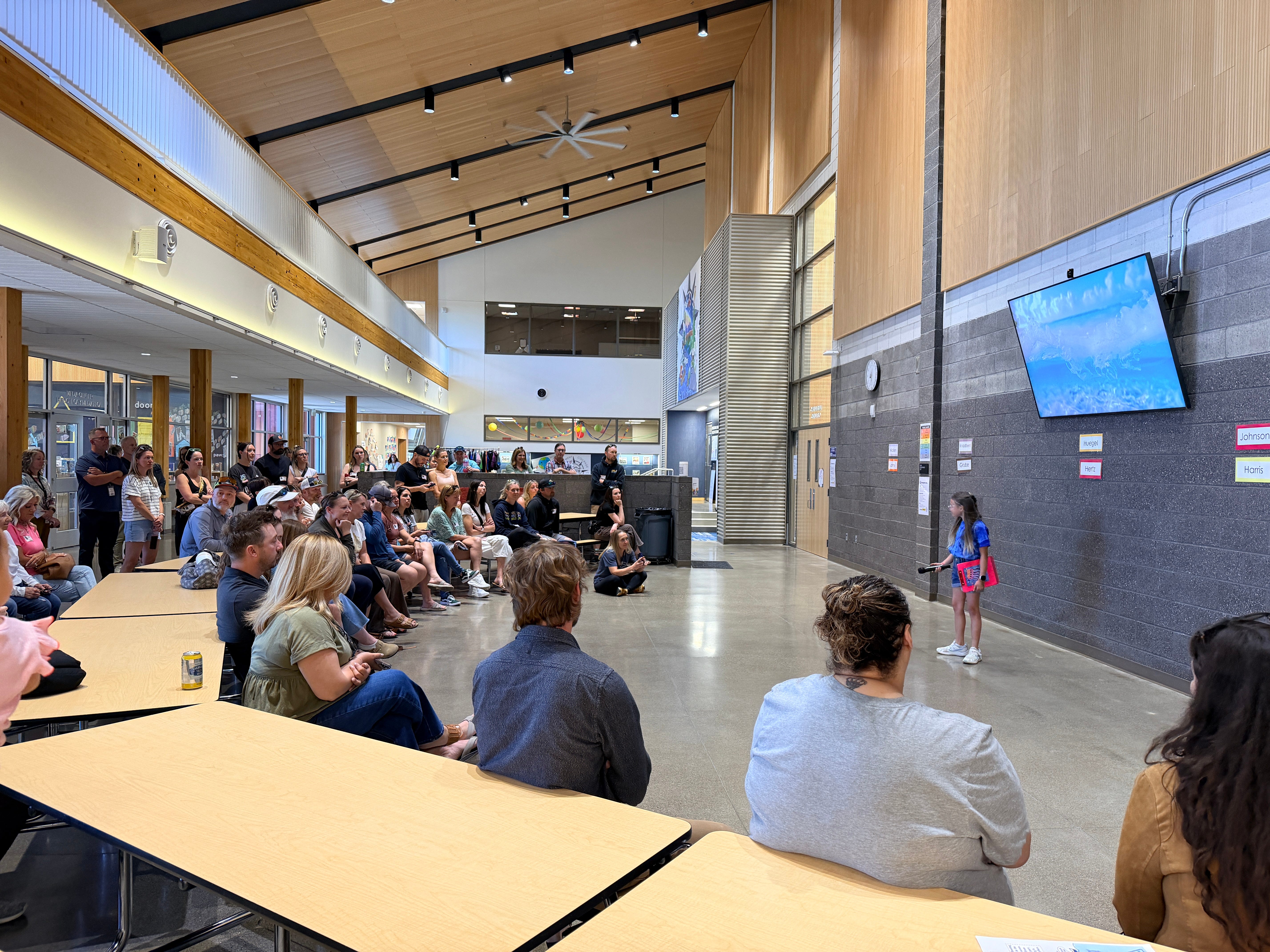
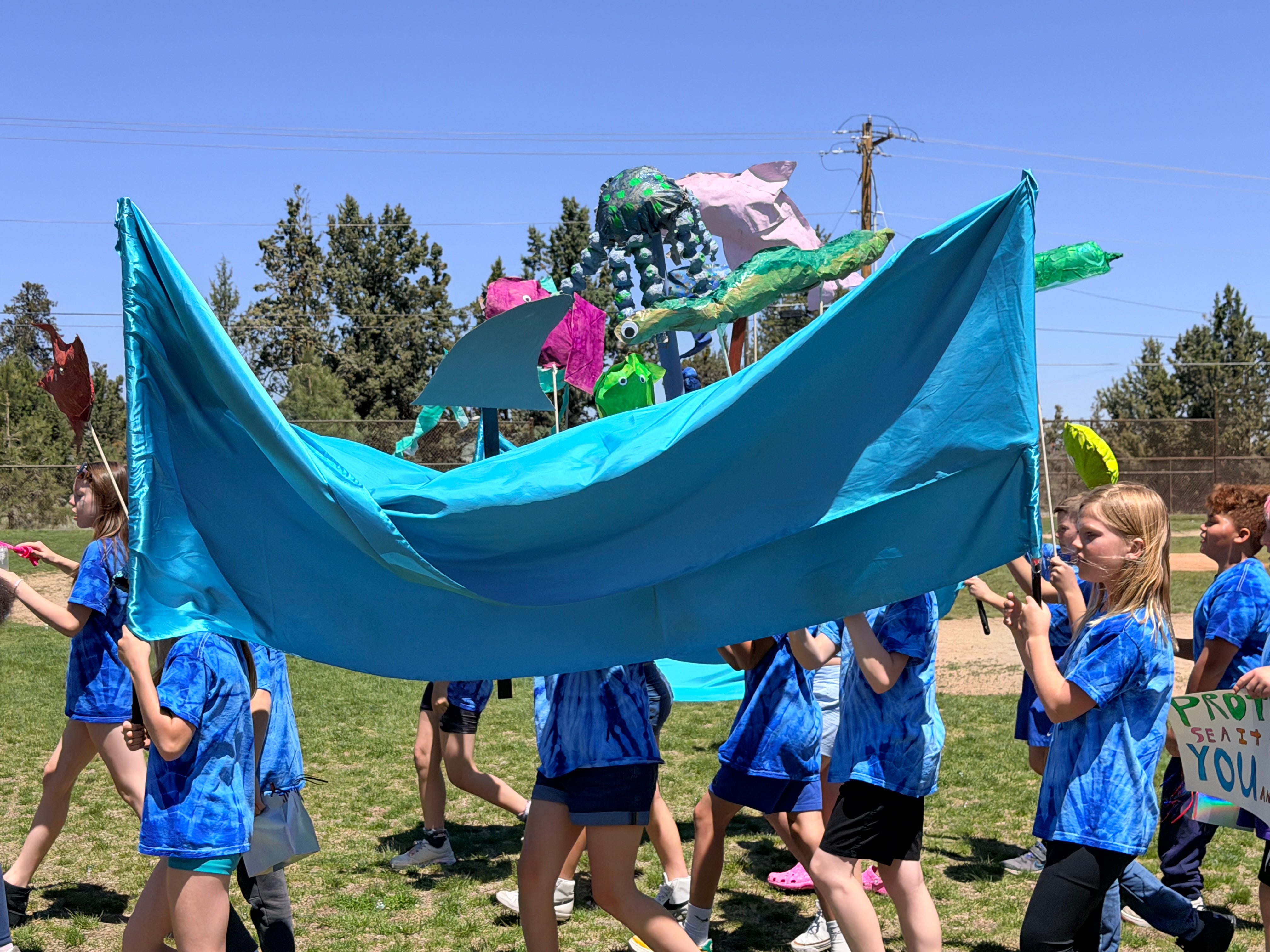
One of the ways the teachers and students addressed this challenge was by reframing the question. Rather than organizing a parade around a problem—such as ocean pollution—they chose to celebrate the world's oceans in all their wonder and majesty. By focusing on the positive, they hoped to inspire others to take better care of the world’s resources. From this idea, the students researched a range of ocean-related issues and studied the animals they would feature in the parade. They then composed speeches that demonstrated their understanding of the issues.
Drawing inspiration from both the book and the Women’s Suffrage Parade, the students designed their own parade with the following elements:
1. Advocacy Speeches. Throughout the parade different students took the bullhorn and delivered a speech explaining the reasons behind the students’ march as well as educating the visitors on key aspects of marine life.
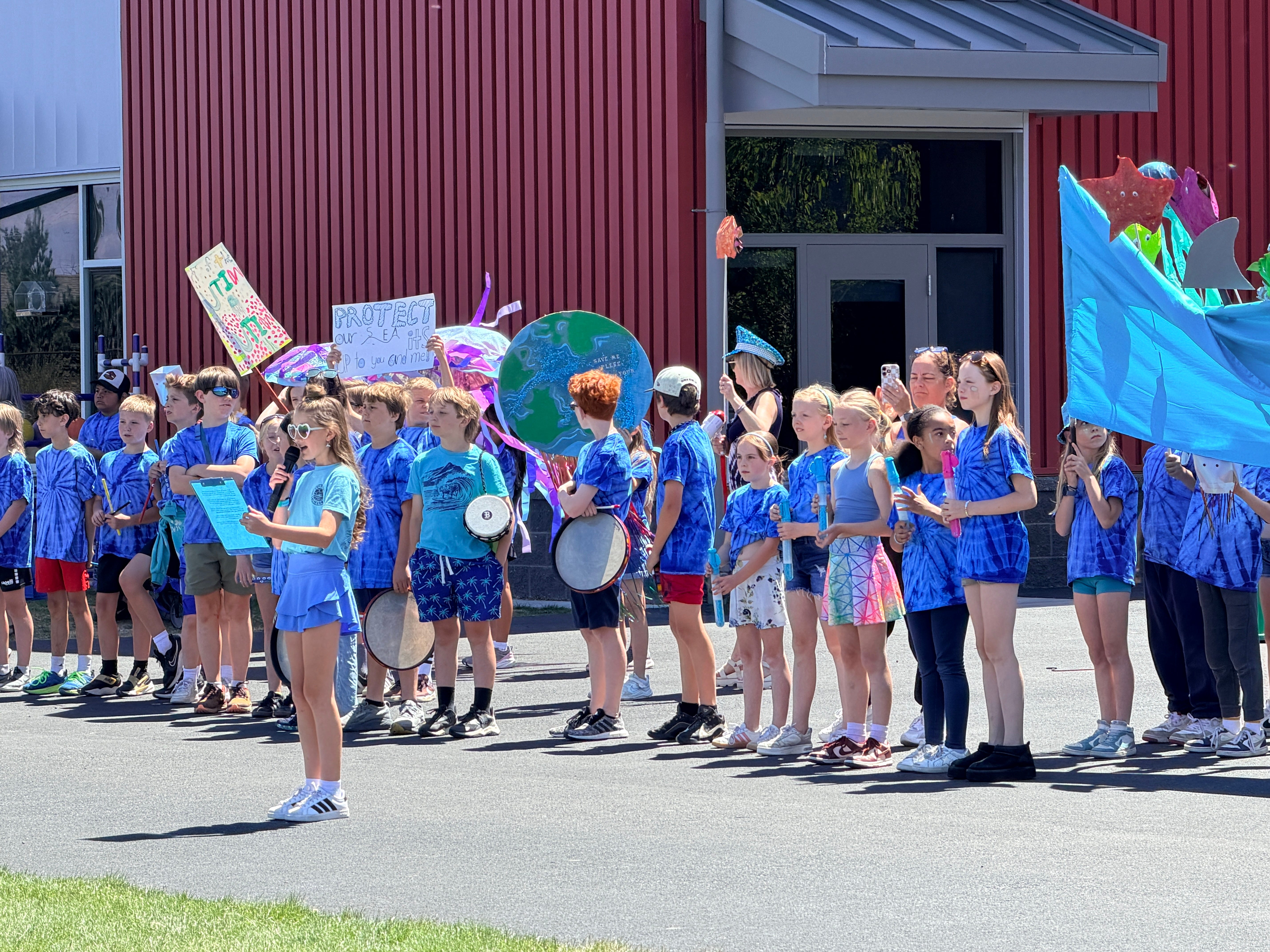
2. A Herald on a Horse. Well, rather than a horse, after all this is ocean animals, the students chose a right whale as their herald. One student who was particularly passionate about right whales also decided to make a poster that accompanied the parade’s “grand marshal.”


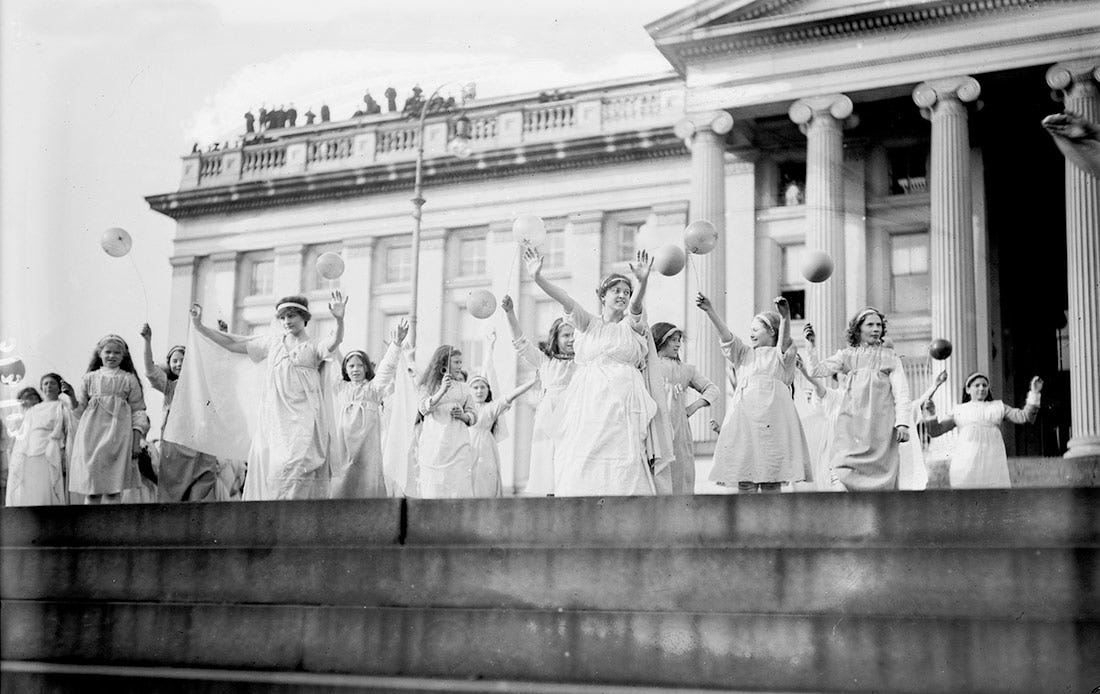
3. A Pageant. The Women’s Suffrage Parade in 1913 enlisted “pageant designer,” Hazel Makye, who was a “professional theater dramatist.” During the parade she would “stage a pageant that celebrated the ideals of American democracy.” The 4th graders also elected a “pageant group” that staged a performance to open the parade. The students also noted the costumes and colors that were used during the suffragist parade and they wore matching shirts that symbolized the ocean.
4. Signs. On the page “THINGS A SUFFRAGE PARADE” needs it mentions the importance of signs, “The parade would begin with the women’s demand for a federal suffrage amendment.” So, too, the students made a series of signs they carried. The signs also became inspiration for chants that were shouted along the parade route.


5. Floats. The students wanted to make full-scale floats. Given the time and resources available, they scaled their vision down. Instead they built puppets in the style of Bread and Puppet Theater, made from paper mâché and wood. They then recreated a “float” of ocean wildlife using blue cloth and the puppets.
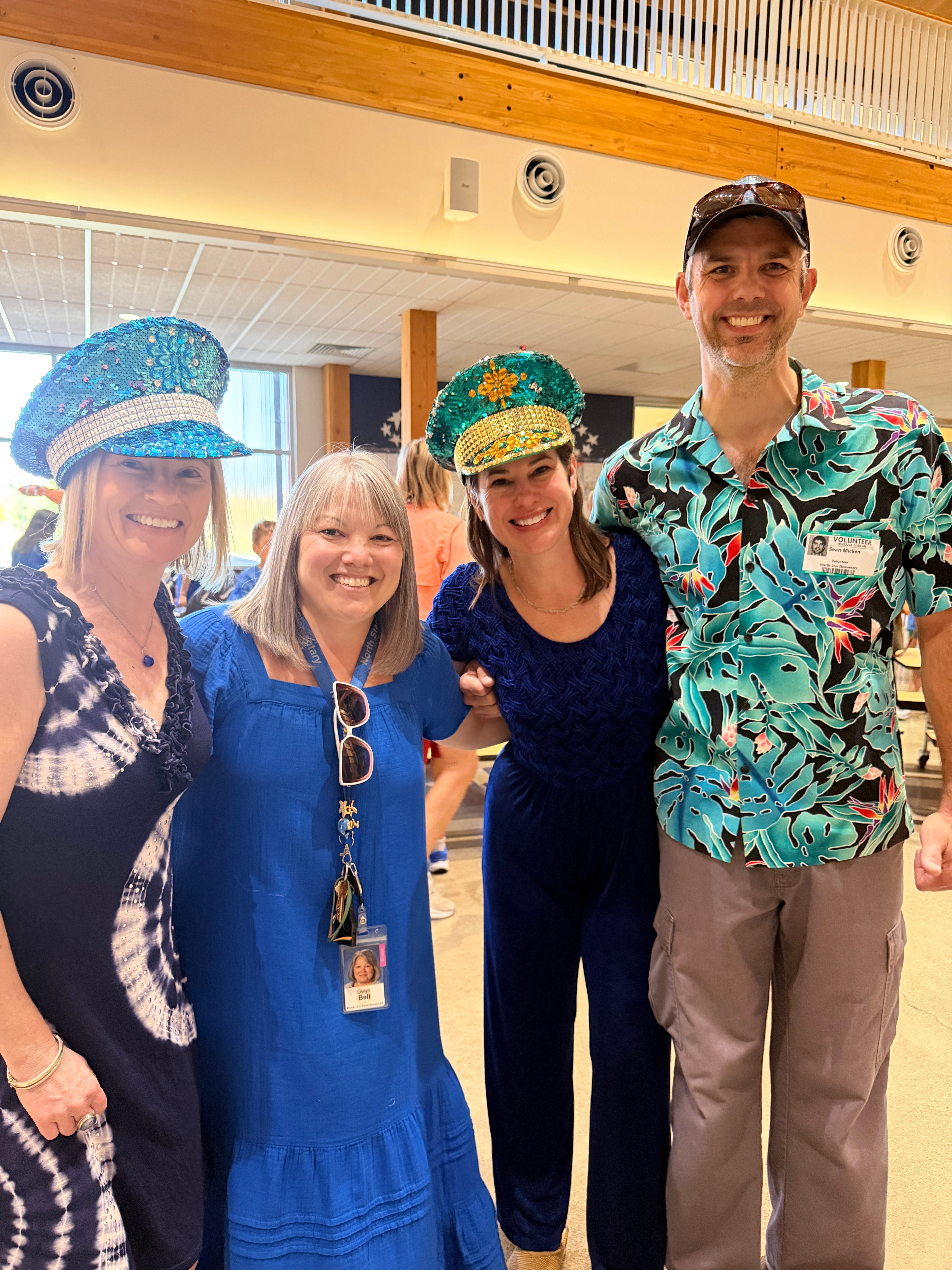
6. Music. Music was an integral part of the Women’s Suffrage Parade that included nine separate bands. Sean Micken, the husband of 4th grade teacher Erin Micken, volunteered his time to lead the students in a drum corps that accompanied the parade. Listen to the background drums in this short video:
Reflecting on the Experience
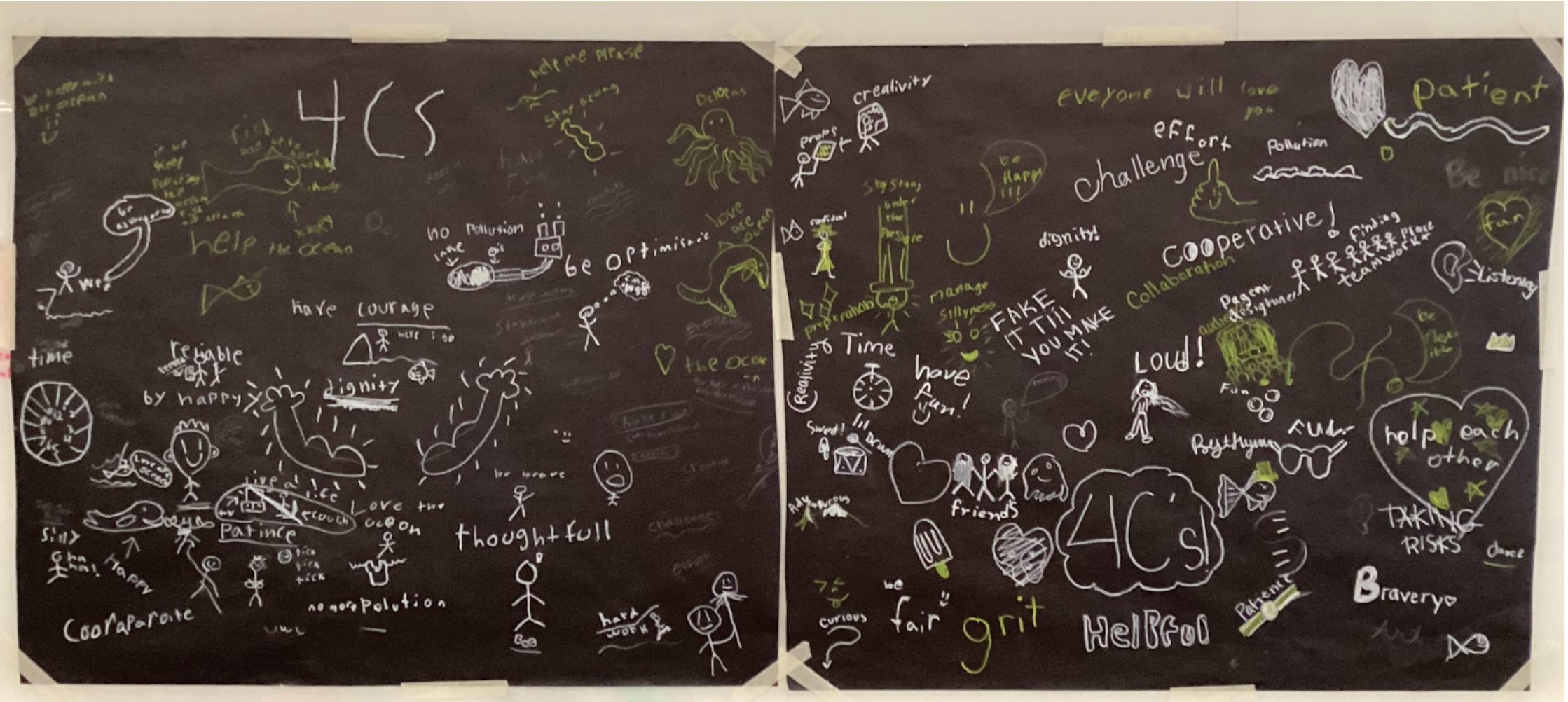
Later, after the parade, the teachers used the idea of Stephen Hawking’s blackboard that I had mentioned previously in the article Research Boards. The students’ 4th grade teacher Erin sent me an email after I’d returned home:
Thank you for the great idea for the parade reflection based on Stephen Hawking's blackboard. We did that yesterday and it was awesome! Here it is if you want to take a look!
She had them analyze Stephen Hawking’s blackboard asking, What do you notice? What do you wonder?
Then the students did a 4-Square Brainstorming exercise reflecting on the four areas:
What you learned?
What was hard?
What was fun?
Which characteristics are needed to be successful?
Finally the class made their own Stephen Hawking board answering the question:
How can you pass on your “parade genius” to next year’s 4th graders?
Rites of Passage
This was North Star’s first attempt at a 4th grade parade. I love that this may become a yearly ritual, something next year’s class will look forward to and begin planning as soon as they enter the classroom. The parade has already become part of the school’s culture—a shared experience passed on from one 4th grade to the next. And to think that all of it was inspired by one page, of one children’s book.
The Women’s Suffragist Unit and parade were designed and led by North Star Elementary 4th grade teachers Erin Micken and Elizabeth Broadbent, instructional assistant Gwyn Bell, and North Star’s 4th grade students. Special thanks as well to Dr. Shelley Berman for bringing us all together and for continuing to champion innovative approaches to social studies instruction. Finally, much gratitude to the school’s principal, Beth Martin, for supporting both teachers and students in thinking beyond the metaphorical—and literal—classroom walls.
Resources
1. She Was More Than Just a ‘Most Beautiful Suffragist.
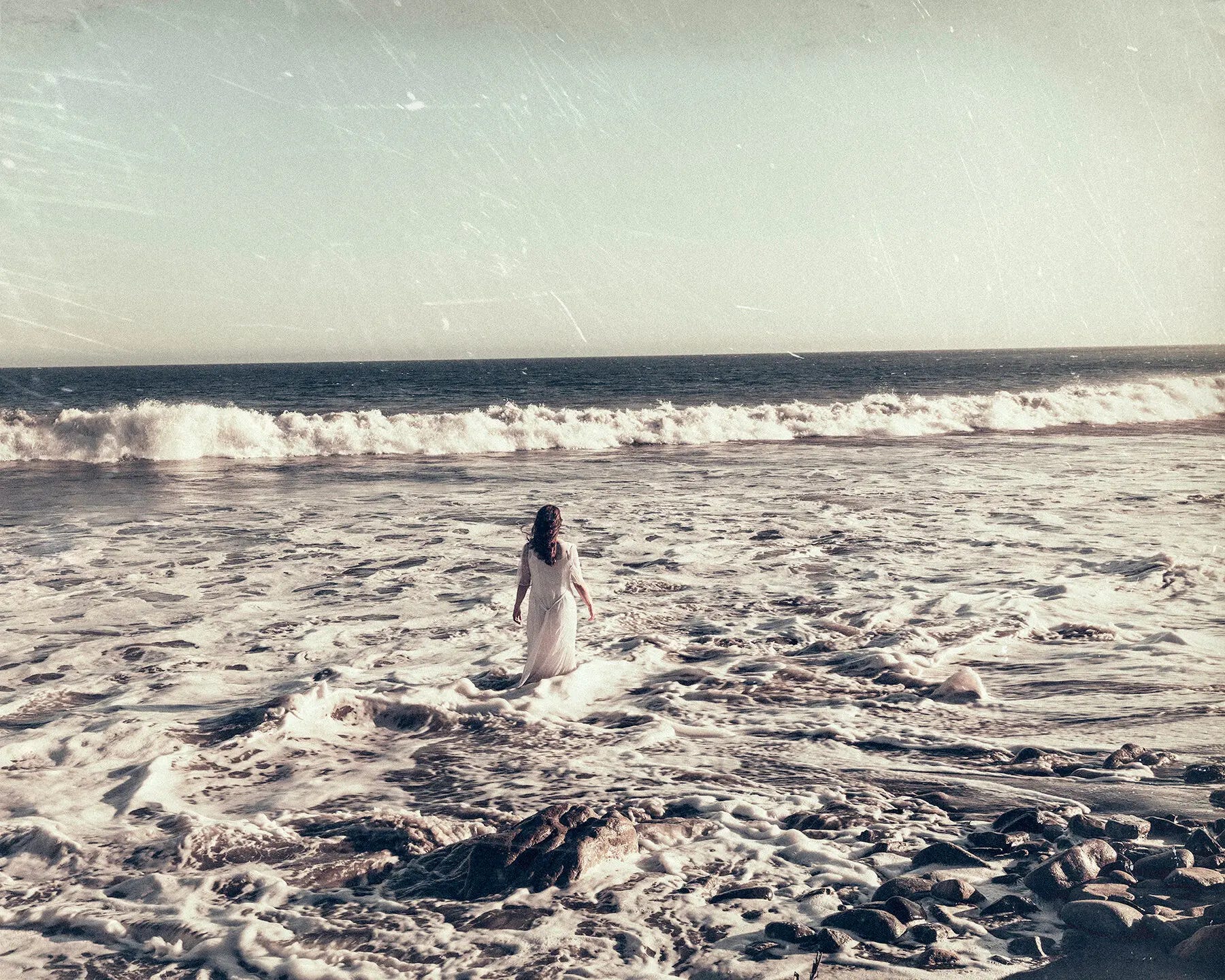
Regarding the photograph above, The New York Times writes, “For her series Standing Together: Photographs of Inez Milholland’s Final Campaign for Woman’s Suffrage, 2016–2020, the artist Jeanine Michna-Bales recreated Milholland’s 1916 journey West by staging historical re-enactments and capturing the landscape. Transitioning, above, metaphorically depicts Milholland’s shift from life to “whatever comes next.”
2. Do Schools Kill Creativity?
With 24 million views you’ve probably already seen this, but since I mention it in the article, here it is just in case you haven’t.
Muy inspirador, but even better, doable!!!!! I love when I see something that I can translate to my classroom, thank you