

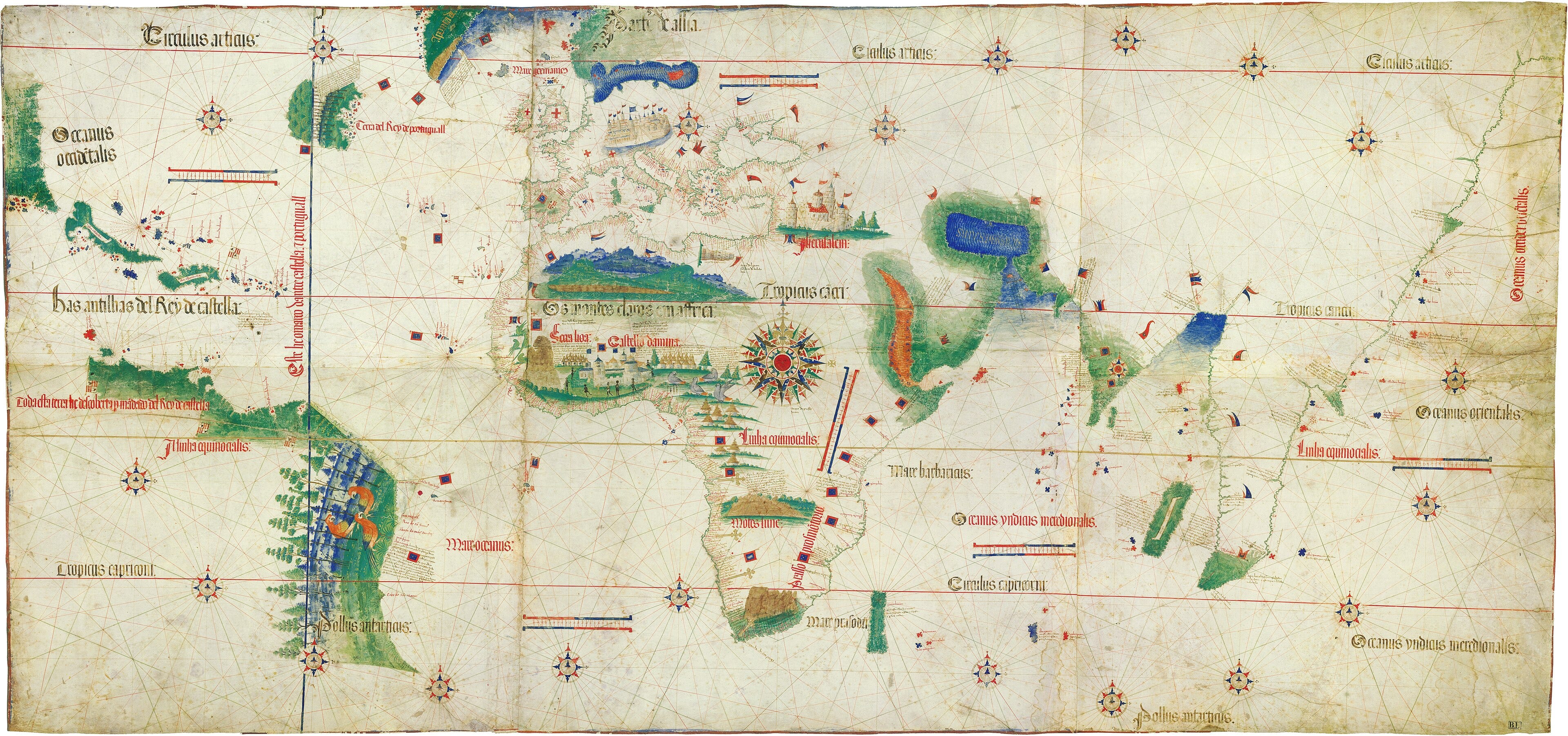
Fifteen years ago, I wrote this article for the Huffington Post. Given the recent conversations about direct instruction, partly sparked by the influential podcast Sold a Story, I think it’s worth returning to. I’ll post it here and then return to comment on it in the end.
How Many Continents Are There?
Originally published in The Huffington Post on February 29, 2012.
As my wife and I were driving home one night on the highway from Merida, Mexico, the capital city of the Yucatan where we work, to our home in Cholul, a small town right outside of the city, we somehow stumbled onto the topic of how many continents there are in the world. I mentioned seven and she indignantly replied:
“Seven! What do you mean seven: there are only five!”
“Five!” I responded. “What are you talking about? What are the five?”
“América. Asia. Europe. África. Oceanía,” she said, naming the five continents she learned in her elementary school in Mexico.
After asking what Oceanía is in English (Australia),1 I listed the seven continents as I learned them in elementary school in the United States. After futilely arguing for a bit about who was right and who was wrong (luckily we were close to home so the argument didn’t have much of a chance to escalate), we promptly looked up the “answer” on Wikipedia.2
Wikipedia in English immediately identifies the seven continents. I’m right! But—wait a minute—Wikipedia in Spanish presents us with a chart of different possibilities ranging from four to seven with the explanation roughly translated, “In reality there isn’t one fixed way to determine the number of continents. It depends on each cultural area to decide if two large masses of earth joined together form one or two continents, and if specifically Asia and Europe or North and South America are one or two continents.”
So in fact, neither of us is right or wrong. The “correct” answer depends on where in the world you were educated and taught to memorize the “right” answer of four, five, six, or seven. Asking our guests how many continents there are has become a fun dinner party game when we have visitors from different parts of the world. If they aren’t aware of the varied definitions of what constitutes a continent, a hearty argument always ensues.
In school we are taught to memorize many facts—seven continents, fifty states in the United States, 1 + 1 = 2—but rarely are we encouraged to question these supposed facts. What would happen if we posed each of these as questions? First, we would teach students that the skill of questioning is of equal or perhaps even more importance than providing the correct answers. Students would also learn that having a flexible stance on a particular issue, reconsidering our own assumptions, being able to see something from another person’s perspective, and moving beyond who is right and who is wrong, are vital dispositions to have not only for dinner conversations, but for everything from working on a project together, to effectively communicating with your partner, to succeeding in international diplomacy.
Learning that 1 + 1 = 2 is important, and certainly an engineer designing a bridge would argue there are times when finding the right answer is critical. But it’s quite fun to think of instances where we might question this equation, even if this moves us from the field of mathematics into linguistics (1 pair of shoes + 1 pair of shoes = 4 shoes or 1 ball of clay + 1 ball of clay = 1 large ball of clay). George Cantor, the inventor of set theory in mathematics during the nineteenth century, felt that “in mathematics the art of asking questions is more valuable than solving problems.” Teaching students to investigate deeply, to ask many questions, to consider multiple points of view, and to imagine numerous possible answers is perhaps much more important than teaching students to memorize and recite the fifty states. “Why is Puerto Rico not a state? Should it be? Who decides what is a state? What were the territories before they were states?”
Yet we have about 45 million students taking standardized tests across the United States. With this many tests, how can states possibly evaluate complex and creative answers to interesting questions? Open-ended questions must be graded by an actual person which costs significantly more than a multiple-choice answer checked by a computer. As a result of the No Child Left Behind (NCLB) act, we as a nation have moved increasingly towards multiple choice exams and, as we hold teachers and schools accountable for the results, classrooms have become places where the right answer rules. This is most apparent in New York City where the Department of Education has publicly released ratings of its 12,700 teachers. Teachers are listed by name and rated solely according to how well their students performed on standardized tests.3
Such emphasis on the right answer is a far cry from the legacy of education reformer Ted Sizer who stressed the importance of an inquiry-based education: “Questions are usually more interesting than assertions or answers, and the most appealing questions are those which are genuine—dealing with matters of manifest importance in the world—and have no easy or total resolution.”4 Perhaps along with asking students to list the four to seven continents, we might also ask, “How and why are continents defined differently in various areas of the world? Based on the multiple definitions of the word continent how many do you think there are?” Such questions will help our students to think deeply and flexibly, which will also help them to negotiate different cultures and ways of knowing. Asking questions places us in the stance of the listener rather than the speaker. And no matter our profession—teacher, doctor, mechanic, lawyer, politician—isn’t asking the right question usually more productive than immediately offering an answer?
Thoughts on the Article
Reading this again fourteen years later, I noticed that although the article seems to lean toward a purely inquiry-based form of education, it actually emphasizes the importance of both learning facts and questioning our assumptions. For instance, I highlight the importance of learning mathematical equations, continents, and the fifty states, while also questioning why we learn these facts in the first place. I’d also rethink the playful mathematical examples, which certainly aren’t a substitute for learning mathematical concepts. At the time, my son was in preschool, and he’d ask strange mathematical questions like, “Dad, what is potato + tomato?”
In a podcast I recently heard an educational analyst say that he missed the days when we taught students the capitals of the fifty U.S. states. I certainly learned them in middle school. I can’t remember many of them today and the main reason is because this knowledge, at least as far as I know, isn’t helpful background knowledge for reading anything I’ve ever read in my lifetime. I also can’t think of a practical reason why most people would need to know all fifty state capitals.
There is a body of core knowledge students do need to know (and even choosing what should be included in that body of knowledge has always been controversial—although I think most can agree that students need to read and learn basic math). Along with teaching knowledge in schools, we also need to question our own assumptions about what content we are teaching, and teach our students to think critically about what they are learning. In my article From Facts to Frameworks I argue that we need to move from individual facts to larger conceptual frameworks through the process of asking questions about the content we are learning. Asking questions and directly teaching content need to walk hand in hand. Every classroom should have a bit of the teaching approach of Socrates, who challenged people to think through questions and dialogue, and Aristotle, who knew the importance of systematic explanations. The mix of these two critical elements in education reminds me of the fundamental premise of David Tyack and Larry Cuban’s book Tinkering Toward Utopia:
Reforms should be designed to be hybridized, adapted by educators working together to take advantage of their knowledge of their own diverse students and communities and supporting each another [sic] in new ways of teaching.5
In the introduction to our book Engage, we encourage teachers: “We hope you will not teach this book with fidelity. We invite you to hack the activities in this book.” I believe that as teachers we can take a “yes, and” approach to pedagogy. Great teaching isn't about choosing between knowledge and inquiry, but knowing how to bring them together in an elegant partnership.
This isn’t quite right. It’s Australia and the broader region including New Zealand, Papua New Guinea and hundreds of other islands.
I noticed here that we had to arrive home to look up the answer. Didn’t we have iPhones in 2012?
Important to note that the statistics in this paragraph are from around 2012.
Theodore R. Sizer, Horace’s School: Redesigning the American High School (Boston: Houghton Mifflin, 1992), 88.
David Tyack and Larry Cuban, Tinkering Toward Utopia: A Century of Public School Reform (Cambridge, MA: Harvard University Press, 1995), 135–136.
This post about continents is so spot on! Living in Mexico, I have had this conversation about how many continents there are SO many times over the year, and I just can't believe that something I was so convinced I knew is actually a matter of perspective and is seen differently in different places. What's more, some people I've talked to are highly offended that I would even consider North and South America as separate!
It was a real eye-opener for me to look deeper into everything I was taught. Thanks for the great writing - I always enjoy your reflections!