

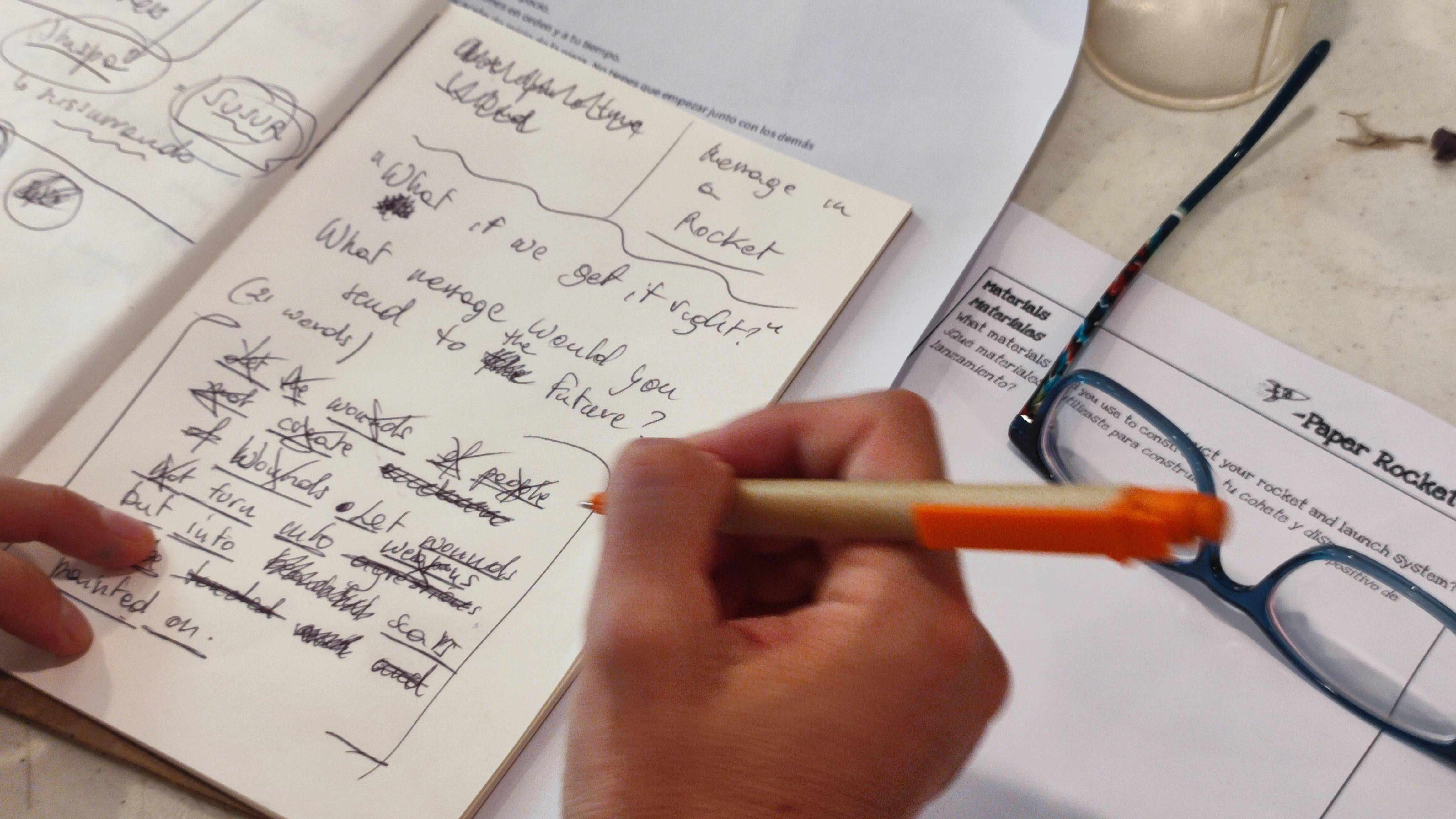
Back this week to concrete tools for the classroom. There are a few activities I consistently come back to because they just work so well every single time, and this one is definitely in my top 10. I originally learned 24-1 from my colleague Cynthia Weiss. We first began using it as a way of editing students’ original writing. Since then, we’ve adapted it for many different contexts and texts. I’ll describe the activity below and then show how a variety of ways to use it in the classroom for reading writing, discussion, and even performing.
Choosing Importance
This activity helps students to narrow down text to its essence. Educators often emphasize “choosing importance”—identifying a portion of text that students consider particularly significant. When I’ve heard literacy specialists talk about choosing importance, I always wondered: important for what, for who? It’s frustrating to see these types of questions on multiple-choice tests because what students consider important depends on how they're reading the text and what they're looking for. A student might consider a particular passage important for any number of reasons, including:
character development
theme/concept
setting
personal connection
narrative
In classrooms, we often try to reduce big ideas, particularly in the humanities, to easily digestible and gradable assessments. Madeleine L’Engle spoke to this in her Newbery Medal acceptance speech for her novel A Wrinkle in Time:
I took a course in college on Chaucer, one of the most explosive, imaginative, and far-reaching in influence of all writers. And I’ll never forget going to the final exam and being asked why Chaucer used certain verbal devices, certain adjectives, why he had certain characters behave in certain ways. And I wrote in a white heat of fury, ‘I don’t think Chaucer had any idea why he did any of these things. That isn’t the way people write.’
I believe this as strongly now as I did then. Most of what is best in writing isn’t done deliberately.
How, then, do we ask students to choose what is important in a text? Instead of one correct answer, students should be able to evaluate a range of possibilities based on framing and context. What’s important is that students share their thinking behind their answer and see how their peers interpret texts. Either the teacher needs to be specific about what students are looking for, or students need to explain specifically why they chose a particular quote.
Choosing an important word, phrase, or quote is a critical skill for students to learn—in any content area in which text is involved. When we’re writing, we might include a quote from a research study, a poem, or a larger literary work—how do we decide which quote to include? Most of us have been reading for so long and, having moved through levels of formal education, have internalized how to choose importance in text. Even when I’m reading science fiction, I might come across a quote I think is profound and want to underline (only to realize it’s a library book and I can’t!).
Although we’ve internalized separating the wheat from the chaff when reading, younger learners often haven’t. As teachers, we have high expectations of what our students are capable of achieving, but sometimes our own expertise makes it difficult to recognize what students need in order to get there.
Researchers Kenneth Koedinger and Mitchell Nathan call this the expert blind spot. In their research, they found that high school mathematics teachers often misjudged which problems students would find most difficult.1 Teachers assumed that abstract equations would be easier than word problems, but students frequently performed better on the word problems because they could draw on their intuitive understanding. The researchers suggest that experts can become so accustomed to their own ways of thinking that they lose sight of how beginners approach a task.
The same principle applies to choosing what is important in a text. As experienced readers, we often recognize a significant passage almost instinctively, without thinking about how we arrived at that choice. But for students, identifying what matters in a text is a skill that needs to be developed. Rather than simply asking students to identify the most important passage, we need to give them opportunities to practice making these choices and to explain their thinking. 24 to 1 is my go-to approach for distilling text down to its essence while giving students opportunities to discuss the thinking behind their choices.
24 to 1 Process
We’ll start with the basic process I originally learned from Cynthia and then explore a few variations. This is one of my favorite activities to tweak for different uses in the classroom.
