

In my post Question First a few weeks ago, I mentioned that I’d share another example of beginning a unit by fostering and capturing students’ natural curiosity and wonder. If you haven’t read that post, you might want to start there and then come back here for a visit.
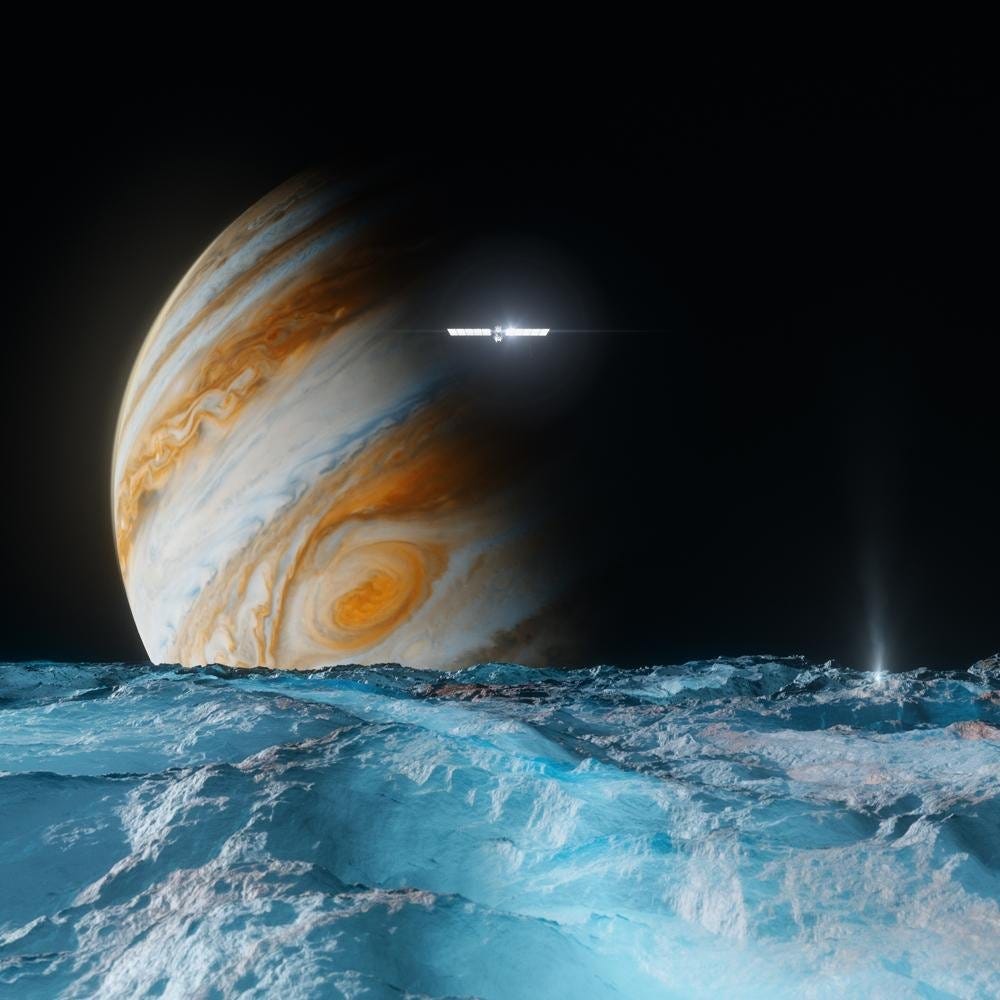
I’m always looking for new ideas to bring to teachers and classrooms. One of the best multidisciplinary units we built this year came from a New York Times article, “‘In Praise of Mystery,’ Hitches a Ride on a NASA Rocket.” If you’re like me, you might jump straight over to that piece and already start generating ideas of your own. But stay with me a little longer, and I’ll share some great ways to bring it into your classroom.
When we work with teachers, we usually have participants who teach across multiple age levels, so our ideas need to adapt from kindergarten through high school. We also often have teachers from different disciplines in the room, so cross-disciplinary approaches allow them to collaborate across classrooms—or, in the case of elementary schools, to make those interdisciplinary connections within a single classroom.
The article features U.S. Poet Laureate Ada Limón and describes how her poem “In Praise of Mystery” was engraved on NASA’s Europa Clipper spacecraft, launched on October 14, 2024, on a five-and-a-half-year mission. NASA’s goal: to determine whether Jupiter’s moon Europa could support life.
We could have begun our unit simply by handing students the article—but instead, we wanted to create a sense of mystery, to get them curious about the mission, and to begin with their questions rather than with the answers.
An Eye, a River, and a Microbe
One of my favorite ways to begin a unit is with a thinking routine. Thinking routines, developed out of Harvard’s Project Zero, are simple structures for “making students’ thinking visible.” In my last post, Tip of the Iceberg, I adapted the routine, Zoom In1, for textual analysis and interpretation. Here, we use Zoom In with an image to launch the Europa unit.
We took a high-quality image of Jupiter’s moon Europa from NASA’s website and began by showing only a cropped portion of the moon to participants. We didn’t give them any additional information—just the image.
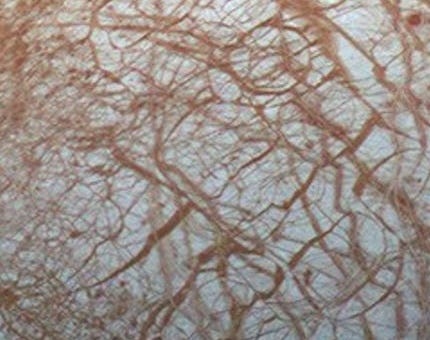
Following the structure of the routine, we asked them to discuss in pairs:
What do you see?
What do you think about what you see?
The first question focuses strictly on observation, not interpretation. For instance, “I see intersecting orange squiggly lines,” or “I see a white background.”
Then students speculate based on what they notice: “The squiggly lines look like veins. I think it’s a picture of what’s under our skin.”
Next, we reveal a slightly larger portion of the image and repeat the questions—adding one more:
What do you see?
What do you think about what you see?
What new information do you have, and how has that changed your thinking?
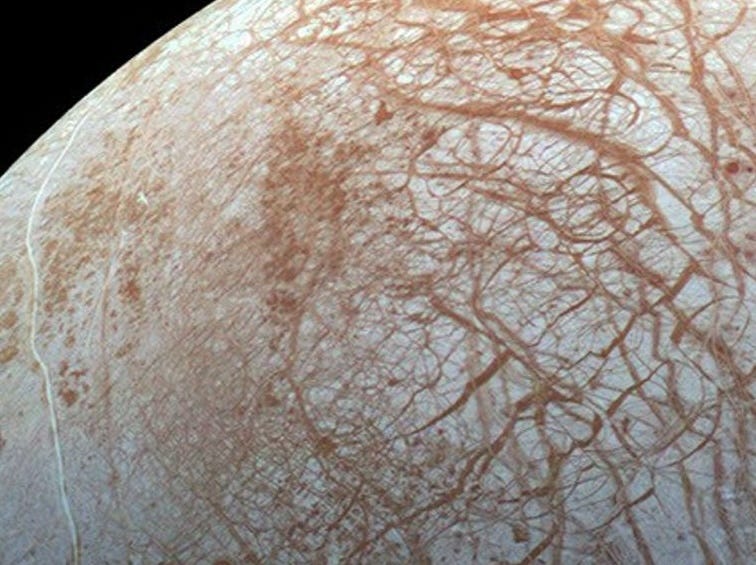
At this stage, students often notice a dark section in the upper left corner. Some might start to suspect they’re looking at something celestial; others might guess an eyeball or microbes under a microscope.
Finally, we show the entire image and repeat the last three questions.
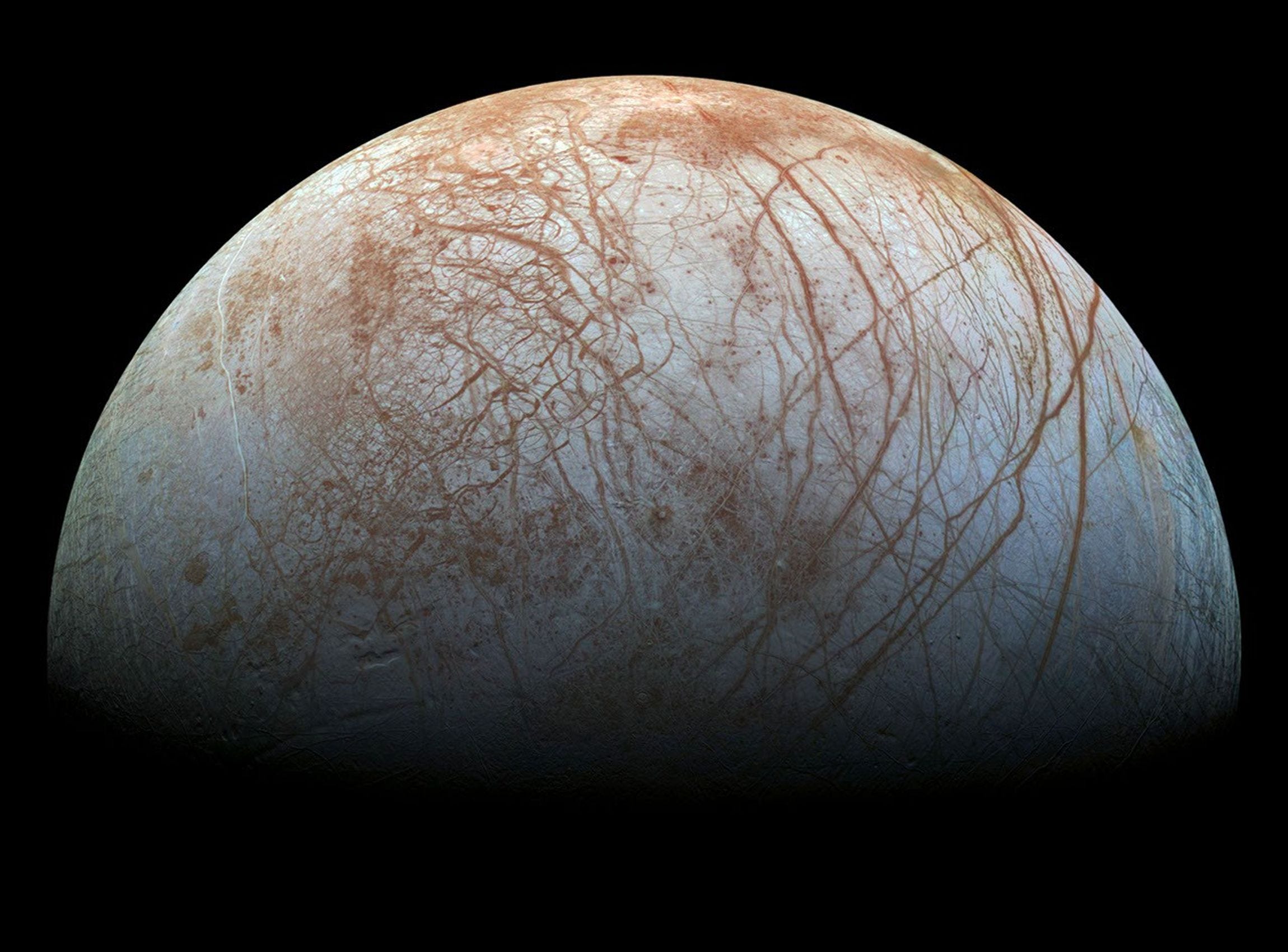
By now, we’ve likely created a class of students who are receptive—and maybe even excited—to learn more about our solar system. In our book Engage, we call this stage “Entering Concepts, Topics, and Texts”—a process that develops what Mandell and Wolf describe as the receptive mind.2
With students now ready to learn more, we offer just a brief description:
“The image is of Europa, one of Jupiter’s moons. On October 14, 2024, NASA launched a probe that will travel to Europa to explore whether the moon can support life.”
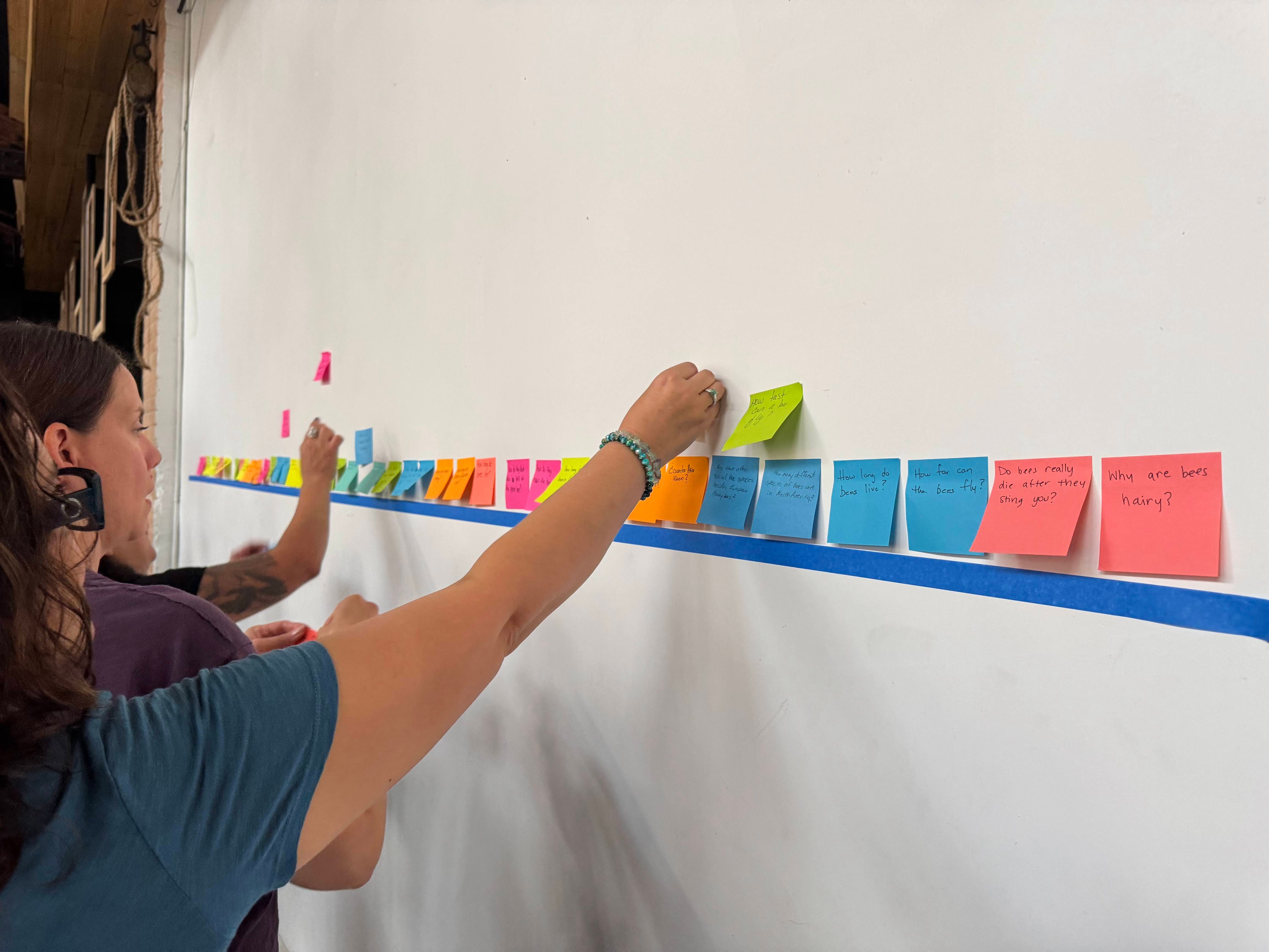
From there, students write their own questions—about the Europa mission, the moon, outer space, or our solar system—any question that comes to mind. All questions go up on a wall divided in two: Questions at the top and Answers below. As we discover answers, we move them to the lower section.
Viewing Videos with Purpose
With the ubiquitous availability of videos, we use them constantly in classrooms. But are we using them purposefully—with intention?
I found an amazing NASA video explaining the Europa Mission: short yet filled with content. I wanted to help students watch it with a clear purpose. How do we frame their viewing so it remains open enough for them to express their own interests and questions?
National Geographic and Alex Warren offer a helpful tutorial on using thinking routines with video.
I adapted one and created this structure. As you watch the video, write down:
3 things I found interesting/surprising
2 things I’d like to know more about (2 questions)
1 image that resonates with me
We first watched the video to grasp the overall story of the Europa Clipper mission, then viewed it again so students could respond to the prompts. After small-group discussions, we added the new questions to the inquiry wall. This time, though, we could also move a few to the “Answered” section—questions like How long will the Europa mission take?
At this point, there are usually over one hundred questions on the wall. Participants organize them into categories and label each section. Common categories include Technology, Physics, Existential, Biology, Astronomy, Social Implications, and Climate Change.
Where the Unit Goes from Here
From here, the classroom can go in several directions:
Individual or small-group inquiry: Students choose the category that interests them most and begin independent research projects driven by their own questions.
Collective inquiry: Students vote on the topics they want to explore together. For example, a physics or math class might examine how the spacecraft uses gravity assists—slingshotting around Earth and Mars—to gain momentum for its journey to Jupiter. (This maneuver saves an enormous amount of fuel—fascinating, right?)
Teacher-directed inquiry: Teachers design lessons around key student questions or those that best align with the curriculum.
At this point, we’ve barely touched the surface of the New York Times article. What about the poem “In Praise of Mystery” engraved on the Clipper? Or the Message in a Bottle project that invited people worldwide to send their names into space? More to explore next week—same Bat time, same Bat channel.
Thanks for reading.
from Making Thinking Visible: How to Promote Engagement, Understanding, and Independence for All Learners by Ritchart, Church, and Morrison, 2011.
Acting, Learning, and Change by Jan Mandell and Jennifer Lynn Wolf, 2003.