
I wasn’t able to publish a post last week because I was in Bend, Oregon, working with teachers and students at North Star Elementary School. There will be much to share—new ideas, curricular design, and fresh insights—but for now I want to describe a new activity I piloted, inspired by the Mexico City sound improvisation musician Darío Bernal Villegas.
All of our curricular planning begins with selecting a key text. Although we have built institutes, workshops, classes, etc. from a central concept, theme, or even skill (i.e., in a language classroom, telling stories using the past tense), my first question is almost always, “So what is the text?” When a New York Times journalist visited us at our former ArtsLiteracy lab school, Brown Summer High School, he noticed that students were wrestling with complex texts and saw great potential in the synergy between performance and literacy development.
One of my favorite texts to use at the elementary level is Malala’s Magic Pencil. It also works beautifully with adults, since in a two-hour workshop we have time to read the entire book. (There are also versions of her biography written for middle and high school students.)
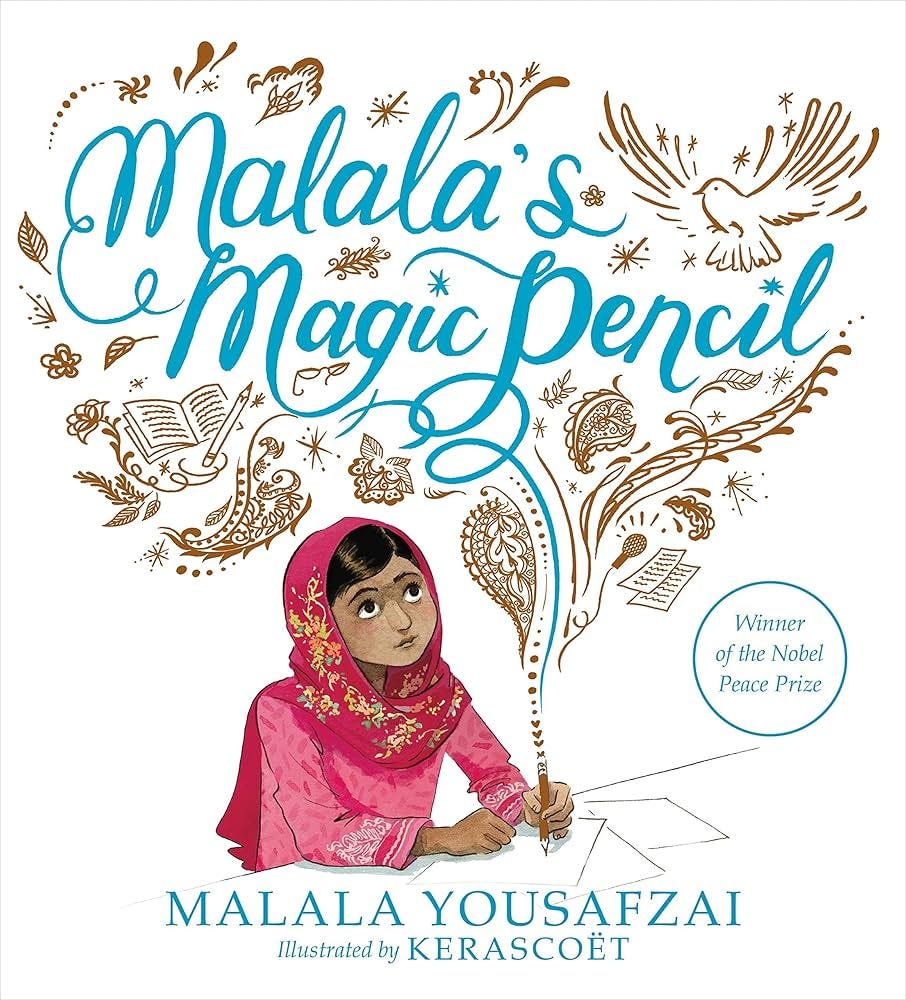
Malala writes about how she would change the world if she had a magic pencil. The opening pages pose the question, “What would you do if you had a magic pencil?”—giving us both our essential question and a theme centered on transformation and change.
The book ends with her speech at the United Nations, delivered when she was only sixteen years old. She speaks about the universal right to education and famously asserts:
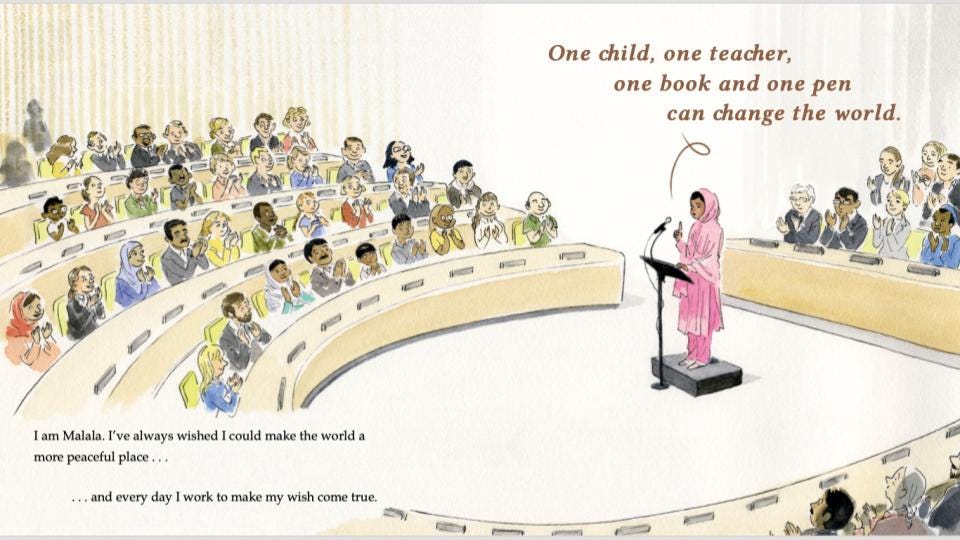
It is the power of her words in this book that makes it such a rich text for vocal work.
Orchestrating Words
At our Habla Institutes, Darío often orchestrates “found sounds” with teachers. He has done this in many ways—using vowels and consonants, everyday objects, and vocally or kinesthetically generated sounds. While watching a video of Malala giving her United Nations speech, I thought it might be interesting to try Darío’s technique using phrases from her speech.
Video has become ubiquitous in classrooms. Too often, however, a video is simply played and students are told to “pay attention.” Just as we have explored ways to read purposefully, I believe it is equally important to create a clear purpose when “reading” video.
For Malala’s speech, I asked teachers to watch a five-minute clip and collect powerful, key phrases. Afterward, in small groups, they shared both their phrases and the thinking behind their choices.
Each person then chose one phrase—the one that spoke to them most deeply and that they wanted to hold on to.
With this phrase in hand, participants stood up and walked around the room looking for others who had selected the same words. Groups formed organically. A few teachers noted, somewhat despondently, that they were the only ones who had chosen their phrase. I reassured them, “That’s perfect. We want a diversity of phrases and group sizes in the room.” Eventually the room settled into about ten groups, the largest with roughly twelve participants.
Within their groups, they compared their selections and agreed on an identical wording. (Some had chosen longer portions of a sentence, so the goal was to arrive at a phrase with the same number of words.)
I then taught them a set of conducting gestures based on what I had learned from Darío.
Leading the groups as if they were different instruments in an orchestra, we created a true Symphony of Words.
In the above video, musician Darío Bernal Villegas demonstrates the “conducting gestures” for leading groups to start, stop, continue, and increase/decrease volume.
Variations on a Theme
Once we had established the Symphony of Words, we were able to return to it throughout the session. After reading the book, participants created headlines for Malala’s story—a comprehension strategy I like to use with younger students to surface the “big ideas” of a text. We then read the headlines aloud together from each of the tables.
At the end of the session, teachers wrote their own responses to the prompt, “If I had a magic pencil, I would . . . ,” focusing on changes they would make in their homes, neighborhoods, workplaces, or on a global scale. I encouraged them to think about serious issues but also to have some fun with the prompt, adding levity to what can be a heavy topic. In small groups they combined their answers into performances focused on the sound and feel of the words—remixing, repeating, and amplifying key phrases.
Into the Classroom
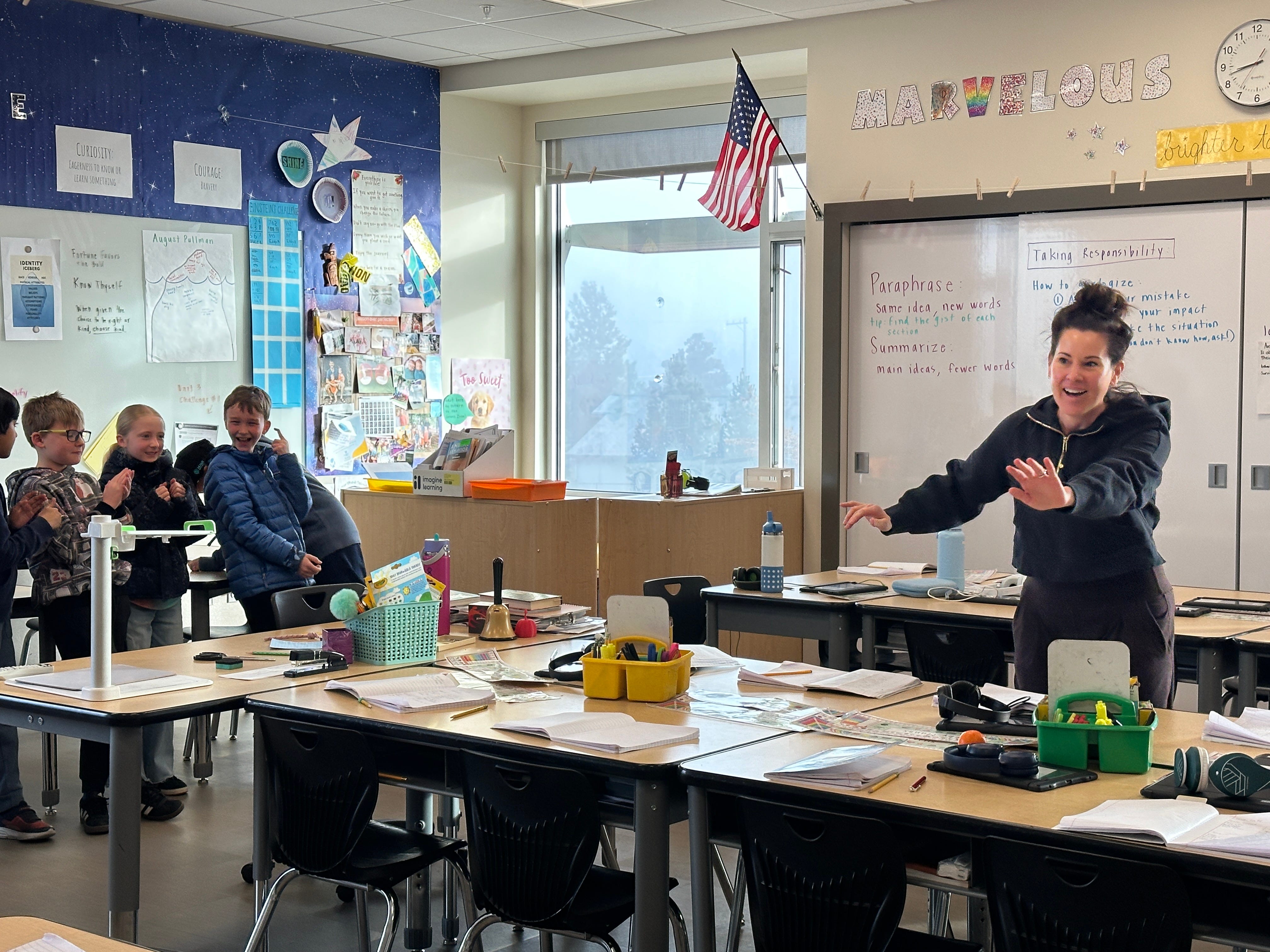
The next day I watched teachers try this approach in first- through fifth-grade classrooms. Most began with pure sounds, as I had modeled at the start of our workshop. The activity requires some facilitation skill, but the teachers did a terrific job leading their own Symphonies. I also picked up a few techniques for making it work even better—especially with first graders!
At its core, the Symphony of Words supports key dimensions of literacy:
Students synthesize a text down to its essential phrases and articulate the thinking behind their choices.
Repetition of words and phrases supports comprehension, especially for complex texts and for language learners.
Pronunciation is naturally refined as students listen to one another and make corrections together.
Words gain emotional and aesthetic power. Students put their bodies and voices behind the language, allowing it to resonate and come alive off the page.
I’ll keep experimenting with variations on this theme, and I hope you will too. I’d love to hear your ideas—whether in person or here on Growing Ideas.
Malala Yousafzai’s address to the United Nations Youth Assembly
Love love love!
I have done this in my language classroom!! I love how it builds confidence, how students work together and how they connect with the words.